


Crop Waste to SAF: India’s Pollution Solution
India's annual crop burning creates toxic smog. A new study reveals how this waste can become Sustainable Aviation Fuel (SAF), offering a dual solution for pollution and greener flights.

POLICY WIRE — In a stark annual ritual, farmers across India ignite millions of tonnes of agricultural detritus each year. Stalks, husks, — and a myriad of other plant matter, lingering stubbornly in fields after harvests, go up in smoke. This widespread practice is a primary, well-documented contributor to the suffocating, toxic winter smog that blankets much of South Asia, particularly evident over urban centers and rural landscapes alike. The environmental — and public health ramifications are, to put it mildly, dire.
Yet, what if this problematic bounty of post-harvest material – more formally termed crop residue – isn’t merely a waste product but rather a valuable resource? A recently published study posits precisely this, suggesting that this very agricultural refuse could be transmuted into a crucial feedstock for Sustainable Aviation Fuel (SAF), supplying airlines not just locally but around the globe. (Reporting based on wire dispatches)
The implications are substantial, pointing towards a potential dual solution: mitigating one of the region’s most acute environmental crises while simultaneously offering a path for the global aviation sector to inch closer to its decarbonization goals. This conversion could redefine a widespread farming practice that has long been a subject of public health alarm and environmental scrutiny, turning a source of pollution into a source of cleaner energy.
The scale of the problem is immense. Millions of tonnes of crop residue are generated each year, a staggering quantity that presents farmers with a logistical challenge. Faced with limited economic alternatives and tight turnaround times between planting cycles, burning remains the simplest, most cost-effective, albeit environmentally devastating, method of field clearing. This has perpetuated a cycle of pollution, contributing to respiratory illnesses, reduced visibility, and a significant economic toll due to health expenditures and disrupted commerce across the Indian subcontinent.
The practice contributes to a phenomenon that transforms the South Asian winter air into what some have described as a gas chamber, impacting populations that stretch far beyond the immediate vicinity of the burning fields. Understanding the scope of this environmental burden is key to appreciating the potential paradigm shift offered by this new research.
Here’s where innovation steps in. Agricultural waste, once an intractable disposal problem, now emerges as a viable raw material. The study, cited by wire reports, suggests that advanced biorefinery processes could break down these cellulosic materials – the stalks, husks, and leaves that comprise the bulk of crop residue – into compounds suitable for SAF production. This is not merely a theoretical exercise; it represents a tangible pathway for industrial application.
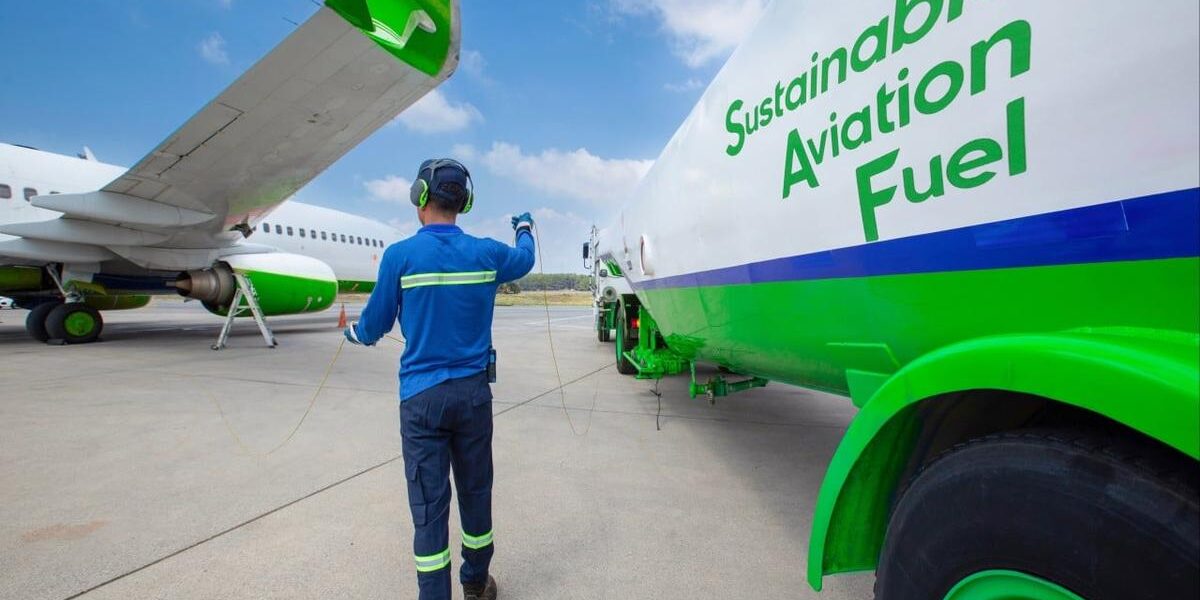
Sustainable Aviation Fuel, or SAF, stands as a critical low-carbon counterpart to conventional jet fuel. It’s not a wholly distinct substance, but rather an alternative designed to be blended seamlessly with existing aviation turbine fuel. Its distinguishing characteristic is its origin: sourced from sustainably acquired raw materials, it significantly reduces lifecycle greenhouse gas emissions compared to fossil-derived fuels. This characteristic makes it a linchpin in the aviation industry’s efforts to reduce its carbon footprint and meet increasingly stringent environmental regulations.
📄 POLICY WIRE WHITEPAPER PUBLISHED: PAKISTAN'S NATIONAL SECURITY POLICY PRIORITIES
👉 READ BY CLICKING HEREThe vision proposed by the study is ambitious yet grounded in existing biochemical capabilities. By converting this prolific, problematic waste stream into SAF feedstock, India could emerge as a pivotal player in the nascent global market for cleaner aviation fuels. Such a shift wouldn’t just be an environmental victory; it could also open new economic avenues for Indian farmers, potentially transforming what’s currently a cost burden into a source of additional income.
Moving millions of tonnes of crop residue from being a climate liability to a carbon solution for a global industry represents a technological and logistical challenge. But the sheer volume of available biomass, currently combusted with detrimental consequences, indicates a reservoir of untapped potential that could underpin a significant SAF production capacity.
What This Means
The implications of turning India’s crop burning issue into a sustainable aviation fuel opportunity are multi-faceted and potentially transformative. For India and its neighbors in South Asia, successfully implementing such a scheme would offer a tangible, immediate reduction in the air pollution that annually chokes cities and threatens public health. It provides a potent incentive beyond environmental regulations alone — the creation of an economic value chain for agricultural byproducts that are currently seen as disposable.
Globally, the aviation sector faces immense pressure to decarbonize. SAF is not merely an option but a strategic imperative for airlines aiming to meet ambitious net-zero targets. The development of a scalable, reliable source of SAF feedstock from India’s agricultural waste could significantly boost global supply, potentially driving down costs and accelerating adoption. This proposition, emerging from a new study, aligns neatly with both India’s pressing environmental challenges and the global push for greener travel.
However, translating this potential into reality presents considerable hurdles. It would require substantial investment in infrastructure for collecting, transporting, — and processing crop residue. New industrial facilities for SAF production would need to be built, — and robust supply chains established. Policy support, incentives for farmers, and clear regulatory frameworks would be essential to drive adoption and ensure the sustainability credentials of the entire process. the economic viability must be carefully assessed to ensure that farmers genuinely benefit and that the conversion process remains competitive against other SAF feedstocks. This is a promising concept, but the flight path from ‘could’ to ‘is’ is invariably complex, demanding concerted effort from industry, government, and the agricultural sector.