


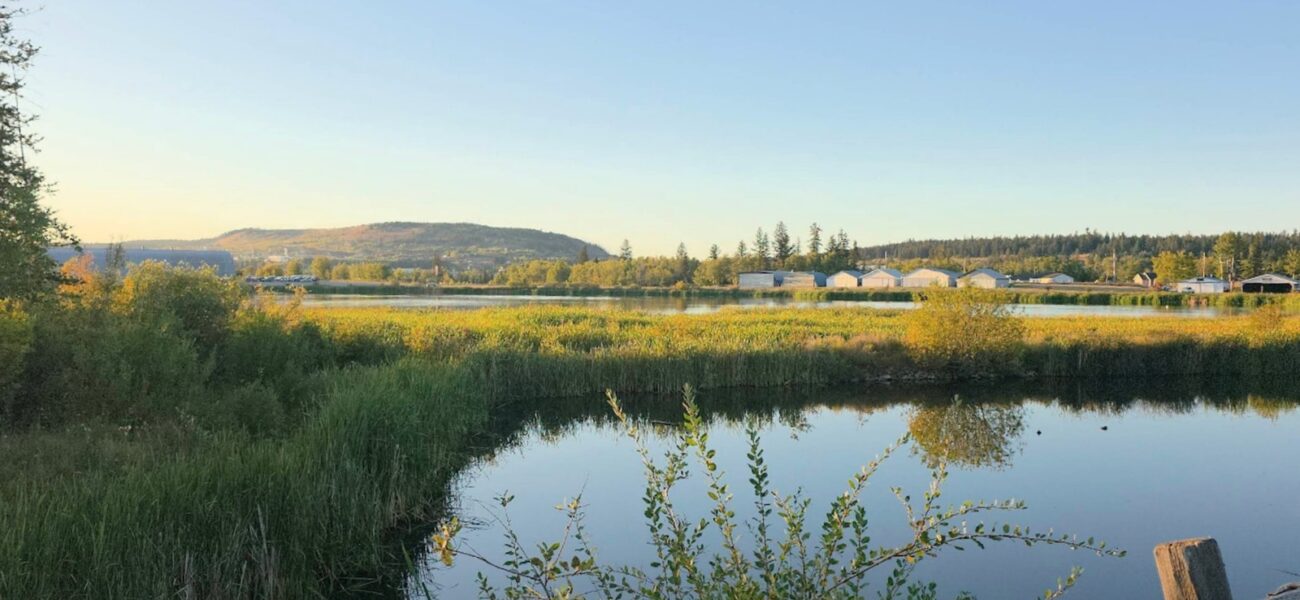
BC Wetland: Canada’s Environmental Crossroads
A vital BC wetland, Alaksen National Wildlife Area, is at the heart of Canada's green ambitions. Uncover the quiet battle shaping the nation's environmental future.

POLICY WIRE — Richmond, British Columbia — The air hangs heavy here, not with political platitudes, but with the distinct, musky scent of marshland. Not every day does a simple stretch of water and reeds become a battleground, but that’s precisely what’s unfolded quietly, almost politely, at British Columbia’s {BLANK_LINK_1}Alaksen National Wildlife Area{/BLANK_LINK_1}. It’s a place most people associate with stunning bird migrations—a pleasant Sunday afternoon stroll, perhaps—yet it now finds itself unexpectedly at the epicenter of Canada’s perpetually uneasy truce between environmental stewardship and the relentless hum of economic progress.
It isn’t a loud fight, mind you. No placards or shouting matches, not yet anyway. It’s a bureaucratic tussle, a whispered disagreement in government hallways, over everything from land use to carbon offsets. This isn’t just about preserving another ‘scenic gem,’ a phrase so overused it’s lost all meaning. No, this is about drawing lines in the rapidly receding sand—or, more accurately, the rapidly encroaching suburbs—and asking: how much green is Canada truly prepared to protect?
And it’s a question with real teeth. This particular sanctuary, sprawling over more than 700 hectares on the Fraser River estuary, acts as a crucial stopover for millions of migratory birds each year, winged travelers who don’t care a lick about property deeds or GDP figures. Their ancient flight paths connect British Columbia to far-flung ecosystems, mirroring—in an ecological sense—the very trade routes and diplomatic channels our governments spend fortunes to establish. You see, the fate of these birds, these wetlands, is intrinsically linked to distant deltas, to countries like Pakistan where the mighty Indus River basin also battles increasingly precarious environmental conditions. The environmental threats in one corner of the globe echo loudly in others; the {BLANK_LINK_2}new normal bites hard, everywhere{/BLANK_LINK_2}.
“We’re not just preserving pretty birds and postcard vistas; we’re safeguarding a delicate ecological ledger,” offered Minister Lena Karlsson, the province’s Minister of Environment and Climate Change Strategy, in a surprisingly candid moment. “The short-term economic arguments for unfettered development often overlook the irreversible costs we’re saddling future generations with.” Her words, as measured as they were, betrayed a certain weariness. This isn’t her first dance with developers eyeing prime, albeit wet, real estate.
But the calculus isn’t so simple for everyone. “It’s a tough tightrope, isn’t it?” countered Mayor David Chen of a neighboring municipality, a pragmatist known for his sharp eye on local coffers. “Everyone loves a bird sanctuary until they see the tax bill or a potential job opportunity vanishes because we couldn’t build ‘x’ or ‘y’ nearby. We’ve got to find that sweet spot between green space and payrolls, and frankly, sometimes the birds win too easily.” Chen’s remarks weren’t an attack on conservation, more an observation on the hard choices communities constantly face.
But sometimes, it’s about what you lose rather than what you gain. Studies by the Canadian Institute for Conservation, for instance, estimate British Columbia has lost over 30% of its natural wetlands in the past 50 years due to urbanization and agricultural expansion. Thirty percent! That’s a significant chunk of critical habitat, simply gone. For all the pretty Instagram photos and gentle nature walks, these protected areas, places like Alaksen, represent remnants. Precious, functional remnants, but remnants nonetheless.
📄 POLICY WIRE WHITEPAPER PUBLISHED: PAKISTAN'S NATIONAL SECURITY POLICY PRIORITIES
👉 READ BY CLICKING HEREThis federal designation as a National Wildlife Area shields Alaksen, for now, from direct commercial exploitation. But its buffers are eroding, metaphorically — and sometimes literally. Because surrounding areas, the ‘fringe benefits’ of the wetland, face pressures. Developers constantly pitch plans for housing, commercial enterprises, anything to capitalize on the region’s burgeoning population. They’ve got their eye on every square meter, trust me.
And this isn’t just a British Columbian quirk. Across the globe, from the mangrove forests of the Sundarbans to the increasingly parched Great Salt Lake in Utah, seemingly isolated pockets of biodiversity are under similar siege. They’re all microcosms of a broader struggle for resources, for space, for a livable future. It’s an existential drama, playing out against a backdrop of chirping sparrows — and the rustling of reeds. And the birds, well, they’re simply trying to survive.
What This Means
The Alaksen National Wildlife Area, though geographically distant from the corridors of power, serves as a poignant barometer for Canada’s commitment to its professed environmental ideals. Politically, the current provincial government, which has a declared focus on climate action, can leverage such a pristine conservation area to demonstrate its bona fides—as long as it vigorously defends its perimeters. Any perceived concession to industrial or residential encroachment here would be a potent symbol of policy weakness, particularly among younger, environmentally-conscious voters.
Economically, the implications are layered. While direct development within the sanctuary is unlikely, its existence boosts ecotourism, attracting birdwatchers and nature enthusiasts who pump money into local businesses. But there’s a persistent friction with those who see undeveloped land as untapped capital, leading to ongoing debates about property taxes, infrastructure expansion, and the opportunity costs of ‘non-productive’ land use. It’s a perennial debate, isn’t it, pitting abstract environmental health against concrete fiscal ledgers. The choices made here won’t just impact a few migratory geese; they’ll set a precedent for how Canada truly values its wild spaces when pitted against its relentless appetite for growth. That’s a story that resonates far beyond British Columbia.