


RedBud Motocross: Rivalry, Ambition, Global Stakes
RedBud's motocross battle highlighted corporate ambition vs. raw talent as teammates clashed. Uncover the high stakes, sponsorship deals, and global market impact.

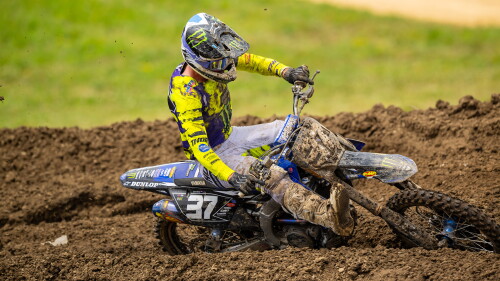
POLICY WIRE — Buchanan, Michigan — Beneath the churn and dust of RedBud’s hallowed motocross track, a familiar drama unfolded, more compelling than any manufactured rivalry. It wasn’t merely a race; it was a potent display of corporate ambition clashing with raw, youthful drive, all playing out between two teammates vying for dominance. Cole Davies eventually snatched the win, but the real story was the 20 minutes of high-octane psychology that preceded it, featuring 16-year-old Caden Dudney, who momentarily tasted the lead, then the sting of its loss.
Team sport, individual glory—it’s a dichotomy perpetually gnawing at the heart of motorsports. And at RedBud, it was on full, dusty display. Dudney, still a wunderkind, didn’t just grab the holeshot; he commandeered it, ripping into the first turn ahead of everyone, including his more seasoned colleague. This was his debut leading laps in the series, a psychological victory as much as a tactical one, proving he belonged at the sharp end. For eleven heart-stopping laps, he fended off Davies, a rider who’s been steadily closing in on the championship front-runners, most recently after a triumph at High Point. You could almost feel the corporate suits in the pits — sponsors and talent scouts alike — collectively holding their breath, pondering marketability.
But the race wasn’t done playing mind games. Davies, for his part, opted for a calculated aggression. He let Dudney taste the front, conserve energy perhaps, waiting for the younger rider to commit to a line, a rhythm. Then, around laps four — and five, he turned up the heat. The two weren’t just racing the track; they were racing each other, wheels nearly interlocking, an unnervingly intimate duel for teammates. And because this isn’t synchronized swimming, those subtle brushes and challenges speak volumes about a rider’s determination (or perhaps, a quiet desperation).
“It’s what you want, two absolute rockets in the same stable,” mused Mark Jensen, Team Principal for Apex Motosports, in a post-race debrief. He gestured vaguely toward the winners’ circle. “It means the program works, our development pipeline is firing. But yeah, it’s also a right pain in my backside when they’re swapping paint like that. Makes the PR guys sweat.” He’s not wrong; team managers often walk a tightrope, balancing individual success with collective optics. Eventually, Davies, patient as a predator, made his move with three laps remaining, taking the lead and, critically, the win.
Dudney, for all his efforts, finished second. A solid podium for sure, and he’s now the ninth rider to grace the podium in just nine motos run this season, a statistic underscoring the fierce competition in this division. The track itself was a character, showing both bone-dry patches — and deeply rutted, soft sections. That volatility claimed Julien Beaumer, third in points going into RedBud. He buried his front tire, literally stuck in a rut—a brutal, visual metaphor for the cruel fortunes of sport, isn’t it?
The global audience for these races, often overlooked, represents a significant growth vector. Recent industry analysis suggests that the professional motocross and supercross circuit garnered an estimated 270 million viewership hours globally last year, a number steadily climbing, especially in emerging markets. Consider the rise of sports sponsorship — and fan engagement from regions like South Asia. Pakistani brands, for instance, are increasingly looking beyond cricket, eyeing international motorsports as a high-visibility platform to project a modern, dynamic image. They understand that a winner like Davies, or an emerging talent like Dudney, becomes an international commodity.
📄 POLICY WIRE WHITEPAPER PUBLISHED: PAKISTAN'S NATIONAL SECURITY POLICY PRIORITIES
👉 READ BY CLICKING HERE“This isn’t just about a trophy; it’s about careers, about the future of the sport,” explained Dr. Aisha Rahman, a sports marketing consultant with extensive experience in the Middle East — and North Africa region. “Audiences in countries like Saudi Arabia — and Pakistan, they crave these high-stakes narratives. They relate to the grind, the raw skill. For these young athletes, every lap led, every pass made, it’s currency in a much bigger, geopolitical game of influence and branding.”
What This Means
This RedBud contest wasn’t just a standalone race result; it offers a microcosm of the intense commercial and athletic pressures bearing down on professional sports. The friction between teammates Davies and Dudney is more than just personal rivalry; it’s a reflection of the ruthless calculus inherent in corporate-backed athletic endeavors. Each victory—each close second, even—recalibrates sponsorship deals, affects rider market values, and shifts the narrative for entire brands. The economic stakes are astronomical; winning means greater media exposure, more lucrative endorsements, and an expanded global footprint for teams and manufacturers. This, in turn, directly impacts the potential for market penetration in burgeoning sports economies, particularly those in the Middle East and South Asia. The image of two young men, racing for the same team, pushing each other to the absolute limit—that’s not just a sport; it’s compelling theatre that sells merchandise and attracts capital, far beyond the confines of Michigan.