


Climate Whiplash: Paris Scorches, Paraguay Drowns
Paris bakes, Paraguay floods. Climate whiplash is driving extreme global weather, straining infrastructure, economies, and public health. Understand the urgent policy challenges.

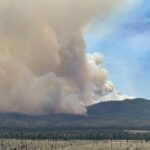
POLICY WIRE — Paris, France — The boulevards of Paris, usually synonymous with temperate strolls and nuanced dissent, have been baking under a sun that feels utterly alien. It’s a heat, frankly, that simply shouldn’t be here, not like this. What was once the predictable hum of a European summer has mutated into a menacing symphony of stifling humidity and searing asphalt—a brutal irony when you consider the sheer, sudden violence of the storms that now seem to follow.
Because while France scrambles to cool down its historically un-air-conditioned urban centers, thousands of miles away, Paraguay is navigating a terrifying one-two punch. First, scorching droughts that turn verdant fields to tinder. Then, without much warning, cyclonic deluges that transform those parched lands into treacherous waterways. They’re facing, simultaneously, the desert and the flood, a climatic chaos that suggests Mother Nature’s not just angry, she’s forgotten her meds entirely. And it’s making policymakers everywhere rethink, well, everything.
“We’re seeing patterns that defy our historical models, truly,” lamented Isabelle Dupont, Chief Meteorologist for Météo-France, her voice strained during a recent press conference. “The speed at which these anomalies are becoming our baseline is – it’s frankly alarming. Our infrastructure, our public health systems, even our agricultural practices—they weren’t built for this. We’re in a constant state of catch-up, and people are exhausted.” She isn’t kidding; hospitals across the south of France are reporting a significant uptick in heatstroke and respiratory issues. It’s no longer an abstract worry; it’s a packed emergency room.
But the South American nation of Paraguay faces a more existential dread. Its economy leans heavily on agriculture, particularly soybeans — and beef. You don’t need an economics degree to know that droughts followed by floods don’t exactly make for banner harvests. The farmers there are resilient, they always have been, but even their collective grit has its limits. Dr. Luis Rojas, Director of Paraguay’s National Emergency Secretariat, painted a bleak picture. “Our rural communities, they’re paying the highest price,” he told us, gesturing expansively over a map riddled with red pins marking flood-affected areas. “We lack the robust early warning systems, the resilient housing, the emergency funds. It’s a systemic vulnerability colliding with unprecedented extremes. We can’t just react; we have to re-engineer how we live, or we won’t live much at all.”
This climate whiplash, from scorching dry to sudden deluge, isn’t unique to these two seemingly disparate nations. Far from it. It’s a preview, a global dress rehearsal. And in some ways, regions like South Asia have been running this brutal show for years. Think Pakistan, where farmers, generation after generation, have diced with the whims of the monsoon. But those monsoons, just like Europe’s summers, are becoming increasingly capricious—either failing to arrive, triggering devastating droughts, or dumping biblical amounts of water, leading to cataclysmic floods that wipe out entire villages and agricultural seasons. It’s the same brutal economic arithmetic, just different continents.
📄 POLICY WIRE WHITEPAPER PUBLISHED: PAKISTAN'S NATIONAL SECURITY POLICY PRIORITIES
👉 READ BY CLICKING HEREAccording to the latest UN Climate Report from 2023, the global frequency of extreme heat days has surged by over 40% in the last two decades alone, accelerating faster than projected a mere five years ago. And those numbers don’t even fully capture the compounding effect when extreme heat combines with high humidity, making ‘feels like’ temperatures far more dangerous than simple thermometer readings. This isn’t just about degrees; it’s about livelihood, human survival, — and indeed, political stability.
What This Means
The convergence of heat and hyper-storms isn’t merely a meteorological phenomenon; it’s a profound shake-up for governance and global economics. Politically, leaders in countries like France face a newly awakened electorate demanding action on climate change, even as the fiscal demands of mitigating and adapting become staggeringly expensive. They’re struggling to balance ambitious targets with the immediate, visceral needs of citizens currently choking on wildfire smoke or evacuating flood zones. For agricultural powerhouses such as Paraguay, the economic implications are more direct — and brutal. Lost harvests translate directly to reduced export revenue, higher food prices internally, and increased pressure on already strained social safety nets. This isn’t just bad weather; it’s national insolvency in the making for some.
It impacts global supply chains, too. A ruined soybean crop in Paraguay, for instance, isn’t just Paraguay’s problem. It’s a hiccup for countless industries — and feedlots across the globe. Similarly, prolonged heatwaves in Europe can crater tourism, impact worker productivity, and strain energy grids already reeling from other geopolitical factors. But more subtly, this accelerating instability drives internal displacement and even—whisper it—climate migration, reshaping demographics and piling pressure on existing urban infrastructure. Who exactly is responsible for the staggering costs? Insurance companies are already bailing from disaster-prone regions, — and national budgets can only stretch so far. The political will required to fund real, systemic resilience often gets diluted by short-term electoral cycles, leaving populations vulnerable. The cost of inaction isn’t just abstract; it’s concrete, and mounting. The old certainties, it turns out, don’t hold much water anymore. Or too much, depending on where you are.