


Azteca: Football’s Shrine, Defying FIFA & Altitude
Dive into the heart of Estadio Azteca, football's unvanquished shrine. Learn how it defies FIFA, challenges players with altitude, and preserves sporting history.

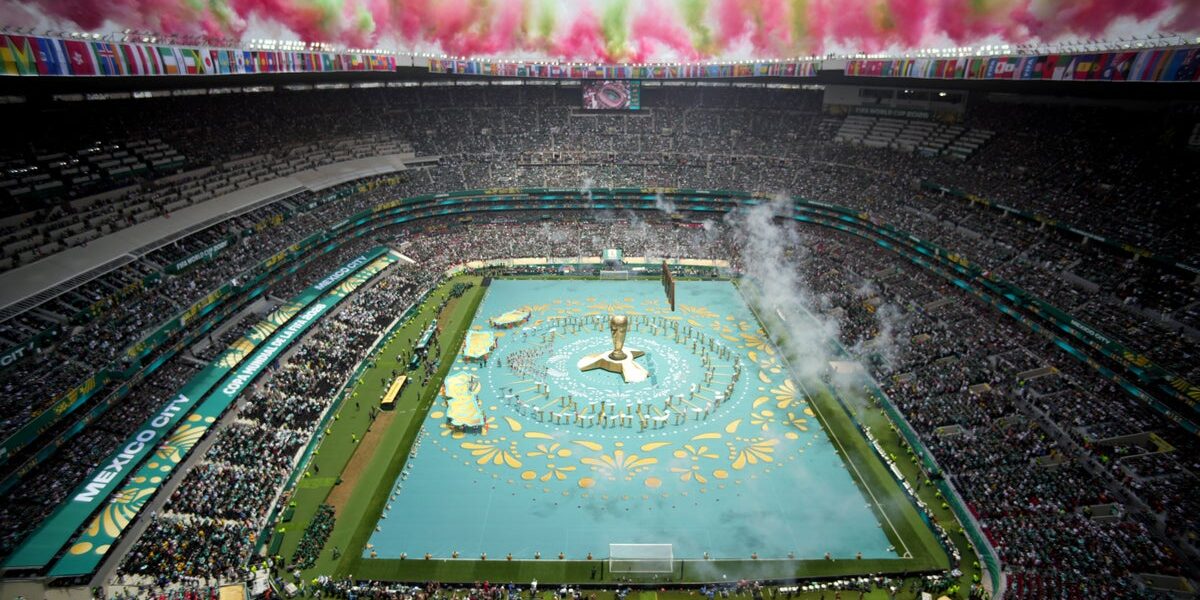
POLICY WIRE — Mexico City, Mexico — FIFA, with its gleaming corporate badges and meticulously printed rulebooks, tried to rename it ‘Mexico City Stadium’. They really did. But some things just don’t bend to branding exercises. The Estadio Azteca, a concrete leviathan perched at a dizzying 2,200 meters above sea level, is one such thing. You can spray-paint new logos on the walls, revamp the press boxes, or even pave over its infamous subterranean dressing rooms, but you can’t erase the indelible ink of history that bleeds from every seam of its brutalist facade.
And that’s precisely what England’s squad — fresh from their trans-Atlantic trek — is walking into for this next World Cup fixture. They’re not just playing Mexico; they’re squaring off against an edifice. A myth. The stadium doesn’t simply hold a game; it participates in it, the thin air and storied ghosts pressing down on every sprint, every misplaced pass. Players here don’t just sweat; they earn their very breath.
It’s here, beneath that iconic arch, that a teenager called Pelé elevated football to art in 1970, lifting his third World Cup, a feat of orchestral brilliance. And it’s here, sixteen years later, that Diego Maradona became both god and devil, sculpting both the ‘Hand of God’ and the ‘Goal of the Century’ against an unfortunate England side. You don’t get moments like that everywhere. This isn’t just a venue; it’s an altar where sporting gods once communed, then promptly etched their legacies in concrete and turf.
For those of us who grew up devouring grainy highlight reels — and yellowed sports pages, the Azteca wasn’t just a place. It was a pilgrimage. It still is. Much like the fervently contested holy sites of Jerusalem or the reverently visited shrines in Pakistan, it’s a spiritual fulcrum for countless millions who see football not just as a game, but as an expression of cultural identity and national pride. For many devotees of the ‘beautiful game’, this hallowed ground – much like Mecca for believers – transcends mere sport, becoming a focal point of collective memory.
Gary Stevens, the former Tottenham Hotspur defender who endured the 1986 tournament here, remembers the claustrophobic calm of the underground changing rooms, then the sudden, blinding eruption into daylight and cacophony. “You were down below pitch level,” he recounted recently. “It was dark — and cool, but then you stepped out into the light and the heat. And the atmosphere. That’s a proper awakening, isn’t it?” And he’s right. That initial ascent from the gloom into the glaring stadium bowl— that’s part of the theatre, part of the challenge. Because everything about this place is an amplified challenge.
FIFA President Gianni Infantino, a man whose relationship with tradition sometimes seems purely transactional, even found himself acknowledging the futility of his organization’s rebranding efforts. “Rules are rules,” he once quipped to a small huddle of journalists, a subtle smirk playing on his lips, “but even I still just call it the Azteca. How could you not?”
Federico Gutiérrez, a long-serving dignitary within Mexico’s football federation, puts it succinctly, his voice resonating with deep, paternal pride. “This stadium,” he told Policy Wire, his gesture encompassing the vast structure during a recent visit, “isn’t ours. It’s the world’s. It belongs to every kid who ever dreamed of a bicycle kick, to every nation that suffered and rejoiced within its walls. We’re simply its current custodians, keeping its light alive.” He’s not wrong. It really is like that.
📄 POLICY WIRE WHITEPAPER PUBLISHED: PAKISTAN'S NATIONAL SECURITY POLICY PRIORITIES
👉 READ BY CLICKING HEREBut the modern footballing landscape, with its glossy new arenas and corporate hospitality suites, has begun to grumble about this relic. The Azteca, you see, isn’t state-of-the-art by today’s metrics. It’s got quirks, — and those sometimes infuriate the meticulously prepared modern athlete. Yet, coaches like England’s Thomas Tuchel, ever the pragmatist, seem genuinely enchanted. “It’s an iconic stadium,” he admitted recently, practically gushing about his childhood memories of watching matches from coffee-table books. “I’m super excited to have this match. It’s an iconic match.”
But excitement and poetry won’t help you much when your lungs are burning a kilometer closer to the heavens than they’re used to. Studies consistently show that playing at high altitude, particularly above 1,500 meters, measurably impacts athletic performance, reducing VO2 max (maximum oxygen uptake) by an average of roughly 8-10% in acclimatized individuals, and significantly more in unacclimatized ones, according to a recent scientific review published by the American College of Sports Medicine. That’s not a romantic notion; it’s a scientific impediment. It demands strategic adaptations. England will find that out quickly.
What This Means
This match isn’t just about qualification; it’s a profound cultural exchange played out on a global stage. For Mexico, the Azteca is an anchor, a testament to national sporting prowess — and a powerful symbol of identity. Its enduring relevance, despite modern criticisms, bolsters Mexico’s soft power, asserting its place at the top table of footballing nations — not through financial might, but through an unrivaled heritage. It’s a point of pride that resonates across Latin America, — and even beyond. It subtly asserts that raw passion and history can, for now, still hold their own against the relentless march of commercialized global sport.
For England, this isn’t just a challenging game; it’s an immersion into the very soul of the sport. Playing here offers an opportunity to connect with football’s mythos, to understand its raw, elemental power, away from the clinical precision of European super-stadiums. But it also serves as a potent diplomatic encounter. How players perform, both physically and psychologically, under the immense pressure of this historical venue will undoubtedly be scrutinized, shaping perceptions not just of their team, but of their footballing philosophy and national temperament.