


Culture Clash: Robotic Elephants Transform Indian Faith
Robotic elephants are replacing sacred pachyderms in Indian temples, sparking a cultural and ethical debate. Explore how technology challenges tradition, faith, and animal welfare.

POLICY WIRE — Thiruvananthapuram, India — The distinct aroma of frankincense and sweat often clings to the air near South Indian temple festivals. It’s usually mingling with the heavier scent of a large, breathing, occasionally cantankerous pachyderm. Not anymore. Because now, alongside the millennia-old rituals — and chanting, you might just catch the faint whirring of hydraulics.
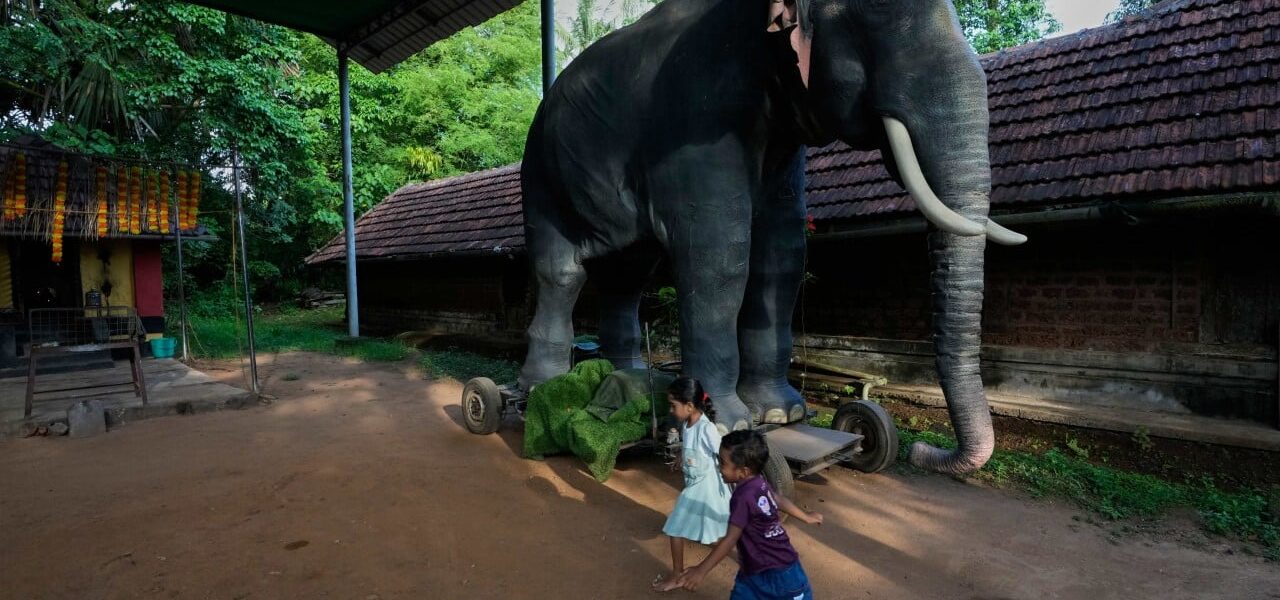
It’s a peculiar thing, watching a robot, expertly clad in silk and gold regalia, mimic the majestic sway of a revered temple elephant. Lifesize, fibreglass, iron, and rubber, these mechanical marvels now grace several temples in Kerala and other Indian states, offering mechanical salutes, flapping synthetic ears, and even squirting water from artificial trunks. They don’t eat. They don’t defecate. And they certainly don’t throw tantrums, or worse, inadvertently trample devotees, which, tragically, happens sometimes with their organic brethren.
The push to mechanize worship — or at least, the props for it — hasn’t emerged from some feverish dystopian vision. Instead, it’s born from a collision of stark realities: increasing animal welfare pressure, exorbitant upkeep costs, and the harsh truth of diminishing wild elephant populations. It’s an inconvenient confluence of piety — and practicality, played out on hallowed grounds. Wildlife SOS, a prominent conservation organization, estimates over 2,670 elephants are currently held captive across India, many in questionable conditions for religious and tourist purposes. This isn’t just about replacing an animal; it’s about re-evaluating an entire, deeply entrenched cultural practice.
But the spiritual implications are thorny. ‘How can a machine embody divinity? The gods manifest through living beings, through the breath of life,’ insists Sri Harichandra Prabhu, a respected priest from Madurai. His tone carries a definite chill. ‘This is not just innovation; it’s an erosion of authentic faith. Our ancestors didn’t pray to circuits — and wires.’
And yet, many religious authorities are openly embracing the change. ‘We aren’t replacing devotion,’ argued Keshavan Nair, Chairman of the Thekke Kavu Temple Board in Palakkad, a temple that recently acquired a robotic elephant named ‘Irinjadapilly Raman.’ His voice, however, rings with more than just spiritual conviction. ‘We’re safeguarding both our traditions — and these magnificent animals. Frankly, a real elephant’s monthly feed, medical care, and mahout wages can easily hit 100,000 rupees (about $1,200 USD). This robot is a one-time investment — and a significant reduction in ethical liability.’
The pragmatic appeal is clear. For temples often running on donation plates and meager endowments, cutting corners on animal care—whether consciously or not—has been a persistent issue. The robots offer a way out, an economic calculus where data, not just devotion, drives decisions. Animal rights activists, of course, are mostly delighted. They’ve been campaigning for decades to free temple elephants, citing documented abuses, neglect, and the sheer psychological torment inflicted on highly intelligent creatures forced into ceremonial duties.
This debate over automation — and sacred animals isn’t strictly confined to India’s Hindu temples, either. Across South Asia and the broader Muslim world, traditional uses of animals—from camel racing in the Gulf, now often using robotic jockeys, to ceremonial uses of horses and even elephants in other cultural parades—are continually being re-examined through both an ethical and technological lens. How much tradition can you strip away before it stops being tradition? That’s a question echoing far beyond the temple walls.
What This Means
The robotic elephant phenomenon in India isn’t merely an eccentric technological novelty; it’s a profound cultural flashpoint with significant political and economic ramifications. Politically, it pits traditionalists against modernizers, religious freedom arguments against animal welfare legislation, and offers the ruling Bharatiya Janata Party (BJP)—often seen as the custodian of Hindu identity—a delicate balancing act. They’ll need to navigate between supporting religious institutions while also projecting a progressive image on animal rights, a global concern. Economically, this creates a niche industry, employing engineers and technicians while potentially displacing mahouts—those hereditary elephant handlers whose livelihoods are tied to the animals. But it also frees up temple funds, theoretically, for maintenance or community projects. Culturally, it’s a vivid demonstration of how even the most ancient practices can be reshaped by technological progress and shifting ethical paradigms. It’s not just a debate about robots; it’s about what constitutes ‘sacred’ in a rapidly secularizing, automating world, and how societies like India grapple with the thorny intersection of faith, fauna, and the future.