

Khamenei Funeral: Iran’s Power Play Unveiled
Witness the profound irony at Iran's Supreme Leader Khamenei's funeral: survivors of his regime lead mourning. Uncover the power plays, political maneuvering, and future of Iran's leadership.

POLICY WIRE — Tehran, Iran — The solemn, days-long public mourning for the late Supreme Leader Ayatollah Ali Khamenei has presented Tehran’s political stage with a peculiar kind of theater. It isn’t just about eulogies or processions; it’s about who shows up, and, more pointedly, who among them managed to survive the very system Khamenei so carefully cultivated. One couldn’t help but notice the old guard, faces etched with years of power and peril, standing shoulder-to-shoulder, ostensibly unified in grief.
It’s a stark tableau, really. These aren’t just functionaries; they’re men who, at various points, navigated purges, political imprisonment—sometimes outright threats to their lives—all within the opaque machinations of the Iranian regime. And now, they’re the ones leading the somber spectacle for the man who, by many accounts, masterminded the very framework that could’ve crushed them. There’s a subtle irony to it, don’t you think? A testament, perhaps, to their own formidable cunning, or merely to the regime’s voracious appetite for expediency over ideological purity when the chips are down.
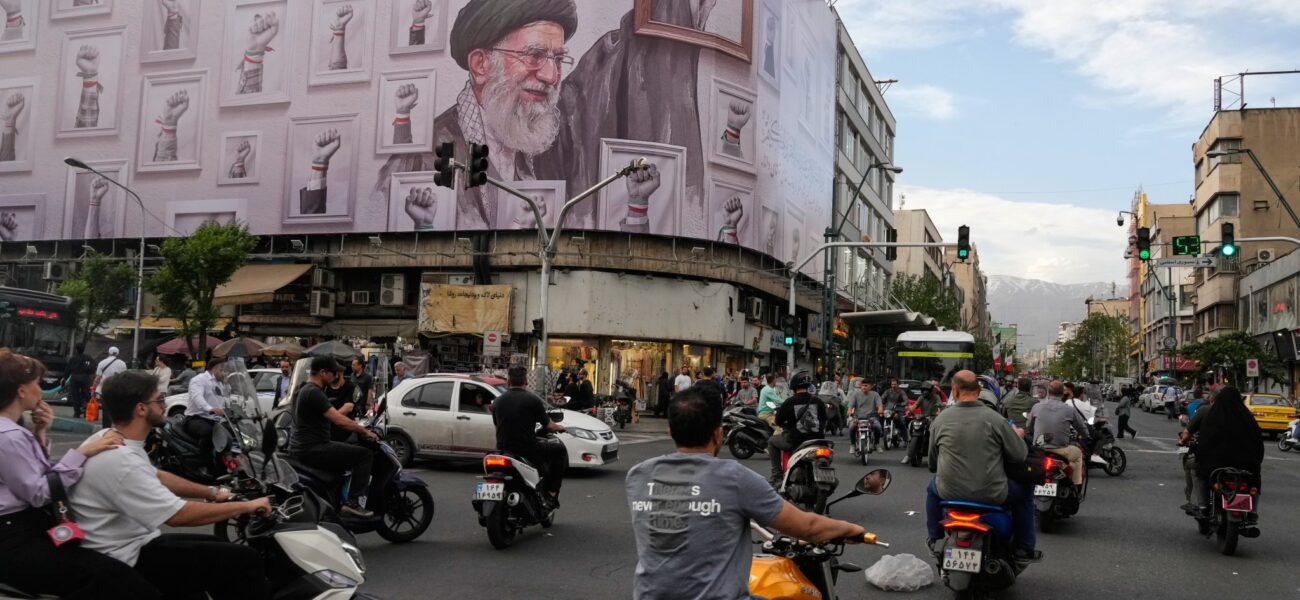
The streets teemed. Not quite the revolutionary fervor of yesteryear, but an orchestrated display of allegiance nonetheless. Thousands gathered, moving through the capital’s main arteries, a sea of black. State media, as expected, beamed wall-to-wall coverage, painting a picture of national sorrow — and unwavering resolve. But beneath the surface, seasoned observers—those who’ve watched this dance for decades—see more. They see calculations. They see positioning. And they definitely see the uncomfortable smiles exchanged between former rivals forced into a temporary truce by the gravity of the occasion.
We’ve seen this kind of managed grief before. The rituals are ingrained, centuries old, but the political undercurrents? They’re always fresh. Because even in death, a supreme leader casts a long shadow, and the fight for who steps into that shadow, or shapes its next form, never truly stops. This isn’t just a funeral; it’s a changing of the guard, or at least a highly theatrical audition for it.
The regime officials present, often stoic, occasionally dabbing eyes that perhaps saw more ghosts than tears, didn’t utter a word beyond what was officially sanctioned. Not publicly, anyway. Yet their very presence spoke volumes. It whispered of grudges buried deep—or perhaps merely dormant. It highlighted the sheer resilience required to endure Iranian revolutionary politics, a game where yesterday’s comrade could well be tomorrow’s disappeared. [QUOTE_PLACEHOLDER]
And so, as the eulogies droned on, detailing Khamenei’s sagacity and leadership, one couldn’t help but ponder the sheer scale of the power apparatus he left behind—a system designed to perpetuate itself, regardless of the individual at its helm. This entire process, drawn out for days, is meant to cement stability. It’s meant to project strength. It’s meant to tell the world, and indeed its own citizens, that all is well, the transition is seamless, the ship steady. Never mind the underlying tectonic plates that are always, perpetually shifting.
Think about the implications across the wider Muslim world. The succession in Tehran isn’t just an internal Iranian affair; it sends ripples. Pakistan, for instance, a nation grappling with its own intricate power dynamics and a youthful population yearning for opportunity, watches closely. The stability (or perceived instability) of its neighbor—an ideological powerhouse for Shia Muslims—holds weight. Data from the World Economic Forum, for example, indicated that over 64% of Pakistan’s population is under 30 years old, a demographic bulge that will undeniably be watching how Iran’s old guard handles this transition and whether it offers any pathways to reform or continues its well-worn path. It’s about more than borders; it’s about precedents.
📄 POLICY WIRE WHITEPAPER PUBLISHED: PAKISTAN'S NATIONAL SECURITY POLICY PRIORITIES
👉 READ BY CLICKING HEREBut back in Tehran, it’s a delicate performance. These aren’t easy smiles. They’re calculated grins of survival, proof positive of navigating an ideological minefield without triggering its lethal charge. They’ve outlasted a lot. And for some, you’ve got to figure there’s a perverse satisfaction in attending the final act of a man who held so much sway over their destinies, for better or worse.
What This Means
The extended, public mourning period in Iran for Supreme Leader Khamenei, especially with the prominent attendance of veteran regime officials—many of whom had faced political eclipse or worse under his lengthy tenure—isn’t merely a display of sorrow; it’s a carefully staged political affirmation. Economically, this elaborate charade aims to signal continuity and predictability to both domestic and international actors, even as deep uncertainties simmer beneath the surface regarding the succession. Any perceived cracks in the façade could trigger capital flight or further depress an already beleaguered economy struggling under sanctions.
Politically, the presence of these ‘survivors’ subtly reinforces the idea that the system itself is more resilient than any single individual, including the late leader. It’s a pragmatic message that adaptability, however ruthless, is valued. The underlying political implication is that while personalities might change, the ideological bedrock remains—at least on the surface. This period will be less about grief and more about consolidating power among key factions, setting the stage for who truly wields influence in the coming years. We’re looking at a carefully choreographed pas de deux between public mourning — and private jockeying. Expect a period of quiet, intense negotiation behind closed doors. The actual mechanisms of control remain robust; the question is whose hands they’ll ultimately rest in. We’ve seen similar internal maneuvers in places like Pakistan when leaders transition, though Iran’s unique clerical-military state adds a distinct layer of complexity, often shrouded in religious rhetoric.
The spectacle of ‘survivors’ saluting the deceased underscores a certain hard-nosed political realism, where past ideological purity or personal animosity takes a backseat to collective regime preservation. It’s a message that for better or worse, the state will endure, and those who know how to play its long game will, inevitably, persist. Like Chicagoland’s political apparatchiks, these Iranian figures know the art of resurgence and strategic alliance. The long shadow of the Supreme Leader persists, but its future contours are very much up for grabs.