


New Ghost Shark: Deep Sea Discovery & Global Policy
Costa Rica's ghost shark discovery highlights vast unknown oceans. Learn why this deep-sea find demands urgent global policy, exploration, and resource management.

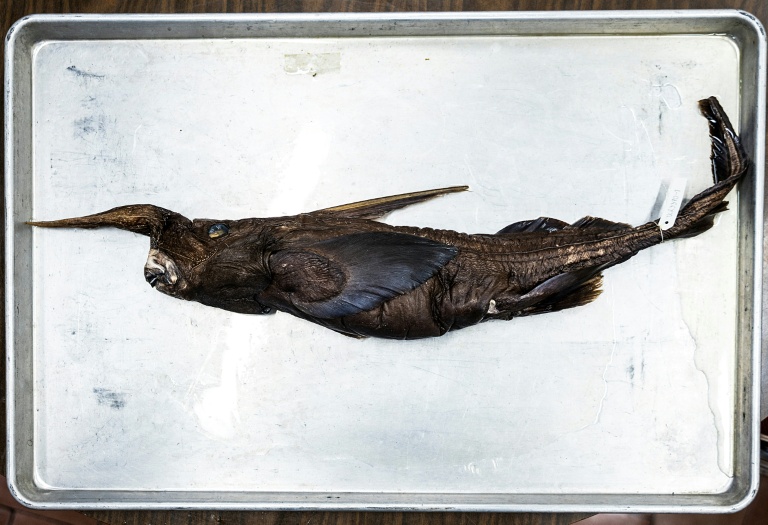
POLICY WIRE — San José, Costa Rica — For all our high-definition screens and instantaneous global communication, most of this blue planet remains shrouded in cold, crushing mystery. Humanity—you know, the clever folks who send probes past Pluto and invent algorithms—still know astonishingly little about the vast majority of our oceans, especially their deep, dark guts. And yet, every now — and then, the abyss deigns to offer a glimpse, a fleeting moment that rattles our complacency. Just like the recent whisper of a new ghost shark species, possibly lurking in the deep waters off Costa Rica, which has suddenly put the spotlight back on exploration’s forgotten frontier.
It’s not some headline-grabbing, toothy monster from the latest blockbuster—this isn’t Jaws. But don’t you see, this creature, a chimaera, an ancient lineage typically dwelling in abyssal plains, carries more weight than its spectral name suggests. Its mere presence (or potential presence) is a stark, almost ironic reminder of how much lies beneath, waiting, and what that absence of knowledge means for actual policy and budgets. We’re still busy arguing about borders up top while entire, intricate worlds swirl below, unseen.
This potential discovery, arising from an exploratory expedition that sampled some of the Pacific’s deeper stretches, hasn’t just titillated marine biologists. No, it’s stirring up much bigger currents for those who squint at geopolitical maps — and budgetary allocations. Think about it. We’ve poured billions into space exploration, but the seabed? That’s often an afterthought. Experts from institutions like the Scripps Institution of Oceanography, for instance, frequently note that roughly 80% of Earth’s ocean floor remains unmapped with modern sonar technology—a stark figure highlighting our geographical blind spots, published widely in journals like Nature Geoscience.
And, if you’re looking at it from a pure economic standpoint, especially for coastal nations, this lack of basic charting is frankly appalling. Nations, including those like Pakistan, with extensive coastlines along the Arabian Sea, rely on marine ecosystems, directly or indirectly. Fishing industries, shipping lanes, — and now, increasingly, potential deep-sea mining. It’s not just a quaint scientific footnote—it’s about knowing your territory, what resources lie there, and what delicate balances you’re messing with.
The scientists involved, from groups such as the Monterey Bay Aquarium Research Institute (MBARI), utilized sophisticated remotely operated vehicles, or ROVs. This isn’t just someone dropping a line over the side. These expeditions are costly, technically demanding operations that scrape at the very edges of our engineering know-how. And the visual evidence, a unique combination of physical characteristics, points strongly towards something previously undocumented. They’ve essentially said, [QUOTE_PLACEHOLDER] when describing the finding, — and also mentioned, [QUOTE_PLACEHOLDER]. They’re taking samples, analyzing genetics—you know, the whole nine yards to formally identify and name the thing.
But this is where it gets real for policy makers. Such finds trigger a fresh round of discussions. What are the economic implications of preserving these habitats versus exploiting potential deep-sea resources? Because, let’s be blunt, nations are hungry for rare earth metals — and other minerals. This newfound ghost shark, if confirmed, instantly becomes a sort of watery poster child for unknown biodiversity that could be steamrolled before we even understand its role in its ecosystem.
And who funds this exploration? Often, it’s a mix of government grants — and philanthropic organizations. But shouldn’t nations with vested interests, particularly those with aspirations for Blue Economy expansion like Bangladesh or the Sultanate of Oman, be pooling resources for comprehensive mapping and discovery efforts? This isn’t charity; it’s an investment in understanding global resources — and climate dynamics.
📄 POLICY WIRE WHITEPAPER PUBLISHED: PAKISTAN'S NATIONAL SECURITY POLICY PRIORITIES
👉 READ BY CLICKING HEREFor nations grappling with immediate socioeconomic pressures, the allure of distant, unseen deep-sea creatures can feel rather detached. But they shouldn’t mistake distance for irrelevance. Pakistan, for example, faces rising sea levels impacting its coastline, with saltwater intrusion threatening agricultural land—it’s not merely a theoretical threat. And global oceanic health, even thousands of miles away, has a cumulative effect. The deep ocean’s health contributes to global climate regulation. If we don’t even know what’s down there, how do we regulate anything responsibly? Or, to put it more precisely, how do you manage resources you haven’t bothered to catalogue?
Because ultimately, these discoveries are a test of our collective resolve. It’s about recognizing that exploration isn’t some niche hobby for eccentrics; it’s fundamental to global resource management and environmental stewardship. When a creature like a ghost shark surfaces (metaphorically speaking), it holds up a mirror, reflecting our own blind spots—both scientific and, more awkwardly, political. Policy-wise, ignoring such things isn’t really an option, is it? We need frameworks that go beyond continental shelves, that address the truly global commons of the abyssal plains.
What This Means
This discovery—even as a probable or potential find—sends ripples far beyond marine biology journals. Politically, it reopens the uncomfortable discussion about deep-sea mining and the inadequacy of current international regulatory bodies like the International Seabed Authority (ISA). If new species, especially those with such evolutionary antiquity, are routinely found in areas targeted for mineral extraction, the ethical and environmental dilemmas intensify significantly. It begs the question: are we prioritizing short-term economic gain over irreversible biodiversity loss in environments we barely comprehend?
Economically, for developing coastal nations, including those across South Asia and the Muslim world (like Indonesia, Malaysia, or Saudi Arabia), an emphasis on deep-sea biodiversity research, rather than just resource extraction, presents an opportunity. Establishing a robust scientific presence in oceanography can bolster diplomatic standing, attract research funding, and, more practically, provide data essential for sustainable fishing practices or climate change mitigation. It isn’t merely about protecting some weird fish; it’s about understanding the intricate web of oceanic health that directly impacts fisheries, tourism, and even atmospheric carbon cycles. Governments must invest more deliberately in these uncharted territories, perhaps even through regional collaboratives, fostering what one could call ‘oceanic diplomacy’ (and shared infrastructure development), much like the conversations sparked by states wading into geopolitics in other domains. It’s an urgent plea from the deep for strategic foresightedness on global environmental policy.