


Ghost Shark: Deep-Sea Secrets & Geopolitical Stakes
A new ghost shark off Costa Rica unveils deep-sea secrets, sparking geopolitical debates over uncharted waters, mineral resources, and urgent global governance.

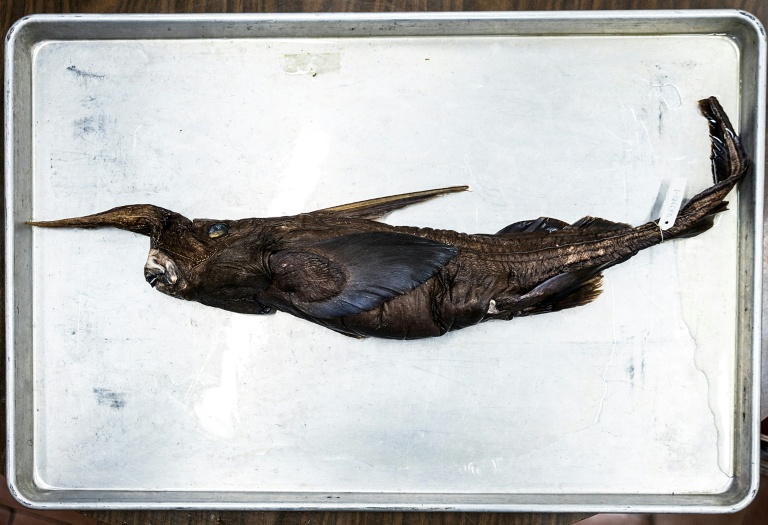
POLICY WIRE — San José, Costa Rica — Sometimes, the planet coughs up a secret so strange, so otherworldly, you’d think it a refugee from a fever dream. A shimmering, gelatinous creature with oversized eyes and fins like wings, drifting through the inky abyss off Costa Rica’s Pacific coast—scientists reckon they’ve snagged what might be a brand-spanking-new species of ghost shark. It’s not merely a cool biological find; it’s a cold splash of reality about what we still don’t grasp of our own world, and the messy, policy-heavy questions these discoveries inevitably drag into the light.
It was caught as a juvenile, meaning it was small. And its deep-sea dwelling (we’re talking trenches here, thousands of feet down) makes this less of a casual swim-by and more of a peek into a realm scientists know little about. Chimaeras, or ghost sharks, they’re old. Very, very old—evolutionary lineages dating back hundreds of millions of years. Living fossils, some call ’em. Their presence, largely untouched by the sun’s warm gaze, raises an eyebrow, doesn’t it? What else lurks down there? What resources? And who, pray tell, actually owns it?
“Every time our submersibles penetrate these frontiers, we come back with something truly astonishing,” remarked Dr. Elena Rodríguez, a senior marine biologist at the University of Costa Rica. Her voice, typically calm, held a discernible current of excitement. “This particular specimen—its morphological characteristics are unique. It’s an invitation, really, to rethink the very boundaries of our known biodiversity, and maybe, just maybe, how we’re guarding it. We’ve barely scratched the surface, — and frankly, that’s both exhilarating and terrifying.”
It’s not just marine biology departments buzzing, mind you. Policy analysts — and international law gurus are taking notes too. The find, deep within international waters (though proximity to a nation’s Exclusive Economic Zone always adds spice), brings fresh attention to the deep sea’s still largely undefined jurisdiction. Less than 20% of the global seafloor has been adequately mapped, according to data compiled by organizations like the General Bathymetric Chart of the Oceans (GEBCO) and The Nippon Foundation. That’s a heck of a lot of real estate operating under a ‘finders keepers’ ethos, unofficially at least.
Because that vast, black expanse isn’t just home to odd fish. It holds ungodly amounts of minerals—rare earths, manganese nodules, polymetallic sulfides. China’s been aggressive in its deep-sea exploration permits. Russia’s got eyes down there. Even tiny island nations eye these potential riches, seeing a future beyond dwindling fish stocks. But what happens when exploration for manganese leads to a wrecking ball in the nursery of creatures unknown, a veritable marine Shangri-La we’d never even knew existed?
📄 POLICY WIRE WHITEPAPER PUBLISHED: PAKISTAN'S NATIONAL SECURITY POLICY PRIORITIES
👉 READ BY CLICKING HERE“The developing world, especially coastal nations in regions like South Asia and the Arabian Peninsula, has a vested interest in these discussions,” explained Ambassador Tariq Ahmed, Pakistan’s Environmental Attaché to the United Nations, speaking from a climate conference sidelines. “The principle of the Common Heritage of Mankind—it sounds grand, doesn’t it? But practical enforcement in the deep seabed is murky at best. Nations like Pakistan, reliant on our marine ecosystems for sustenance and commerce, advocate for clear, equitable, and sustainable regulatory frameworks before commercial deep-sea mining becomes an unstoppable industrial reality. We need global governance here, not a free-for-all.”
This little ghost shark, if confirmed as a new species, isn’t just another pretty (or spooky) face. It’s a compelling, gelatinous argument against reckless exploitation. Every discovery chips away at the ignorance surrounding these critical ecosystems. It presents scientific clout to arguments made by conservationists and nations pushing for stronger protections for areas Beyond National Jurisdiction. The implications stretch far past oceanography labs, influencing how countries view the distribution of future resources and the very definition of ‘global commons.’
What This Means
The alleged discovery of a novel deep-sea chimaera off Costa Rica serves as a potent, if silent, reminder of the global scramble for the last untamed frontiers. It’s not about the shark itself, but what its home represents: uncharted territory brimming with both unimaginable biodiversity and sought-after minerals. Politically, this reinforces the urgent need for a more robust, internationally agreed-upon framework for deep-sea resource governance, an ongoing contentious issue within UN circles. Developed nations with advanced deep-sea technology have a de facto advantage, creating an equity gap that poorer, often resource-rich countries deeply resent. Economically, while commercial deep-sea mining is still nascent, such discoveries complicate its narrative. They introduce a hefty conservation cost and the specter of irreversible environmental damage, potentially increasing the regulatory hurdles and operational expenses for companies eyeing the seafloor’s metallic bounty. It’s an escalating tug-of-war between extraction and preservation, all playing out thousands of feet below where we can see. This Costa Rican anomaly—its very existence—might just galvanize the push for comprehensive, preventative regulation before we awaken something we can’t put back in its dark, cold bottle. And don’t forget the tourism potential; Costa Rica already cashes in on ecotourism. A creature so bizarre, even if seen only through remotely operated vehicles, could be yet another draw to its marine biodiversity.