


Kenya’s Education Crisis: Climate Change’s Silent Toll
Kenya's classrooms are emptying due to climate change. Pastoralist families prioritize survival, leading to a silent education crisis threatening a generation.

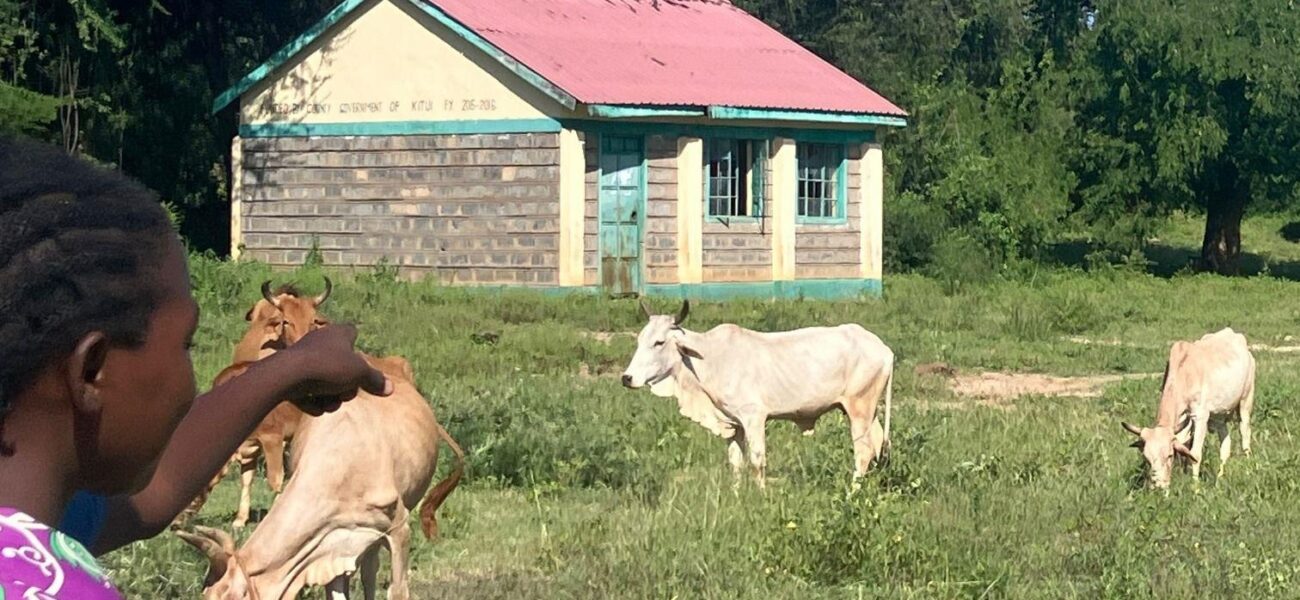
POLICY WIRE — NAIROBI, Kenya — The wind howls through what used to be a classroom window. Inside, dust motes dance in stray sunbeams, illuminating silent blackboards — and cobwebbed desks. No joyful cacophony of children reciting their lessons here; only the distant, mournful lowing of cattle—more numerous, it often seems, than the pupils themselves. This isn’t just a scene from one desolate Kenyan school, but an emerging reality across the nation’s arid and semi-arid lands (ASALs), where classrooms are closing down at an alarming clip, leaving behind ghost towns of learning.
It’s not some abstract educational policy debate that’s emptying these schools. No, it’s far grittier than that. It’s the relentless grind of climate change—the prolonged droughts, the unpredictable rains, the desperation that sends pastoralist families on a ceaseless hunt for water and grazing land. When your survival hinges on chasing every last blade of grass for your livestock, formal education quickly becomes a luxury few can afford, or frankly, even see the point of.
And let’s be real, who can blame them? Generations of tradition clash head-on with modern curricula. “Our cattle are our banks, our lifeline, our very identity,” says Abdullahi Mohamed, a community elder from Wajir County, his voice raspy from years of desert sun. “Schools don’t teach them how to find water, or what to do when the rains don’t come. That’s real education. What use is a diploma if your family starves?” It’s a harsh calculation, but an undeniable one when drought turns fertile lands into dust bowls. That’s how folks here operate, they’ve got to.
Because of these shifting realities, children, particularly boys, are often pulled from school to help with herding, sometimes traveling hundreds of kilometers. Girls, meanwhile, are disproportionately affected too, often kept home to manage households or married off younger as families struggle to cope with economic shocks. Over the past five years, school enrollment in Kenya’s arid and semi-arid lands (ASALs) has dropped by nearly 30% in some districts, according to figures released by the Ministry of Education. It’s not just a drop; it’s a cascade, threatening to wipe out an entire generation’s chance at literacy and opportunities beyond the herding life.
The Ministry of Education acknowledges the issue, though sometimes it feels like they’re shouting into the desert wind. Cabinet Secretary for Education, Ezekiel Machogu, put on a brave face recently, stating, “We’re not giving up on these children. We’re exploring flexible learning models, mobile schools, but you can’t teach a hungry child, or one who’s hundreds of miles away chasing grass and water. It’s an immense, multi-faceted challenge, certainly one that keeps me up at night.” It’s the usual official line, full of good intentions but perhaps lacking the logistical muscle to truly turn the tide in such vast, sparsely populated areas.
📄 POLICY WIRE WHITEPAPER PUBLISHED: PAKISTAN'S NATIONAL SECURITY POLICY PRIORITIES
👉 READ BY CLICKING HEREThe situation in Kenya isn’t unique. It’s a recurring nightmare played out in arid zones from the Sahel to Balochistan in Pakistan, where nomadic and pastoralist communities grapple with climate change, traditional values, and the sometimes-stark irrelevance of conventional schooling. These regions, often Muslim-majority, face similar challenges in integrating modern education without eroding cultural identity or exacerbating economic vulnerabilities. The fight against climate change and for educational access, it seems, isn’t just about emissions and textbooks—it’s about deeply personal choices for survival. You can read more about how similar pressures shape education in developing nations in Hoofbeats Over Homework: Empty Classrooms Echo Kenya’s Arid Future. And it forces us to rethink what ‘development’ truly means when people are simply trying to make it to the next day.
What This Means
The accelerating abandonment of formal schooling in Kenya’s ASALs isn’t merely an educational statistic; it’s a flashing red light for national stability and long-term development. Politically, it signals a widening disconnect between Nairobi’s policy objectives and the on-the-ground realities of its most marginalized citizens. If the government can’t deliver basic services like education, trust erodes, paving the way for political disenfranchisement and, potentially, even greater instability in these already volatile regions. Because neglected populations are easily swayed, aren’t they?
Economically, the impact is dire. A poorly educated populace remains trapped in subsistence cycles, unable to contribute to a diversifying national economy or adapt to new agricultural methods. This perpetuates a vicious cycle of poverty and resource dependence, creating pockets of vulnerability that act as a drag on the nation’s overall growth. It means fewer skilled workers, less innovation, — and a growing dependency on humanitarian aid in recurring crises. On a human level, it condemns a generation to a future with severely limited options, impacting everything from health outcomes to participation in governance. The silence in those classrooms, you see, speaks volumes about a future that’s slipping away.