


Florida’s Foreign Policy: State Designates Terrorists
Florida's latest move: a state designating alleged terrorist organizations. Uncover the controversial impact on civil liberties, businesses, and federal foreign policy.

POLICY WIRE — Tallahassee, Florida — It’s a curious dance, isn’t it, when local politics decides to play dress-up as foreign policy? Not with ambassadors or treaties, mind you, but with press conferences — and the muscular arm of state law. A state capital, a fair distance from actual theaters of geopolitical contention, is now positioning itself to designate—and by extension, presumably, contend with—a list of alleged terrorist organizations. You might scratch your head; it’s an unusual approach, certainly, a state attempting to stamp its authority on global issues that usually fall squarely in Washington’s purview. But here we’re.
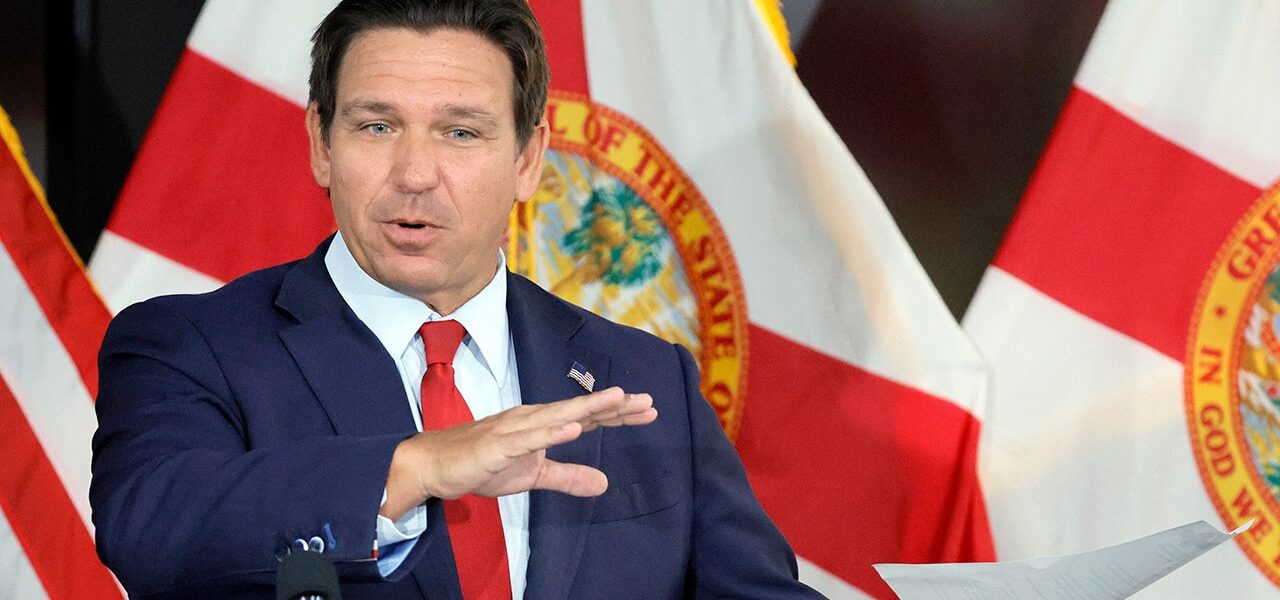
Florida’s Governor, a man not exactly shy about making a statement, recently rolled out plans to wield a new state statute. This legislation, born of recent political currents, apparently empowers the Sunshine State to unilaterally identify and target organizations it deems complicit in terrorist activities. We’re not talking about petty criminals or even domestic extremist cells here. The scope, we hear, is vast—dozens of alleged terrorist groups are supposedly on the docket. That’s a lot of targets for a state bureaucracy to take aim at, frankly, a roster long enough to make the State Department blush.
And what’s the immediate consequence, you ask? Well, it’s not just about a label, is it? State officials reportedly outlined a multi-pronged offensive. We’re looking at, [QUOTE_PLACEHOLDER], — and the law aims to [QUOTE_PLACEHOLDER]. They’re talking about freezing assets—if any are found within Florida’s jurisdiction—and perhaps even preventing companies associated with these groups, however loosely, from operating within the state. It’s an assertive, almost performative, demonstration of power, pushing boundaries where state authority typically hasn’t dared to tread.
The Governor, always keen to project a strong stance on such matters, [QUOTE_PLACEHOLDER] during his announcement. His administration asserts that these measures are essential to protecting state residents and preventing the flow of resources to nefarious actors, wherever they might lurk. Critics, though, aren’t exactly lining up to applaud. Civil liberties advocates, as you’d expect, have quickly raised alarms. They worry about due process—the constitutional niceties, you know—and the very real possibility of unintended consequences. Misidentifications are a real concern when you’re dealing with such broad brushstrokes. And the risk of stigmatizing entire communities? That’s a significant worry, especially when you’re naming groups that might have a wide range of affiliations or historical contexts.
Because let’s be honest, the line between political activism and terrorism often gets mighty blurry depending on who’s drawing it. And states aren’t generally equipped to manage the intelligence gathering and diplomatic complexities inherent in these designations. They don’t have the same foreign intelligence apparatus or the global diplomatic corps that the federal government does. It’s a bit like a community theater troop deciding to stage a grand opera, complete with pyrotechnics. Ambitious, yes. But also potentially a touch unwieldy.
📄 POLICY WIRE WHITEPAPER PUBLISHED: PAKISTAN'S NATIONAL SECURITY POLICY PRIORITIES
👉 READ BY CLICKING HEREThe implications, even at a state level, ripple far. For instance, consider the potential effects on diaspora communities—Pakistani-Americans, other South Asian groups, or various Muslim communities across the state and beyond. If a group with tangential connections to certain ethno-religious populations abroad is designated, it’s not hard to imagine a chilling effect on legitimate advocacy or humanitarian work here at home. This isn’t just theoretical; communities often become targets of suspicion when vague or broad state actions are taken against internationally oriented entities. For instance, a 2021 study from the Council on American-Islamic Relations (CAIR) reported that incidents of Islamophobia in the United States increased by 9% from the previous year, highlighting the fragility of community relations when certain narratives gain traction.
This Florida initiative isn’t occurring in a vacuum. It’s part of a broader, more national conversation about security — and sovereignty. But a state stepping into this particular arena—it just feels different. The rationale provided is straightforward: [QUOTE_PLACEHOLDER]. And to be fair, who doesn’t want to keep their state safe? But the execution? That’s where the trouble usually starts, isn’t it?
What This Means
Politically, this is classic positioning, a robust play to a specific voter base that appreciates strong, decisive action against perceived threats. The Governor gets to look tough, to look proactive, especially with the 2024 political cycle looming large. It burnishes his anti-woke credentials and his ‘America First’ brand—even when that America is confined to a peninsula. Economically, however, it’s a murky pool. Unilateral state actions in a sphere usually reserved for federal government could create headaches for businesses that operate internationally, or those simply trying to navigate complex global supply chains and financial regulations. It adds a layer of unpredictable risk that corporations usually prefer to avoid. it risks a diplomatic fracas, not just with foreign nations that might disagree with Florida’s designations, but also with Washington. Imagine the federal government’s frustration when a state decision impacts sensitive international negotiations or national security strategies. It could, quite easily, complicate federal efforts to manage global alliances and rivalries, turning what should be a coherent national posture into a cacophony of competing jurisdictions. The Governor’s move is, in essence, a challenge—not just to alleged terrorists, but to the traditional understanding of federal authority in foreign affairs. How that challenge will be met, either legally or politically, remains an open question. It’s certainly a bold gamble, with an equally bold potential for blowback, both at home — and abroad.