


New Americans: Silent Journeys to US Citizenship
POLICY WIRE reveals the quiet triumph of new American citizens in Albuquerque. Amidst political debates, 49 individuals complete their decade-long journeys to citizenship.

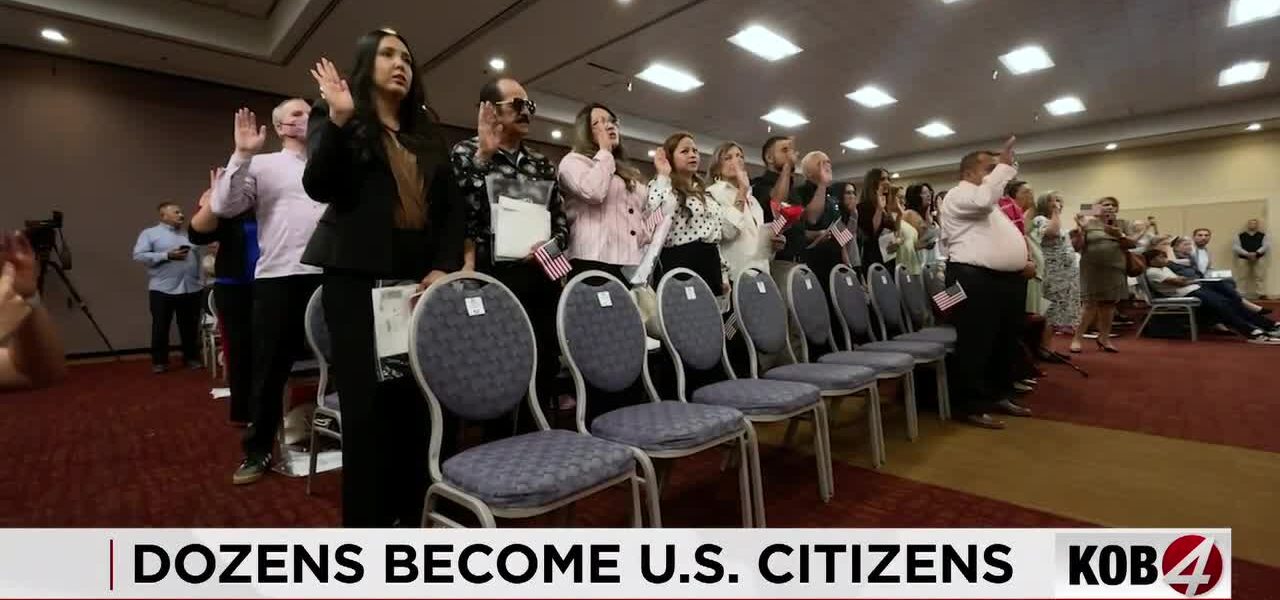
POLICY WIRE — Albuquerque, N.M. — While political machines grind through another contentious election cycle, trading barbs over border policies and national identity, a quieter, yet profoundly significant drama unfolded recently in New Mexico. No grand pronouncements, no fiery debates—just 49 people, a few dozen individuals really, taking an oath in Albuquerque. This wasn’t some minor footnote; it marked the culmination of entire lives reshaped, a generation of waiting. And it happened right as the country approached its 250th birthday, a neat bit of historical symmetry that probably wasn’t lost on a soul in that room.
It’s easy to miss, you know, when the news cycle moves at the speed of light. But this ritual, playing out in an Albuquerque Convention Center hall, is the gritty reality of what the immigration system is about—individual journeys, often fraught with unimaginable challenges. These folks, from 14 different corners of the globe, closed the book on years of effort. They came, they stayed, they persevered. And now, they’re American citizens.
Lluvia Damaris Gutierrez Lopez, a woman now in her mid-twenties, put it rather starkly. “It means the world to me,” she shared, the weight of a decade etched into those five words. Her odyssey started young. “I finally made it after 10 long years. I first started when I was 16, the whole process. Now I’m 26 and I’m a citizen.” A common story, really—the decade-long slog, the paperwork piled high, the tests, the waiting. It’s not just a walk through the park; it’s a marathon across arid land.
And for Gutierrez Lopez, America wasn’t a choice made as an adult. It was simply… home. “I wanted to become a citizen because I’ve been here since I was one year old. This is my home, this is all I know,” she confessed. It’s hard to argue with that kind of innate connection. Her parents, who’d made the harrowing journey from Juarez, Mexico, also witnessed their enduring hope come to fruition. She explained: “My parents’ dreams were finally completed, all their hard work getting over here, and then me being able to accomplish everything to be here a citizen,” That’s an inheritance of resilience, plain — and simple.
U.S. District Judge David Urias, presiding over the ceremony, touched on this arbitrary nature of fate. He observed, [QUOTE_PLACEHOLDER] A poignant thought, one that forces a moment of reflection. The simple lottery of birth—it’s not a meritocracy.
Gutierrez Lopez admitted she used to talk more openly about her journey. But these days? Not so much. There’s an undeniable chill in the air, a sense of caution that wasn’t there before. “I try to keep it down just because everything that’s happening. But soon as I got in here and saw all our fellow new citizens, they were so proud of their country. And then when Mexico’s name was called up,” she recounted. Then, a raw, unscripted surge of pride: “Oh that’s the proudest moment that I was, oh do you say wave my American flag to the Mexico name,” she said.
This process—blood tests, background checks, exams, years of quiet anxiety—isn’t for the faint of heart. It grinds you down. But then, it offers this kind of jubilation. “It is possible to get your dream, 10 long years, and I finally got mine,” she declared. Her sister — and parents are also citizens now. Her brother’s next, perhaps next year. Family’s important; it’s the bedrock of so many things.
📄 POLICY WIRE WHITEPAPER PUBLISHED: PAKISTAN'S NATIONAL SECURITY POLICY PRIORITIES
👉 READ BY CLICKING HEREData from the U.S. Citizenship and Immigration Services (USCIS) confirms this enduring aspiration: in fiscal year 2022, more than 970,000 individuals naturalized across the United States. Many arrive from nations like Pakistan, where socioeconomic mobility and political stability often prove elusive, viewing America not just as a land of opportunity but sometimes a harbor from turmoil. The narrative playing out in Albuquerque is replicated daily, city after city, bringing in talent, drive, and diverse perspectives that ultimately strengthen the whole.
What This Means
The quiet procession of new citizens in Albuquerque, contrasted with the cacophony of political discourse, really shows us a few things. First, America, for all its current existential angst, remains a magnet. It’s a place people will dedicate a decade of their lives to reach, navigating Byzantine bureaucracy and a not-always-welcoming public sentiment. And because it’s such a diverse group of immigrants—those 14 countries in New Mexico hint at the global spread—the implications are far-reaching. You see people from various walks, backgrounds, and faith traditions, including those from Muslim-majority countries, like Pakistan, making these sacrifices.
From an economic standpoint, these aren’t just statistics; they’re consumers, taxpayers, entrepreneurs. They’re filling gaps, contributing to social safety nets. This isn’t a zero-sum game, despite what some loud voices would have us believe. Politically, every naturalized citizen is a new voter, a new voice shaping the electorate, bringing their unique experiences to bear on policy debates—potentially altering the calculus of future elections. But there’s also the very real human element: people seeking stability, a future for their kids, a chance to live without constant fear. That’s a powerful driver, something beyond quarterly earnings or poll numbers. This slow, steady integration—often painful and certainly not seamless—is the engine of continuous reinvention for the U.S. It just doesn’t make for flashy headlines until someone, like Ms. Gutierrez Lopez, articulates that long road. But, boy, it’s there, bubbling under the surface.