

Albuquerque Oath: Redefining American Identity
In Albuquerque, 49 new citizens earned their American identity, offering a powerful counter-narrative to immigration debates. Discover their decade-long journeys and the future they shape.

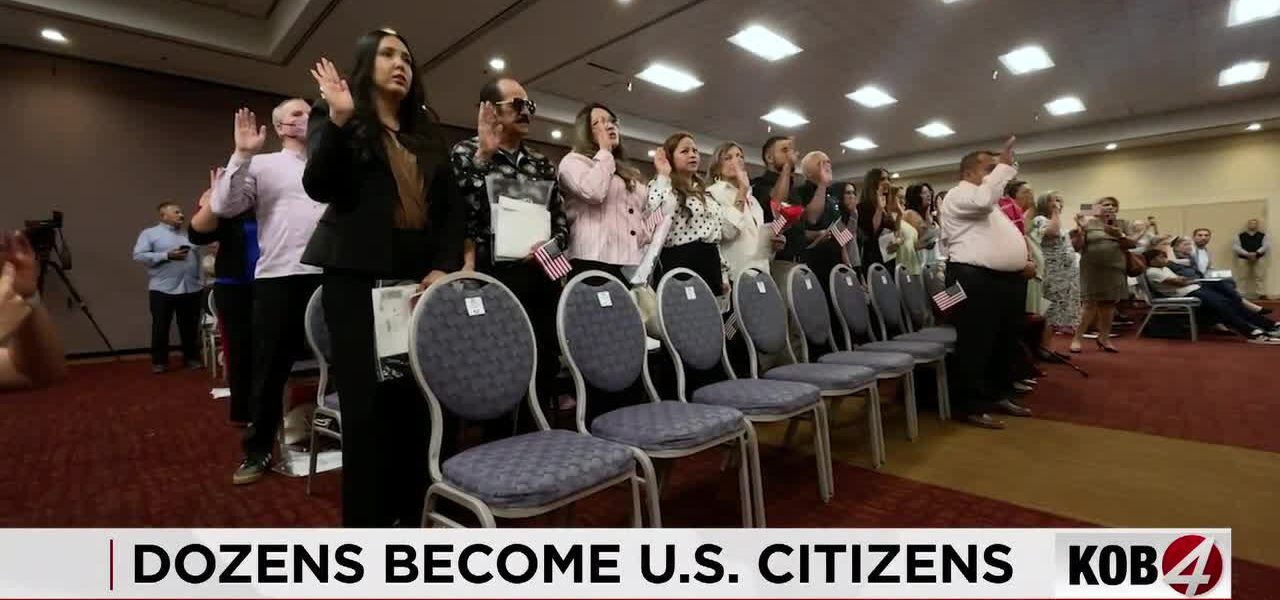
POLICY WIRE — Albuquerque, N.M. — In a city that often feels like the dusty frontier of a deeply fractured nation, the air recently carried an unexpected quiet celebration. It wasn’t a raucous parade or a politician’s stump speech. Instead, tucked away in the utilitarian halls of the Albuquerque Convention Center, forty-nine souls from fourteen disparate corners of the globe swore an oath, transforming years of bureaucratic limbo into an irreversible legal fact: they were now Americans. But just as the country braces for a bicentennial-and-a-half — its 250th birthday—this subdued gathering wasn’t merely about a legal formality. No, it was a subtle, almost subversive counterpoint to the boisterous, often angry, public discourse dominating every other news cycle.
It’s easy to dismiss such events as mere administrative procedures. And certainly, from the vantage point of a federal office building, that’s exactly what they’re. Yet, for those present, it was anything but clinical. Imagine working a decade toward something—not a new car, or a promotion, but a fundamental shift in your very identity. That’s the unspoken narrative echoing through these ceremonies. For Lluvia Damaris Gutierrez Lopez, a woman who’d known little else besides the dusty familiarity of the American Southwest since she was a baby, it meant everything. “It means the world to me,” she’d managed, a raw earnestness in her voice. “I finally made it after 10 long years. I first started when I was 16, the whole process. Now I’m 26 and I’m a citizen.” A decade. Think about it. A decade for a piece of paper, a stamp, a new beginning.
The timing, conveniently just ahead of a milestone national anniversary, offered a rather poetic, if perhaps unintended, commentary. While pundits debate the very definition of American identity, here were forty-nine individuals actively defining it for themselves. They weren’t born into it, nor did they inherit it; they earned it, brick by excruciating bureaucratic brick. It wasn’t handed to them. But that’s exactly what makes their stories, — and their presence, so pointed. Many don’t recognize the sheer grind it takes. For instance, according to U.S. Citizenship and Immigration Services, in fiscal year 2023, approximately 878,500 new citizens were naturalized, a substantial figure reflecting untold individual sagas. And that number, as we all know, only tells half the story.
U.S. District Judge David Urias, presiding over the naturalization ceremony, touched on this inherent unfairness with a dry, almost understated profundity. “For those of us who were born in any of the border states, you know, if you think about it, just being born 100 miles to the south would have changed everything for us,” he observed. And it’s true. The cosmic lottery of birth, its casual cruelty, shapes lives, destinies, — and yes, entire policy landscapes. Imagine the families from Pakistan or other South Asian nations, having navigated vastly different cultural and political terrains, yet ending up in the same Albuquerque convention hall, their aspirations coalescing into this single, shared moment. They too understand the stark contrast between their journey — and the privilege of mere birthright.
Lluvia’s path, starting at age one in the U.S., only cemented her desire. “I wanted to become a citizen because I’ve been here since I was one year old. This is my home, this is all I know,” she stated. Her parents, having left Juarez, Mexico, to create a new life, finally saw their dreams—and hers—come to fruition. And then came the nuanced admission, a telling symptom of our polarized age: she’s been careful recently about discussing her journey publicly. “I try to keep it down just because everything that’s happening.” But seeing fellow new citizens, particularly when Mexico’s name was called, it opened the floodgates of pride. What a paradox, isn’t it? To wave an American flag while still openly embracing your heritage.
📄 POLICY WIRE WHITEPAPER PUBLISHED: PAKISTAN'S NATIONAL SECURITY POLICY PRIORITIES
👉 READ BY CLICKING HEREBut the real work, many will tell you, only begins at the oath. Senator Ben Ray Luján (D-NM), whose constituency often grapples with complex immigration issues, reflected on the broader implications, stating, “These naturalization ceremonies aren’t just legal proceedings; they’re the foundational act of reinvesting in our shared future. Every new citizen brings fresh perspectives and an unwavering commitment to the American experiment, often forged through profound sacrifice.” It’s a testament to hope, yes. It’s also a stark reminder of how high the barriers remain, despite the glossy narratives.
What This Means
The quiet induction of new citizens, particularly in a state like New Mexico, carries weighty political and economic implications. On one hand, it’s a direct counter-narrative to the hardening stance on immigration evident across swaths of the American political spectrum. It’s proof the process, arduous as it’s, still functions. And it’s creating new voting blocs, shifting demographics, — and ultimately reshaping the electorate for years to come. Many politicians, especially in border states, grapple daily with the often-competing demands of national security and human rights. But they’ll soon have to contend with a newly energized, enfranchised segment of the population, often with deep roots in their communities, even if their citizenship is new.
Economically, these new citizens aren’t just consumers; they’re entrepreneurs, taxpayers, and laborers, filling gaps in crucial sectors and contributing to local economies. Studies repeatedly show that immigrants, on average, have higher rates of entrepreneurship and contribute significantly to GDP. These forty-nine people in Albuquerque—and hundreds of thousands like them annually—aren’t just fulfilling personal dreams; they’re making an active, measurable deposit into the nation’s coffers and culture. Their diverse backgrounds, including hypothetical ties to regions like South Asia, enrich the American narrative. They’re a powerful, quiet force for renewal. So, as the country inches toward its quarter-millennium mark, perhaps these intimate ceremonies are a truer gauge of its evolving character than any firework display or political soundbite. It’s less about the fireworks — and more about the slow burn of tenacious resolve. They don’t just happen without sustained effort.