

Washington’s Nod to Pakistan: Geopolitical Tightrope
Washington's calculated nod to Pakistan's defense right is a geopolitical tightrope walk. Discover the complex US-Pakistan dynamics and regional implications.

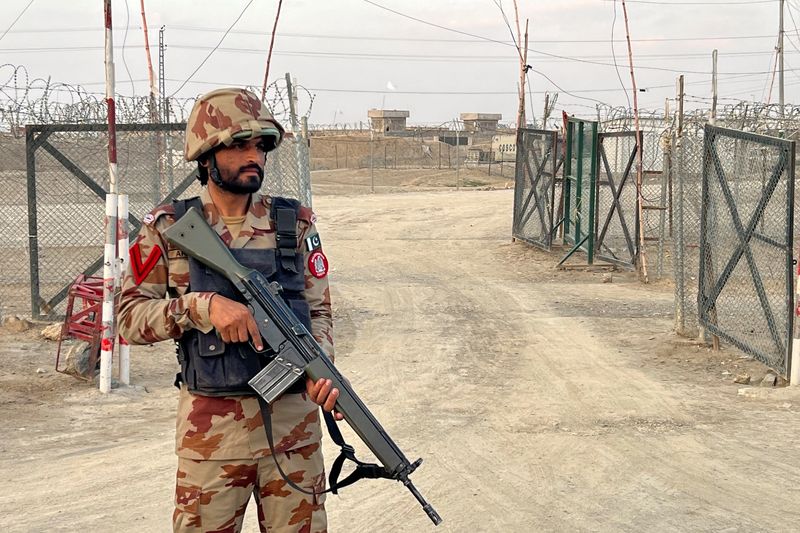
POLICY WIRE — Washington, D.C. — Geopolitical chess, you know, it’s rarely about straightforward moves. More often, it’s about a whispered promise, a qualified affirmation, or a carefully worded declaration meant to soothe one ally while subtly nudging another. So, when the United States recently voiced its unwavering belief in Pakistan’s inherent right to defend itself against the rather unambiguous scourge of [QUOTE_PLACEHOLDER], it wasn’t just a simple statement of support. No, siree. It was Washington navigating a diplomatic minefield, yet again, trying to square a circle that’s been stubbornly elliptical for decades.
It’s a peculiar thing, this particular brand of affirmation. It doesn’t arrive out of the blue, but rather, tends to surface after incidents — violent, often tragic — compel some form of international acknowledgment. This latest round comes as Pakistan grapples with what it frequently terms a resurgent wave of militancy. Islamabad points fingers, and not without cause, across its western frontier, a border region long porous and, frankly, problematic for both sides.
You see, for America, supporting Pakistan’s defense against terrorism has always been, well, layered. It’s never been a blank check, — and it certainly isn’t now. The underlying message is always about capability — and intent. Can Pakistan truly defend itself? And perhaps more tellingly, against whom, exactly, is that defense primarily directed? And does that defense align neatly with Washington’s broader regional interests? Because sometimes, it doesn’t. Things get messy. Quick.
And let’s not forget the enduring, deeply embedded historical context here. From the Cold War alliances to the post-9/11 ‘War on Terror’ — periods marked by colossal financial aid and then, just as suddenly, by icy pauses in relations — the US-Pakistan relationship has been nothing if not a rollercoaster. It’s shaped Pakistan’s security apparatus, its economy, — and heck, even its sense of national identity. But it’s also bred a peculiar cynicism, an expectation that grand statements from abroad rarely translate into the kind of long-term, steadfast commitment one might hope for from a purported ally.
But the numbers don’t lie. According to the Global Terrorism Index 2023, Pakistan registered the second-highest number of terrorist attacks and related fatalities globally in 2022, trailing only Afghanistan. That’s a stark, bloody testament to the challenges Pakistan faces, suggesting this isn’t just about cross-border skirmishes but a deep-seated domestic and regional crisis. So, Washington’s rhetoric, however qualified, lands in a very real, very desperate context.
Naturally, Islamabad sees the US statement as validating its narrative, that it’s the aggrieved party, battling externally sponsored terror. And that’s important for domestic consumption — and for shoring up its international standing. But this particular type of diplomatic embrace comes with unspoken expectations, conditions you just know are lurking below the surface. America isn’t a charity. They’re never just saying [QUOTE_PLACEHOLDER] without a whole lot of unspoken follow-up.
It’s worth considering how this plays in the broader Muslim world, too. Many nations across the Middle East and North Africa often perceive what they believe is a bifurcated US policy: firm rhetoric against terrorism when it threatens Western interests, but perhaps a softer touch when it involves complex intra-regional conflicts where allies might be implicated. This specific US stance on Pakistan’s ‘right to defend’ – a country with an Islamic identity and often seen as a bellwether for regional stability – becomes a case study in Washington’s carefully calibrated diplomacy. It’s an exercise in maintaining influence without granting too much leeway, or so they hope.
📄 POLICY WIRE WHITEPAPER PUBLISHED: PAKISTAN'S NATIONAL SECURITY POLICY PRIORITIES
👉 READ BY CLICKING HEREThe danger, always, is the potential for escalation. Every nation has the right to defend itself—we don’t need Washington to tell us that. But when two nuclear powers (and their sometimes volatile neighbors) are involved, the language, the actions, and the reactions have an outsized impact. The US message here isn’t just about defending against amorphous terror. It’s about ensuring that any defense doesn’t inadvertently destabilize a region that’s already, shall we say, prone to a little instability.
What This Means
Washington’s carefully couched declaration means a few things, politically — and economically. Firstly, it offers a necessary, if brief, diplomatic balm to Islamabad, which has felt increasingly isolated and vulnerable due to rising terror incidents. This might translate into a slight easing of geopolitical pressure on Pakistan’s military and civilian leadership, giving them a bit more room to maneuver internally and regionally. However, it’s far from a blank cheque. Expect a continued, albeit subtle, insistence from Washington on what ‘self-defense’ entails, particularly concerning counter-terrorism financing and intelligence sharing. Don’t hold your breath for huge shifts, but perhaps a re-engagement in security dialogues might be on the cards.
Economically, such statements can ripple through investor confidence, however marginally. Stability rhetoric, even if vague, can prevent further hemorrhaging of capital in a nation already wrestling with immense economic challenges. It signals that a major global power still sees Pakistan as a partner worth engaging with, albeit warily. Any perception of international isolation hurts a struggling economy, whereas even qualified support can offer a temporary floor. But we’ve seen this before: this won’t fundamentally alter Pakistan’s deep-seated fiscal woes. Remember, the talk is cheap, but the bills aren’t. They’re still struggling with that ravine plunge, for instance. See Ravine Plunge: Pakistan’s Recurring Tragedy and the Echoes of Neglect for more. It also implies Washington’s ongoing — perhaps unwilling — acceptance of its role in an intractable regional quagmire. This support is less about enthusiastic partnership and more about managing an unpredictable, strategically important region where disengagement could be far worse than a messy, complicated embrace. It’s a calculated gamble on a geopolitical chessboard where few pieces move without consequence.