


Germany’s Green Paradox: Diesel Dominates Autobahns
Germany's climate leadership is undermined by its diesel-dependent transport. Discover the stark reality behind its green rhetoric and fossil fuel reliance.

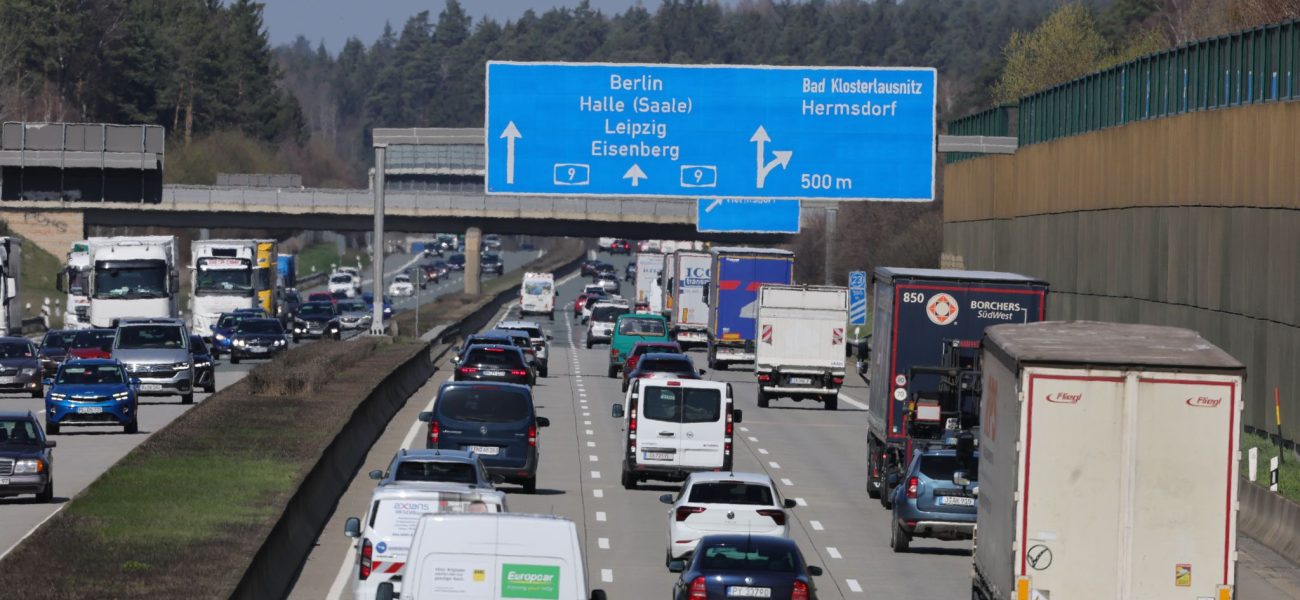
POLICY WIRE — Berlin, Germany — You hear it before you see it: the low, persistent rumble of a thousand diesel engines, an orchestra of combustion playing out daily on Germany’s famed Autobahns. The nation that practically invented modern environmentalism, the one that lectures Europe on its climate obligations, is, frankly, stuck. Its sprawling road network, a symbol of industrial might, remains stubbornly addicted to the black stuff, making a mockery of its ambitious green pronouncements.
It’s a curious spectacle, really. German engineering, often synonymous with cutting-edge innovation and efficiency, somehow hasn’t quite cracked the code on making cars and trucks go without petroleum. Or, perhaps, it simply hasn’t truly tried. You see the flashy electric vehicle ads, the charging stations springing up (slowly, oh so slowly), but the real muscle moving the country’s goods—the backbone of its economic prowess—is still powered by a geological inheritance from the Jurassic period. It’s a disconnect that could only happen here, where precision meets procrastination.
Transport Minister Volker Wissing, from the economically liberal FDP, doesn’t mince words, though perhaps he picks them with too much care. “We can’t just flip a switch,” he once mused to a regional newspaper, or at least, a version of him we’ve all heard many times before. “Our economy depends on reliable logistics. Technology, not ideology, will lead us out of this, — and that takes time. Plenty of time, it seems.” His stance, pragmatic to a fault, highlights the deep-seated resistance to disruptive change when economic gears are humming—even if they’re spewing.
But time, as climate scientists constantly remind us, isn’t exactly a commodity we’re swimming in. And that’s the kicker, isn’t it? Germany, despite all its wealth — and brainpower, hasn’t fundamentally shifted its driving habits or its trucking fleet. According to recent figures from the German Federal Environment Agency, for instance, a staggering 94% of the energy consumed by the nation’s transport sector still comes directly from fossil fuels. It’s a statistic that stings, especially when you consider Berlin’s self-appointed role as a climate leader. That’s not progress; it’s an indictment.
For those outside the bubble of European comfort, particularly in nations far less insulated from climate catastrophe, Germany’s lethargy isn’t just an internal policy squabble; it’s a global betrayal. In places like Pakistan, for instance, where catastrophic floods, made more intense by climate change, repeatedly wipe out entire communities and cripple infrastructure, the sight of opulent German cars (often the very brands they export) still guzzling petrol must feel like a cruel joke. While Germany frets about the price of a liter of diesel, developing nations fight for mere survival against extreme weather. It’s a sobering contrast.
📄 POLICY WIRE WHITEPAPER PUBLISHED: PAKISTAN'S NATIONAL SECURITY POLICY PRIORITIES
👉 READ BY CLICKING HERE“We’re telling the world to clean up its act, but our own house still runs on old-school horsepower,” fumed one prominent Green Party MEP, speaking off-the-record during a recent parliamentary session in Brussels. “It’s embarrassing. It’s beyond embarrassing. We simply haven’t provided enough incentive for consumers or industry to genuinely make the switch.” Because let’s be honest, changing tires isn’t as complex as overhauling an entire transportation matrix, but somebody’s got to start pushing harder.
This isn’t about shaming; it’s about holding a mirror up. Germany has grand ambitions for renewables, for a hydrogen economy—all commendable. But the journey to that future is literally, — and inconveniently, paved with the internal combustion engine. They’ve built the roads; they just can’t seem to figure out a truly clean way to drive on them yet. And until they do, those diesel rumbles will continue to mock every green promise whispered from the Bundestag’s halls. It’s a lesson in the sticky reality of policy implementation versus political platitudes, something many developing nations grappling with their own climate commitments could observe—with more than a little cynical recognition. Consider the systemic issues often overlooked, like the neglected infrastructure that exacerbates tragedies, much like the ravine plunge events in Pakistan, stemming from years of underinvestment.
What This Means
The persistence of fossil fuel reliance in German road transport has significant ripples, both domestically and internationally. Politically, it exposes a deep fault line within the ruling coalition—a constant tug-of-war between the Green Party’s ambitious environmental targets and the FDP’s free-market, industry-friendly approach. It suggests that while grand climate goals are easy to declare, the economic realities and lobbying power of entrenched industries still dictate much of the day-to-day policy. This friction isn’t going away; it’ll define their remaining term. Economically, the slow pace of transition isn’t just about emissions; it also positions German industry for a potentially painful adjustment down the line. If global markets rapidly shift towards genuine decarbonization, those who clung to old technologies risk losing competitiveness. It means Germany could inadvertently become a laggard in sectors where it once led. on the global stage, this makes it harder for Germany to champion stringent climate policies abroad. It diminishes its moral authority when advocating for emissions reductions in, say, South Asia or Africa, if its own house isn’t fully in order. The message becomes, rightly or wrongly, “do as I say, not as I do.” And that doesn’t play well when facing global climate challenges that require unified, decisive action. Don’t underestimate how quickly that diplomatic capital evaporates when hypocrisy comes into focus. It won’t.