
Europe’s Bold Shift: Aid & Defense Converge for Stability
Brussels redefines foreign policy, merging aid and defense. Unpack Europe's new pragmatic approach to security, linking development and military power for global stability.

POLICY WIRE — Brussels, Belgium — It was once considered uncouth, perhaps even strategically shortsighted, to utter certain ideas in the same breath. Like suggesting that the grand aspirations of international aid, that noble pursuit of lifting millions from squalor, might share more than just a passing acquaintance with the gritty, often brutal, realities of military expenditure. But now? Well, the script’s flipped. The continent’s leadership is increasingly, almost enthusiastically, embracing a thesis that’d have once been political dynamite, connecting those seemingly opposing poles of statecraft with surprising vigor. It’s a pragmatic pivot, for sure, driven by anxieties not just about far-flung despots, but closer-to-home vulnerabilities.
For too long, it felt like the European Union—and plenty of its member states—navigated international relations with a peculiar schizophrenia. On one hand, you had the development ministries, pouring billions into schools, clinics, — and infrastructure abroad. Noble work, to be fair. On the other, the defense departments, perpetually underfunded, scrambling to keep up with, let’s just say, more assertive neighbors. But things, as they always do, they’ve shifted. Suddenly, senior European figures are telling anyone who’ll listen that development aid isn’t just about charity; it’s about stability. And stability, wouldn’t you know it, often needs a deterrent.
It’s an argument that certainly carries more weight these days, especially with simmering conflicts stretching from the Sahel to the Red Sea, threatening established global shipping lanes. You can almost see the gears grinding in chancelleries across the bloc. There’s a tangible realization, apparently, that if you’re not investing in the long-term resilience of a fragile state, you’re practically guaranteeing a future security headache. It’s not just a budget line item anymore; it’s preventative maintenance for geopolitical fences. That kind of thinking? It’s not entirely new, but its mainstream adoption signals a telling evolution in European strategy, a belated acceptance that power vacuums don’t just stay empty. They get filled. Usually by someone you’d rather wasn’t there.
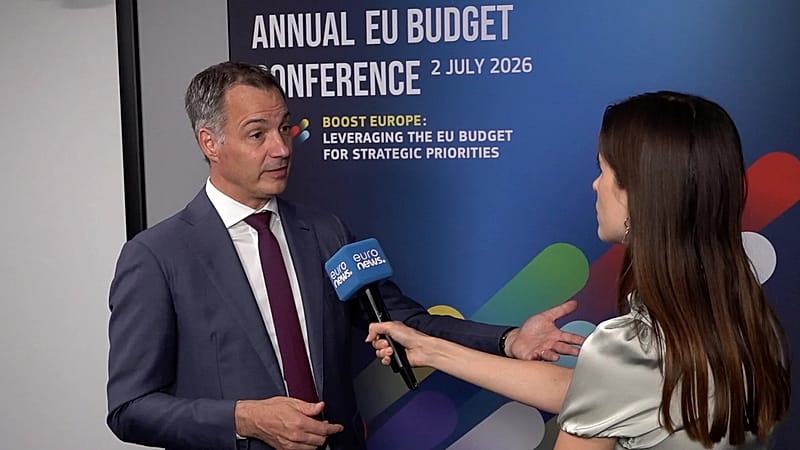
The Belgians, amongst others, are at the forefront of this recalibration. Alexander De Croo, their Prime Minister, didn’t mince words. He declared that defense and aid spending are [QUOTE_PLACEHOLDER], echoing a sentiment gaining traction from Paris to Berlin. He suggested it wasn’t about choosing one over the other. No, it was about a synergistic, integrated approach, like a well-oiled machine where every component — however disparate its initial function might seem — contributes to the overall stability and output. It’s an approach many might call ‘common sense’, but for Europe, it’s a noteworthy strategic refinement after years of relying on others—(usually across the Atlantic)—to manage its complex periphery. And if it means more military equipment making its way to partners, with development funds shoring up their civil institutions, then that’s the emerging reality.
Because ultimately, what’s the point of pouring resources into a nation if that nation then buckles under internal strife or external aggression? What’s the ROI on a school built only to be razed by insurgents, or a clinic established in a region overrun by militias? This new narrative suggests a deeper appreciation for the complex ecosystem of global security, where economic prosperity and political stability aren’t just feel-good outcomes; they’re the bedrock of security itself. They’re trying to connect the dots between food security and territorial integrity, between good governance and border defense. It’s not revolutionary, perhaps, but it’s an awakening from a certain continental naiveté.
But the true test of this revamped philosophy lies not just in rhetorical flourishes, but in budget lines and actual policy implementation. Will countries truly boost both, or will aid budgets simply become piggy banks for defense departments in disguise? It’s a legitimate concern. Especially when you consider that global military spending reached an all-time high of 2.44 trillion USD in 2023, according to the Stockholm International Peace Research Institute (SIPRI), a significant portion of which came from NATO and EU states. It makes you wonder how much of this newfound wisdom will genuinely translate into balanced investment, and how much will be merely lip service, another justification for increased arms purchases.
📄 POLICY WIRE WHITEPAPER PUBLISHED: PAKISTAN'S NATIONAL SECURITY POLICY PRIORITIES
👉 READ BY CLICKING HEREThink about regions like South Asia. Countries there, particularly those bordering volatile territories, are constantly grappling with both acute development needs and significant security challenges. Pakistan, for instance, a nation routinely cited for both its strategic importance and its development gaps, finds itself a recipient of both types of assistance. The idea that aid helps stabilize communities and prevents radicalization—thereby reducing the need for costly defense interventions down the line—has long been articulated by strategists observing the complex interplay of geopolitics and economics on its borders. It’s not exactly a new revelation to those operating in Karachi or Islamabad; Pakistan’s recurring tragedy, after all, often plays out where neglect and insecurity intertwine. But now, it appears the message has finally percolated to the hallowed halls of European decision-makers, just a little late to the party. One wonders if they’ve really been listening.
This isn’t just an intellectual exercise for European policymakers, by the way. It’s about securing supply chains, mitigating migration pressures, and protecting a liberal international order that feels increasingly under siege. And it’s a direct response to a world where lines blur, where climate change can create conflict, and where hybrid warfare demands an answer beyond conventional tanks and troops. It implies a recognition that you can’t build a fortress with one hand while the other is undermining its foundations by ignoring widespread human despair.
What This Means
The apparent convergence of defense and aid spending signifies a significant, albeit pragmatic, shift in European foreign policy doctrine. Economically, we could see a reallocation, not necessarily a reduction, of development funds toward programs with direct or indirect security implications. This might mean more investment in areas like conflict resolution, post-conflict reconstruction, and governance in fragile states – initiatives that prevent larger security costs later on. But this reorientation risks turning development aid into a mere security tool, potentially undermining its core humanitarian goals if not managed with extreme transparency and sensitivity. It’s a fine line to walk, one where the immediate strategic advantage could overshadow long-term societal well-being. Politically, this signals a more assertive, less idealistic Europe, one that acknowledges its own interests—not just moral obligations—in global stability. It’s a reflection of the continent’s deepening security concerns, moving beyond rhetoric to a more integrated, and potentially more interventionist, foreign policy. This could, in turn, influence how countries like those in the Muslim world, many of whom are aid recipients and strategic partners, perceive Europe’s commitment to genuine partnership versus self-serving strategic alignments. They’ll be watching to see if these ‘two sides’ genuinely reinforce each other, or if one quietly swallows the other.