


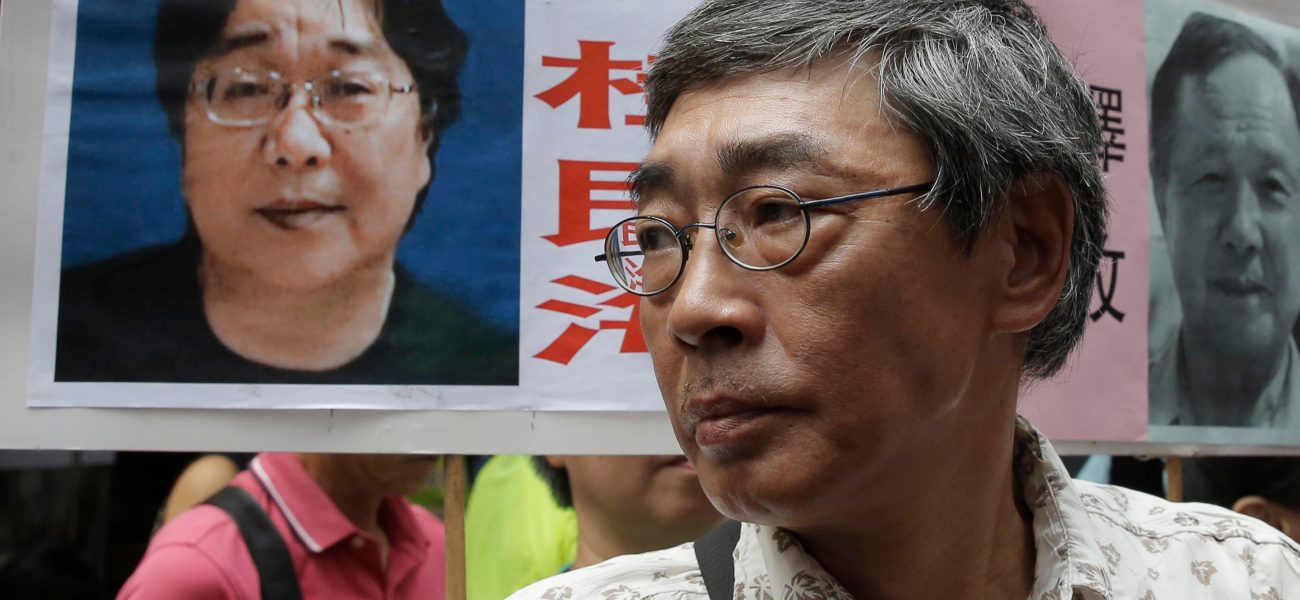
Hong Kong Bookseller Dies: Beijing’s Shadow Lengthens
The death of Hong Kong bookseller Lam Wing-kee, once detained by Beijing, exposes China's growing authoritarian grip. Discover the chilling implications for HK's freedom.

POLICY WIRE — Taipei, Taiwan — The quiet passing of a bookshop owner in exile often barely warrants a mention outside local obituaries. But when that owner is Lam Wing-kee, whose disappearance ignited a global firestorm eight years ago—a living, breathing symbol of Hong Kong’s evaporating freedoms—well, that’s different, isn’t it? Lam, snatched in 2015 by Beijing’s shadowy tendrils only to re-emerge later with a chilling tale, has died in Taiwan at 70, finally free from the long arm that once pulled him across borders. It wasn’t the kind of dramatic exit he’d fought for, perhaps, but its reverberations will carry just as far. And boy, will they. He was just trying to sell books—political ones, yes, the kind mainland China definitely doesn’t want folks reading—and for that, he paid a steep price, a sort of slow-motion martyrdom, if you think about it.
Lam’s saga, etched into the collective memory of Hong Kongers and human rights advocates, encapsulates the blunt force of Beijing’s expanding jurisdiction. Back in 2015, Lam, along with four other booksellers linked to Mighty Current Media and Causeway Bay Books—known for dishing out titles critical of China’s leadership—vanished. They just blinked out of existence. But it wasn’t an alien abduction; it was something far more terrestrial and chilling: enforced disappearance by mainland Chinese authorities, a flagrant disregard for the fundamental principle of ‘One Country, Two Systems’ that supposedly guarantees Hong Kong’s autonomy. He re-surfaced months later on Chinese television, looking like he’d seen things, making what many saw as a forced confession about smuggling banned books. A real Sophie’s Choice for a guy just trying to get by.
Eventually, Lam managed to return to Hong Kong — and bravely spoke out, detailing his harrowing 8-month detention. He described how he was blindfolded during transit and interrogated endlessly about the customers who bought books from his shop. He even detailed [QUOTE_PLACEHOLDER] the authorities’ demands for customer information and his fear that the ordeal would jeopardize others. It’s a textbook case of intimidation, really, designed to scare the wits out of anyone contemplating similar ‘offenses.’ But instead of breaking him, it arguably cemented his resolve—or at least gave him an escape hatch to Taiwan.
His eventual move to Taiwan in 2019, amidst massive anti-extradition protests back home in Hong Kong, spoke volumes. He chose democratic self-rule over Beijing’s creep, even opening a new Causeway Bay Books in Taipei, a symbolic gesture of defiance. It was a hell of a statement, wasn’t it? He understood, perhaps better than many, the precarious tightrope Taiwan walks under the constant shadow of its gargantuan neighbor, and the moral clarity that sometimes demands a geographical shift. For activists across the broader South Asia and Muslim world—from Karachi to Jakarta—where independent media often operates under immense pressure, Lam’s struggle was disturbingly familiar. Journalists, dissidents, and outspoken intellectuals frequently face detention, travel bans, or even assassination attempts for challenging the narrative of authoritarian regimes. Because even in ostensibly democratic states, the line between robust criticism and perceived sedition can get blurry real fast.
And let’s be honest, Lam’s passing isn’t just another item for the foreign news desk. It’s a stark reminder of what’s lost when freedom of expression withers. A 2024 report by Reporters Without Borders ranked Hong Kong 135th out of 180 countries and territories for press freedom, a precipitous drop from its relatively free status just a decade ago. That’s a statistic that should keep everyone up at night, wouldn’t you say?
📄 POLICY WIRE WHITEPAPER PUBLISHED: PAKISTAN'S NATIONAL SECURITY POLICY PRIORITIES
👉 READ BY CLICKING HEREWhat This Means
Lam Wing-kee’s death, while a personal tragedy, carries significant political — and economic weight. First, it further calcifies the narrative of Hong Kong’s diminished autonomy under Beijing’s tightened grip. The very concept of Hong Kong as a bastion of rule of law, distinct from mainland China, took a beating with the booksellers’ disappearances and has never quite recovered. Businesses operating in Hong Kong—especially those with international ties—can’t ignore this. The perceived capriciousness of ‘law enforcement’ that reaches across borders is a massive disincentive for any entity valuing predictable legal frameworks and independent institutions. You’re constantly looking over your shoulder.
Economically, this climate of fear damages Hong Kong’s standing as a truly global financial hub. If people can be ‘disappeared’ for what they publish, what prevents the same from happening for financial transgressions (or perceived ones)? It injects an unpredictable variable into an already volatile regional landscape. For democratic nations, including many in South Asia, the saga serves as a somber warning against encroaching authoritarianism and the tactics used to silence dissenting voices. Consider nations like Pakistan, where journalists often report under threat and independent media faces mounting challenges, or the suppression of information in Myanmar. There’s a universality to the struggle for information control. The long arm of a powerful state doesn’t just silence; it casts a chill that affects investment, intellectual exchange, and even cultural flow. It doesn’t discriminate based on passport or proximity to China; it merely seeks to enforce a narrative. It’s a chilling echo—a pre-emptive strike against inconvenient truths. This sort of geopolitical chess impacts more than just individuals; it affects economies and societal trust at large, making international partnerships, particularly those emphasizing free markets and transparency, much harder to forge or maintain. The bookseller’s life—and death—continues to hold a mirror to the escalating battle for an open global information space, an arena where the consequences of silence are both personal and profoundly international.