


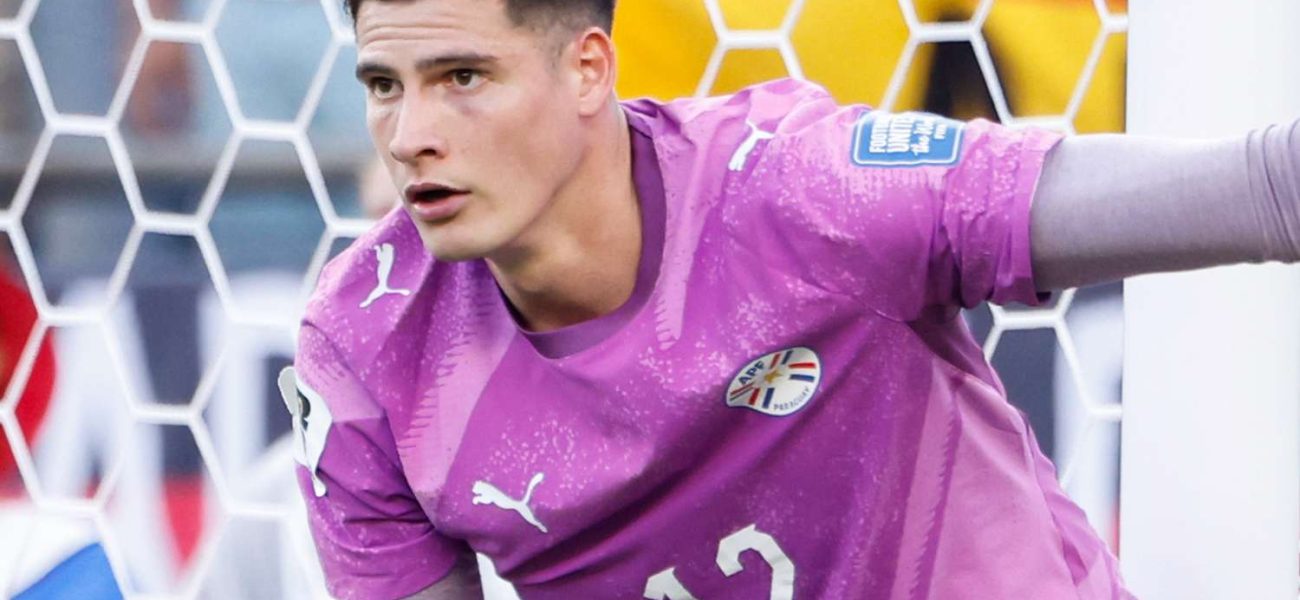
World Cup Hero Sold Jersey: Sports’ Harsh Economic Truth
Paraguayan World Cup hero Orlando Gill sold his jersey to save his son. Discover his story of triumph, sacrifice, and the harsh financial realities for many athletes.

POLICY WIRE — Boston, USA — It’s a tale of triumph, sure, but also of raw necessity and the cold, hard cash (or lack thereof) that underpins even the most glittering of sports arenas. An unknown buyer, post-victory, has now offered to return a humble piece of fabric—a soccer jersey—to its original owner. That owner, it turns out, is none other than Orlando Gill, Paraguay’s newly minted goalkeeping hero fresh off a stunning World Cup upset. And his story? It pulls back the curtain on the precarious finances haunting many aspiring athletes, long before the floodlights hit.
Before Gill, 26, was making world-class saves on a global stage, he was just another young father grappling with an unthinkable medical emergency. His newborn son, Lauti, arrived in December 2022 with severe health complications. The bills piled up, fast. Melissa Avalos, Gill’s wife, later shared the brutal truth in an Instagram post: They’d been through [QUOTE_PLACEHOLDER] the hardest moments of our lives when Lauti was born. Avalos elaborated, Gill was selling his clothes from the club where he played at that time, to be able to pay the expenses 😭 our son He fought for his life and his dad was always there!! A harsh reality, right? This wasn’t some minor inconvenience; it was a desperate scramble to save his child, documented even by the BBC and Reuters. He had nothing.
So, a soccer jersey — specifically, his Under-20 kit — went up for sale. It wasn’t for fame; it wasn’t for glory. It was for Lauti. The buyer, Pedro Suarez, forked over 200,000 guarani ($32.90), according to Reuters. That’s a sum that feels like spare change to the high-rolling football titans, but it was apparently enough to make a difference for a young family in crisis. But fast forward to June 29 at Boston Stadium, — and everything shifts. Paraguay, the supposed underdog, squared off against Germany in a FIFA World Cup 2026 match, pulling off a breathtaking 4-3 penalty shootout victory after a 1-1 draw. Gill was a standout, naturally.
The triumph resonated. Avalos’s past social media post resurfaced. The global narrative — struggling athlete, ill child, immense sacrifice — grabbed headlines. But this wasn’t about sentimental virtue signaling; this was a stark reminder of how thin the margin for error is for so many. And then Suarez, the fan who’d quietly purchased the jersey, tracked Gill down. His message? I told him, ‘Don’t worry about the shirt, I’ll keep it safe for you.’ The offer came with a playful, yet pointed, condition. ‘But you have to beat France.’
What a moment. Gill, speaking to reporters after the Germany match, said Paraguay’s win really showed [QUOTE_PLACEHOLDER] that you shouldn’t speak too soon. It proves that Paraguay is capable of achieving great things. He felt the opportunity was bound to come sooner or later. But he was speaking about the team’s prospects, perhaps not about his personal financial fortunes being tied to a game of chance. You know, football—it’s funny how it works sometimes, throwing out life-altering twists like a trick shot. The world’s attention then pivots to the next game, Paraguay versus France, scheduled for Saturday, July 4 at Philadelphia Stadium. Imagine the pressure, playing for national pride, and knowing a symbolic piece of your history hangs in the balance, a reminder of battles fought off the pitch.
It’s not just a feel-good story; it’s a harsh economic lesson cloaked in human drama. Most professional athletes, even those making decent local wages, are a long, long way from the global elite. They’re a significant injury, a bad contract, or a premature birth away from serious financial hardship. Gill’s experience isn’t unique, even if its World Cup resolution feels almost scripted. In many parts of the world, from Latin America to South Asia, young talents often gamble everything on sport. Think of aspiring cricketers or football players in Pakistan or India, whose entire family’s future often rests on their fragile shoulders. A single setback, a single unexpected medical bill for a loved one, can utterly derail years of sacrifice. They don’t have multimillion-dollar contracts to fall back on; sometimes, they’ve only got their old jersey.
What This Means
This entire Gill saga, really, highlights something much bigger than one man and his kit: the incredibly thin line between athletic aspiration and financial desperation for countless individuals outside the rarefied air of global superstardom. It’s a reminder that sports, for many, is less a lucrative career and more a high-stakes lottery, a last resort against poverty, and an overwhelming burden of expectation. His family’s ordeal for an expense that, in developed economies, might be manageable via robust public health systems, starkly illustrates the systemic economic pressures in nations like Paraguay.
But the story also serves as a potent metaphor for the precarious economic realities faced by many individuals across the developing world, including regions in South Asia or the broader Muslim world. Where public services falter, families must often liquidate their few assets—sentimental or otherwise—just to stay afloat during a personal catastrophe. It’s not about being unlucky; it’s about systems that offer little safety net, forcing individuals to become impromptu capitalists with their own meager belongings. And, a tiny fraction of them get the kind of dramatic, almost Hollywood, reprieve Gill has seemingly earned.
But how much of that’s luck? Or the romantic pull of a good story in a media-saturated world? Had Paraguay lost to Germany, would Suarez have offered the jersey back? It’s a safe bet that millions of similar acts of quiet, desperate sacrifice occur globally every day, never reaching the attention of Reuters or the kind fan who held onto Gill’s shirt. The episode becomes less about football and more about economic policy failures, about what happens when societies don’t — or can’t — support their own. Gill’s victory isn’t just for Paraguay; it’s a win for every person who ever had to sell a part of themselves for their family, hoping the gamble would someday pay off. And frankly, that’s not exactly how a stable society should function, is it?