


ABQ Demolition Drama: City Power vs. Owner Rights
The demolition of Albuquerque's Lindy's Diner sparks a debate on city power vs. property rights. Read how urban policy impacts local businesses.

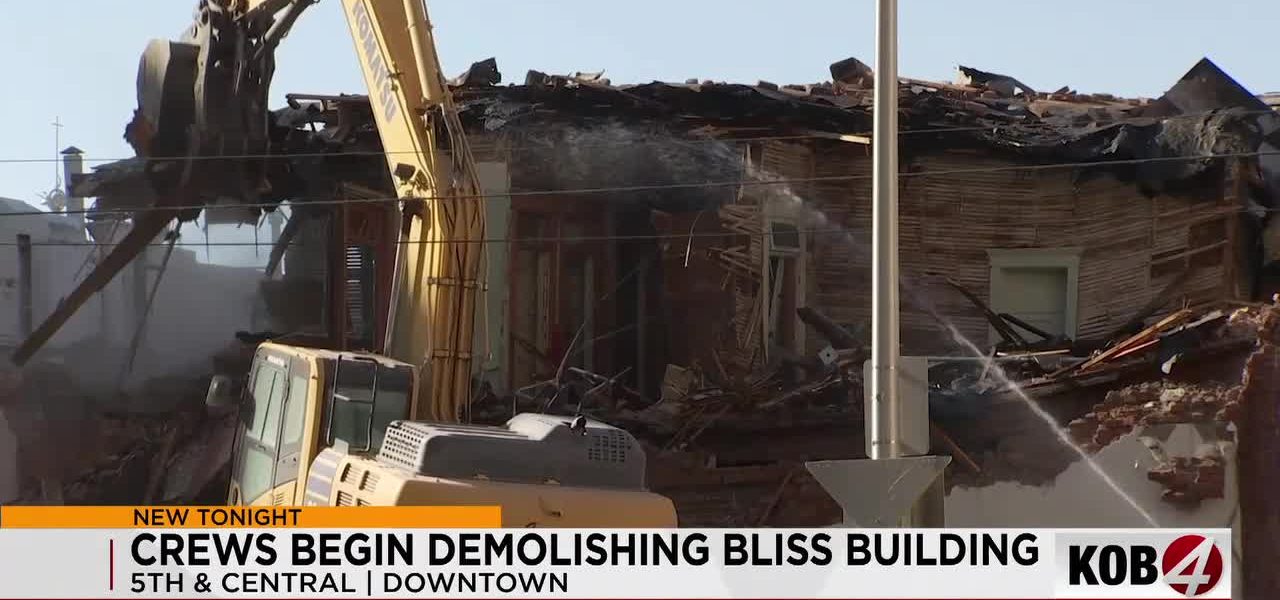
POLICY WIRE — Albuquerque, U.S. — It wasn’t the roar of machinery that truly defined the moment this week on Fifth and Central. No, that’s too neat. It was the low rumble of resentment, a deep-seated frustration vibrating through the dust-choked air as heavy equipment gnawed at the Bliss Building—home to the storied Lindy’s Diner. See, this isn’t just about an old structure coming down; it’s about a raw power struggle, a city’s steel fist clashing hard against the open palm of a desperate small business owner.
The skyline changed, yeah, but the narrative thickened. Just days after the city of Albuquerque, N.M., dramatically elbowed aside a private demolition effort that, frankly, seemed to have stalled out, municipal crews got down to the gritty business. They’re smashing a downtown landmark. A quick resolution for a potentially hazardous situation, you might think. But that’s the city’s line. The folks who owned it? They’re calling foul. And let’s be real, in the urban jungle, disputes over what constitutes public safety versus private burden often get messy.
“We can’t afford to play games with public safety, plain and simple,” declared Mayor Timothy Graves, during a hastily called press briefing late Tuesday. “When a structure poses an imminent hazard to our downtown core, we don’t just sit on our hands. The buck stops with us for public welfare; that’s non-negotiable.” Graves, a career politician known for his aggressive urban revitalization efforts (and equally aggressive campaign donors), doesn’t mince words. But critics would argue his administration often moves with a certain heavy-handed efficiency, rarely inconvenienced by dissenting voices.
Dawn Vatoseow, the building’s owner — and proprietress of Lindy’s, certainly felt the city’s unyielding grip. Her words aren’t just an echo; they’re a primal scream of frustration. “The city was well aware of the fact that I didn’t have $400,000 to do the demo, and I was depending on the money from State Farm to facilitate that demolition,” she told local reporters, her voice tight with suppressed fury. Think about that: a city, aware of a private citizen’s financial bind, then stepping in to effectively seize the reins, forcing her hand, and then sticking her with the bill – potentially. It’s a classic municipal strong-arm, a ‘damned if you do, damned if you don’t’ scenario painted in concrete dust.
The owners are, predictably, taking the gloves off. They’re launching lawsuits, not just at the city—that much was expected—but also at their insurance carrier. It’s a double-barreled legal slugfest, aimed at recouping what they feel is rightly theirs, or at least assigning blame where it’s due. You see it everywhere, this particular urban tango. In rapidly modernizing cities across Pakistan, say, Lahore or Karachi, property owners face similar dilemmas. A historical building becomes structurally unsound or sits on coveted land, then governmental authorities, citing safety or progress, often swoop in. The private owners, often lacking political muscle or deep pockets, frequently find themselves in impossible binds, much like Vatoseow. The economic currents there, just like here, aren’t always kind to the little guy.
Because as the Bliss Building gets systematically reduced to rubble, so too are livelihoods—and perhaps a certain faith in municipal goodwill. That intersection of Fifth and Central? Still cordoned off. Public safety, they say. Don’t want any falling debris hitting pedestrians. You get it. It’s expected to clear up by July 15. Until then, traffic jams — and shattered memories.
This whole debacle speaks volumes about the delicate balance between urban progress — and individual property rights. When does public good trump personal hardship? When does bureaucratic efficiency become municipal overreach? The city’s move here isn’t an isolated incident; it’s a symptom of a larger policy trend where city councils, eager for revitalization and unburdened by the nuanced plight of specific citizens, often move with decisive, and sometimes destructive, speed. According to data compiled by the Urban Development Institute, small businesses displaced by municipal projects see an average 40% failure rate within two years of relocation if not provided with substantial assistance, an assistance often not fully realized by those impacted.
What This Means
Politically, this incident paints Mayor Graves’s administration as both decisive and, depending on your perspective, slightly authoritarian. It consolidates his image as a leader who prioritizes rapid development and public order, even if it means bruising individual citizens and sparking lawsuits. For property owners across Albuquerque, it’s a chilling reminder: don’t count on delays. The city, when it decides to act, acts. Economically, the loss of Lindy’s Diner—a genuine local landmark—represents a blow to downtown’s character and its informal economy. Every independent diner contributes not just tax revenue, but also foot traffic, a unique identity, — and local jobs. Replacing such institutions with generic developments rarely offers the same warmth or economic stability. This episode, essentially a forced demolition, highlights the fragility of local enterprises in the face of governmental prerogatives. It also underscores an enduring global policy question: whose vision of urban improvement gets prioritized when private assets conflict with public-sector agendas? Is it about a city becoming cleaner, safer, more modern? Or is it about preserving the vibrant, if sometimes dilapidated, spirit of local culture — and commerce? Often, they don’t meet in the middle. This saga, sadly, mirrors broader trends in rapid urbanization where traditional businesses and individual property rights find themselves facing overwhelming odds. It’s the old story, told new again—the little guy versus the Goliath, just this time, Goliath has a wrecking ball and a city ordinance. For more on how state action can reshape communities, consider City’s Hand, Owner’s Ruin: Albuquerque’s Demolition Drama Unpicks Urban Policy.