


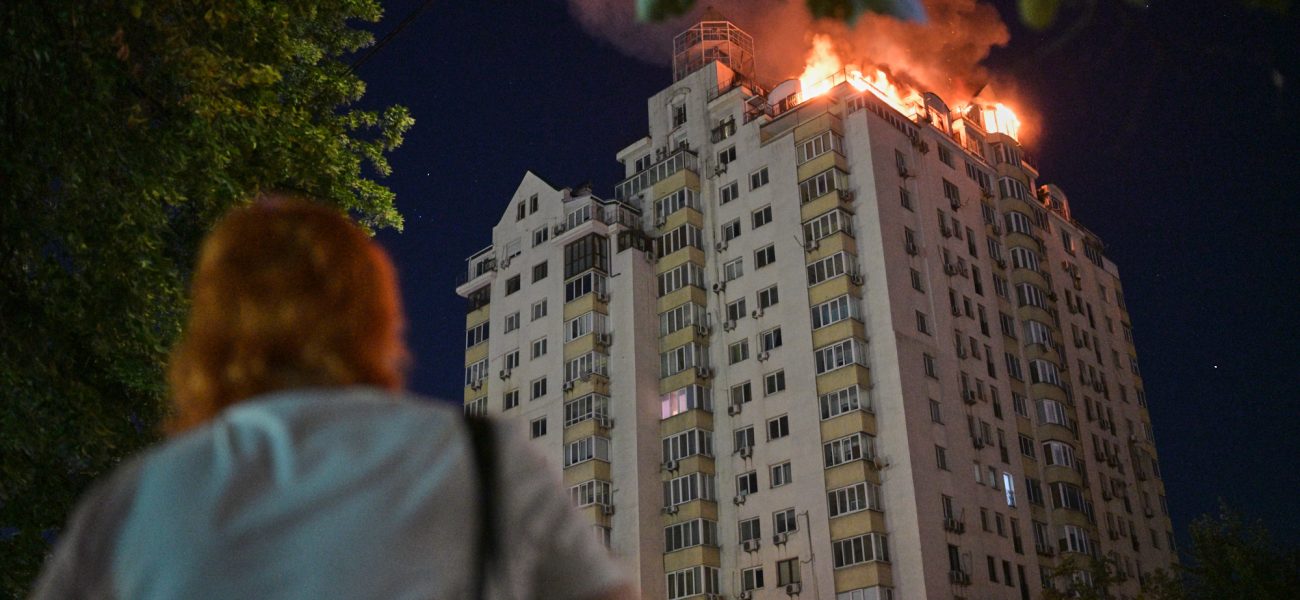
Putin’s Choice: Russia’s Fuel Crisis & Ukraine War
Explore why energy-rich Russia faces fuel shortages. Putin's calculated policy prioritizes the Ukraine war and global exports, sacrificing domestic stability. Uncover the strategic choices behind...

POLICY WIRE — Moscow, Russia — Out on the dusty plains of Russia’s agricultural heartland, the combine harvesters are grinding to a halt. Not from mechanical failure or a sudden lack of resolve, but because their tanks are running on fumes—or, more accurately, not running at all. It’s a surreal tableau: a nation rich beyond measure in energy, now grappling with empty pumps in its own backyard. But if you were hoping for a flicker of concern from the Kremlin, well, you’d be mistaken. President Vladimir Putin, it seems, has other things on his mind, things burning brighter, louder, and certainly farther afield than a few disgruntled farmers in Saratov or Tambov. He’s busy doubling down on Ukraine.
It’s a peculiar sight, isn’t it? As local reports and social media posts, quickly suppressed, begin to paint a picture of worsening fuel queues and stalled harvests across various regions, the state media paints a canvas of steely resolve and successful operations abroad. But then, officialdom isn’t known for its candor during wartime, is it? Putin himself has, in his characteristically blunt style, largely brushed aside the mounting domestic anxieties. He simply dismisses them. You see, the big picture for the Kremlin isn’t about local logistics. It’s never really about that. It’s about power projection, a grander game of chess played out on a much larger board. [QUOTE_PLACEHOLDER]
Analysts abroad are quick to point out that Russia’s Ministry of Energy and some local officials have acknowledged they’re facing temporary logistical difficulties
. And isn’t that just a classic turn of phrase? Not shortages, mind you. Just supply chain adjustments are underway
. It’s the kind of bureaucratic double-speak that’d make any veteran observer of geopolitical theater—someone who’s watched this drama unfold over two decades—arch an eyebrow. Meanwhile, the Institute for Energy Economics and Financial Analysis (IEEFA) reports that Russia’s crude oil exports to China and India surged by over 40% in the first half of this year compared to pre-war levels, as Moscow scrambled to reroute its energy arteries post-sanctions.
This reorientation has, for many, inadvertently starved the domestic market of resources, shifting product from local refineries to more lucrative overseas contracts. It’s simple economics, really, but with far-reaching consequences for everyday Russians. But these aren’t just market forces; they’re choices. Policy choices. They’re telling you, clear as day, what the priorities are. And local needs? Well, they’re just not top billing right now.
And because the Kremlin isn’t just letting things slide; they’re intensifying their aerial bombardments and missile strikes on Ukrainian cities. Recent weeks have seen a marked uptick in attacks targeting infrastructure — and civilian areas. This isn’t a coincidence. This is a cold, calculated move. It demonstrates a regime prepared to inconvenience its own citizens—even anger them, some might say—for the sake of prosecuting its objectives abroad. It’s a stark reminder of who holds the reins — and what matters most in that particular power structure.
It brings to mind the fragile energy landscape in a place like Pakistan, for instance, a nation no stranger to its own precarious dance with energy security and geopolitical tightropes. For years, Islamabad has grappled with erratic fuel prices and supply interruptions, often due to global market volatility or logistical bottlenecks. Imagine, then, a resource-rich nation deliberately creating its own internal squeeze. Pakistanis, having lived through periods where power cuts were a daily certainty and fuel stations went dry, would understand the stark implications of a government prioritizing external objectives over internal stability. This isn’t just about economic strain; it’s about a leadership making choices that fundamentally impact its population’s daily grind.
For Moscow, this isn’t some unforeseen crisis; it’s a strategic decision. You can almost hear the unstated declaration: Our military priorities remain clear
. The state isn’t just ignoring its people; it’s sending a message. But to whom? To Kyiv? To the West? Or, perhaps, to its own populace, reinforcing the notion that loyalty—or at least quiet suffering—is expected?
What This Means
This fuel predicament, rather than signaling weakness, is a stark manifestation of Moscow’s unyielding resolve in Ukraine. It underscores a Kremlin philosophy where the military apparatus, the war machine, takes precedence over virtually all other considerations. The economic implications are multifaceted: increased inflation, potential civil unrest—though likely swiftly suppressed—and a further fracturing of the already strained social contract between state and citizen. It also forces a re-evaluation of Russia’s position as a reliable energy partner globally, as domestic demand is actively sidelined.
Politically, it’s a tightrope walk. While nationalist fervor might tolerate short-term hardship for what’s painted as a grand patriotic struggle, prolonged deprivation can chip away at even the most robust propaganda efforts. The move could also hint at a calculated effort to further militarize public consciousness, normalizing the idea that the country is effectively on a war footing and civilian comforts are a luxury. For countries like India and China, who are benefitting from cheaper Russian exports, this dynamic might seem convenient in the short term, yet the long-term instability it represents could be concerning. As Berlin grapples with its own economic pressures (see our analysis on Germany’s housing crunch), Russia’s internal struggles highlight the broader geopolitical energy dynamics impacting various economies.
The situation’s an uncomfortable reminder that resource wealth doesn’t automatically translate to equitable distribution, especially when national policy turns a blind eye to domestic realities. We’re seeing a powerful state deliberately orchestrate an internal squeeze for external gain. That’s a dangerous game, one with a history of unpredictable fallout.