


‘Baby Doe’ Cold Case: Soda Bottle DNA Leads to Arrest
Decades-old 'Baby Doe' mystery solved in MA. DNA from a soda bottle leads to an arrest, revealing the power of forensic genealogy.

POLICY WIRE — Barnstable, Massachusetts — For nearly four decades, the anonymous grave of a newborn boy — simply known as Baby Boy Doe — lay a chilling testament to one of Massachusetts’ most enduring mysteries. He was found back in the frosty spring of 1985, his tiny body wrapped in a blanket, abandoned in a wooded area. Nobody knew who he was, or who could’ve done such a thing. That kind of quiet horror just hangs around a place, doesn’t it?
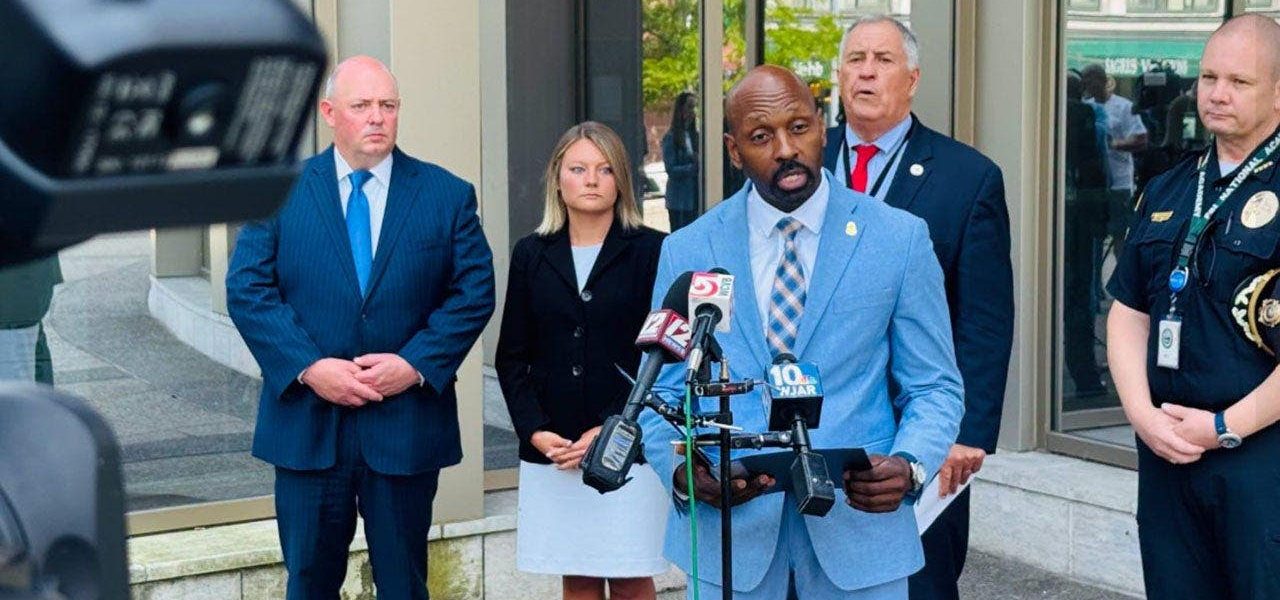
Now, however, the silence has been broken. Not by a confession, or an eyewitness stepping forward after all these years, but by a discarded soda bottle. It’s wild, isn’t it, how a humble piece of trash could finally unlock a puzzle that stumped investigators for a lifetime. But this isn’t just about a beverage container. It’s about what science can pull from such an item when law enforcement gets truly desperate, truly persistent. Forensic detectives recently made an arrest in connection with the 1985 slaying. A local woman, now in her late fifties, faces charges. She’d been living her life, presumably, all this time, while the ghost of Baby Boy Doe waited. [QUOTE_PLACEHOLDER]
Investigators, working the case tirelessly, managed to link her to the infant through a rather unassuming artifact: that soda bottle, which she’d allegedly handled. They pulled DNA from it. That’s the stuff that makes old cases new again, what with the magic of modern forensics. It wasn’t just some casual breakthrough, though. This kind of work—the grinding, meticulous comparison of genetic material—represents decades of scientific leaps. It reminds you how cold cases aren’t ever really ‘cold’ to those who keep digging. Just mostly frozen.
But how, precisely? Through what’s called forensic genetic genealogy. It’s not a new concept anymore, but its effectiveness still surprises. Detectives take unidentified DNA from a crime scene—like the DNA from the infant’s blanket or clothing (if there was any left to test from way back when, or the infant itself)—and upload its profile to public genetic databases. Think Ancestry.com, but for cops. They then try to find relatives of the unknown suspect or victim, building out family trees until a likely candidate emerges. From there, they discreetly obtain DNA from that person for a direct comparison. In this case, the soda bottle became that final, crucial piece of evidence, giving authorities what they needed to directly tie the woman to the decades-old crime. It’s a painstaking process, you see. Long. Involved. Not always pretty.
This saga of belated justice isn’t unique to American shores. The global rise of DNA forensics impacts how justice is pursued everywhere, even in regions with vastly different judicial infrastructures. Consider countries like Pakistan, for instance, where investigative resources might be stretched thin, but the societal demand for accountability in cases involving vulnerable victims remains incredibly high. Forensic science, including DNA analysis, is increasingly recognized as a transformative tool. Its adoption and efficacy vary, but the sheer power to link perpetrator to victim, across time and space, offers a shared hope for justice—for a nameless infant in Massachusetts just as much as for victims of heinous crimes in Lahore or Karachi.
The alleged murderer now faces legal proceedings, decades after the event. The details emerging from the arrest indicate the complexity of the initial investigation, and how utterly different law enforcement’s capabilities were in the mid-1980s. According to a 2019 report by the National Institute of Justice, approximately 20% of cold cases are solvable with current forensic technology, a statistic that likely continues to grow as DNA methods become even more sophisticated and cost-effective. But what about the other 80%? That’s the real grind for investigators, right there.
This incident throws into stark relief the enduring questions surrounding crimes that were once considered forever insoluble. The emotional weight on families — and communities involved in these kinds of cases is immense. To have even the possibility of an answer, so long after the fact, it’s gotta be profoundly unsettling for some. And profoundly relieving for others. It redefines what ‘getting away with it’ truly means. Maybe you don’t. Maybe your soda bottle just waits for science to catch up.
What This Means
This isn’t just a story about a decades-old murder finally getting an answer; it’s a vivid demonstration of modern forensics reshuffling the decks of legal precedent and personal privacy. Politically, the increasing reliance on forensic genetic genealogy amplifies debates around the permissible scope of law enforcement investigations. There’s a persistent tension, you see, between the public’s understandable desire for justice—especially in cases involving infants or cold crimes—and concerns about the privacy of genetic information. Should law enforcement be allowed to troll commercial DNA databases, effectively creating involuntary genetic informants out of millions of unwitting citizens?
Politicians, particularly those facing election cycles, are quick to laud these advancements as wins for public safety, a triumph for ‘tough on crime’ narratives. But their enthusiasm often skates over the complex legal — and ethical thicket such methods create. Economically, this pushes state and federal budgets towards greater investment in high-tech forensic labs and specialized training. It’s not cheap, this stuff. You don’t just wave a magic wand — and get DNA results. And with more agencies leaning on these services, the commercial landscape for private genealogical services is subtly changing too, as some begin to explicitly cater to or distance themselves from law enforcement partnerships. The economic calculus is simple: invest in the tech, or accept that more cold cases will remain just that—cold. But, really, the true cost isn’t measured in dollars alone, it’s the lingering stain of unresolved grief on a community’s soul. It’s a heavy price to pay, either way you slice it. The whole thing speaks to a persistent American obsession: closing the loop, no matter how long it takes. Even if the implications for institutions are significant.