


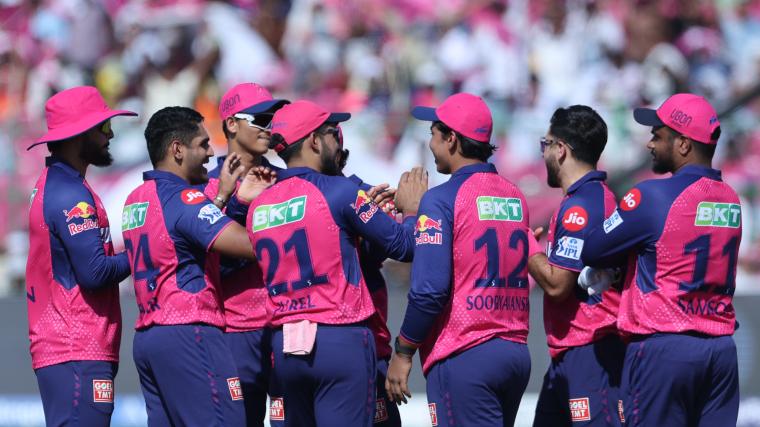
Jaipur IPL Crisis Ends: Court Restores Cricket Stability
Jaipur's IPL future was uncertain due to cricket administration chaos. Discover how the High Court's ruling ended the ad hoc rule, bringing stability and economic relief to Rajasthan cricket.

POLICY WIRE — Jaipur, India — For nearly three years, Rajasthan’s cricketing establishment had been tied in knots, a bureaucratic Gordian knot worthy of state-level infamy. Fans in Jaipur—those fervent supporters of the Rajasthan Royals, mind you—found themselves watching a frustratingly familiar rerun: their home team, threatened with displacement, caught in a tangle of administrative ineptitude and outright political stonewalling. But then, as it often does when the squabbling becomes truly tiresome, the judiciary stepped in, with a clean cut that’s sent a jolt of hope through the city’s sports economy.
It wasn’t about runs or wickets; it was always about governance, or rather, the stark lack of it. The Rajasthan Cricket Association (RCA) had devolved into a revolving door of temporary committees, a bureaucratic purgatory that made the Board of Control for Cricket in India (BCCI) antsy. And rightly so. Because you see, the IPL—India’s glitzy, multi-billion-dollar cricket spectacle—demands a certain degree of operational hygiene, something an elected body provides, and a stopgap committee simply can’t guarantee. Who’s gonna sign the contracts for an Rs 8 crore dispute, for instance, if nobody’s legitimately in charge?
The mess really flared after Vaibhav Gehlot stepped away from the RCA presidency in early 2024. For close to thirty months, Jaipur’s Sawai Mansingh Stadium, a fortress for the Royals, seemed poised to become another cautionary tale of what happens when local political factions treat sporting federations as personal fiefdoms. And when the Rajasthan State Sports Council, citing lapsed agreements and alleged outstanding dues totalling around Rs 8 crore—a tidy sum for any organization, even in the bustling world of Indian cricket—sealed the stadium and RCA offices, the alarm bells really started ringing.
“We’d grown weary of the excuses, frankly,” stated Arun Singh Dhumal, Chairman of the Indian Premier League (IPL), in a telephonic conversation. “The BCCI insists on properly elected member associations for good reason; they provide stability, accountability. This wasn’t a preference, it was a mandate for future hosting rights. We made an exceptional arrangement for a bit, sure, but everyone knew it couldn’t last forever.”
He’s not wrong. Because while the BCCI grudgingly allowed the Royals to coordinate directly with the state sports department for the 2024 and 2025 seasons—a clumsy workaround at best—they made it abundantly clear it was a temporary fix with a fast-approaching expiry date. And when you’re talking about an ecosystem worth untold millions, where a single match pumps significant cash into local economies, you can’t afford that kind of operational limbo. The Royals were already looking elsewhere, contemplating adopting new temporary homes.
But then, like a legal boundary-clearing six, the Rajasthan High Court issued an order that finally cut through the stasis. It suspended the RCA’s ad hoc committee and appointed Bhaskar A Sawant, an additional chief secretary in the state home department, as the sole administrator. His directive is crystal clear: conduct proper democratic elections within three months. Suddenly, a clear path forward exists, replacing two-and-a-half years of dithering.
This decision means more than just keeping the IPL in Jaipur. Because it signifies that even the labyrinthine pathways of Indian bureaucracy can be straightened when judicial oversight demands it. It’s a quiet reminder, too, that sports in the subcontinent—a massive, almost spiritual undertaking—won’t simply wait while regional bodies squabble over power. But the larger implication, for franchises like the Royals and for cities like Jaipur, is simple: finally, a stable ground beneath their feet.
“We certainly welcome this intervention,” remarked a spokesperson for Rajasthan Royals, clearly relieved. “Our commitment to Jaipur and its passionate fans has never wavered, and we now feel a genuine resolution is within reach. You can’t build a sustained sporting legacy on a shaky administrative foundation; it’s just not practical.”
What This Means
The High Court’s decisive action isn’t just about cricket; it’s a telling commentary on governance, economic opportunity, and regional stability. Politically, it’s a shot across the bow for any state-level sporting association prone to chronic internal disputes. It underscores that prolonged administrative voids, especially those tied to lucrative commercial ventures like the IPL, won’t be indefinitely tolerated. This could set a precedent, pushing other federations across India and indeed, broader South Asia, to sort out their internal affairs or face similar judicial scrutiny.
Economically, the certainty it brings is immense. The IPL isn’t just a sporting event; it’s a major economic driver, bringing in tourism, creating temporary employment, and generating revenue for local businesses—hotels, transport, hospitality, and media. Losing IPL hosting rights would have been a significant economic blow to Jaipur. Now, the pathway to full hosting capability is clear, allowing the city to fully capitalize on its association with a global brand like the IPL.
it highlights the enduring, almost singular role of cricket in uniting—and sometimes dividing—the subcontinent. Across the fence from Pakistan, through India, and into Bangladesh, the game is more than just sport; it’s a cultural phenomenon, a significant source of national pride and entertainment. And when such a cherished institution is hampered by administrative failures, it impacts millions, transcending mere financial figures. This ruling stabilizes not just a franchise, but a small, significant corner of a sprawling cricket-obsessed regional economy. Stability, after all, brings cash. And everybody likes cash, don’t they?
The legal battles that plague Indian sports governance aren’t exclusive to cricket. Look no further than the recent power struggles documented in Washington’s handling of crypto ethics or even the economic impact of high-stakes sports in the US. But because in India, cricket is a religion, these battles play out with an added fervor. For now, Jaipur’s prayers seem answered.