


Cochiti Lake Reopens: Unseen Costs of Public Safety
Cochiti Lake reopens after a recovery mission. Explore the unseen human costs of public safety, agency efficiency, and global disparities in tragedy response.

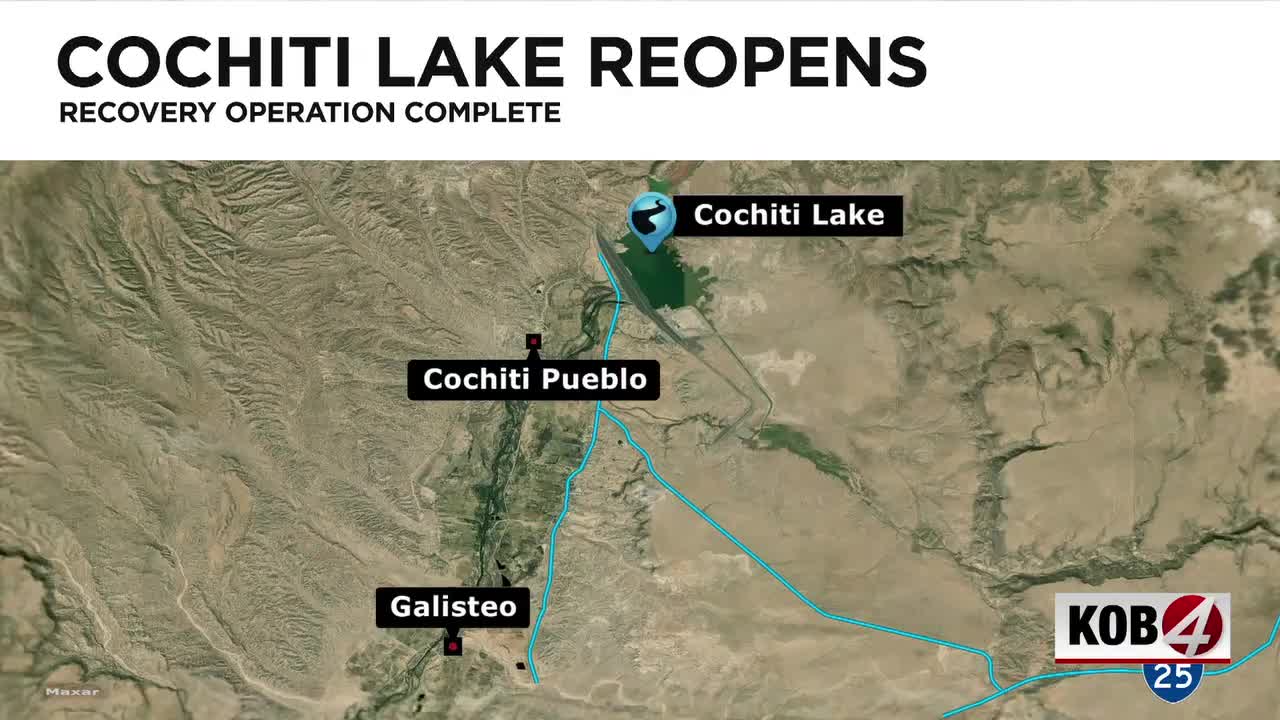
POLICY WIRE — COCHITI LAKE, N.M. — The signage is back up, a familiar herald of summer freedoms. Water laps at the shore. But for all the superficial calm of its recent reopening, Cochiti Lake just north of Albuquerque carries the quiet burden of a solemn undertaking. A missing person’s recovery mission wrapped its grim work here, culminating in the lake being declared officially open again for recreational pursuits. It’s a return to normalcy that doesn’t quite erase the memory of what happened—a hushed reminder that even in sun-drenched leisure spots, shadows loom.
It wasn’t a raucous demonstration or a political protest that shut down this reservoir. It was a search for someone lost, a very personal crisis that ripple-effected across a state agency. The U.S. Army Corps of Engineers acted decisively, a bureaucratic machine shifting gears with somber precision. They closed the lake Sunday while the Cochiti Fire Department performed the search, temporarily transforming a destination for canoes and paddleboards into a contained operational zone. Such is the routine, heartbreaking efficiency of modern governance: a public asset closed for an unspoken, private agony.
The Cochiti Fire Department, a pillar of this tight-knit community, did their job, concluding their difficult task with a brief, terse social media update that their [QUOTE_PLACEHOLDER] And just like that, the curtain lifted. The immediate crisis contained, the protocols followed. Yet, we’re left to ponder the unspoken implications. How many communities across America quietly bear witness to these submerged tragedies, their daily rhythms momentarily fractured by personal loss before the urgent press of life moves on?
And what does this tell us about safety, about oversight, about our expectations of carefree recreation? In an almost prosaic post-script, The U.S. Army Corps of Engineers reminded visitors that alcohol is not allowed at the lake and that loaner life jackets are available. It’s an almost clinical addendum, juxtaposing the profound finality of death with prosaic public safety advisories—a subtle irony for anyone who’s paid attention to the cost of human error, or worse, simple misfortune, in aquatic environments.
It’s easy to dismiss a single incident in rural New Mexico as an isolated event. But across the vast, intricate network of public recreation spaces managed by federal agencies, incidents like these are not uncommon. From 2011 to 2020, there were an average of 3,959 unintentional drowning deaths per year in the United States, according to the Centers for Disease Control and Prevention (CDC). These aren’t just statistics; they’re families shattered, communities forever marked. And for every meticulously managed, resource-rich recovery operation like the one at Cochiti, there are countless others globally that never quite reach the same standard.
Think about the densely populated regions of South Asia, the sprawling deltas of Bangladesh, or the mighty rivers that traverse Pakistan. For these nations, water isn’t just recreation; it’s lifeblood, transport, agriculture. But it’s also, too often, an unforgiving reaper. Safety regulations—basic life jacket availability, clear alcohol prohibitions—can feel like luxuries when contrasted with the sheer volume of humanity navigating often rudimentary vessels on treacherous waterways. The systems, the resources, the sheer operational capacity brought to bear on Cochiti Lake offer a stark contrast to places where such comprehensive searches might be utterly unattainable, where a missing person in the water might remain just that—missing, forever, a nameless statistic swallowed by currents.
But the narrative isn’t just about disparity. It’s also about a universal, fragile truth: human life. We crave leisure, don’t we? That’s why places like Cochiti Lake exist. And because we do, we accept a certain implicit bargain. It’s an almost primal yearning for open spaces, for cool water under a relentless sun, a yearning common to a tourist splashing in New Mexico as it’s to a child playing near a riverbank in Lahore. The U.S. Army Corps of Engineers might issue its pronouncements, the Cochiti Fire Department might update its social media—brief flashes of official communication that barely scratch the surface of collective loss.
And so, as Cochiti Lake invites visitors back into its cool embrace, one can’t help but wonder about the echoes. What exactly was recovered, beyond a person? Was it a fragment of collective understanding, a renewed respect for the elements? Probably not. It’s usually just a brief moment of quiet solemnity, before the splash — and laughter begin again. This incident, minor as it might seem on a national stage, isn’t just about a lake reopening. It’s about the quiet machinations of state, the human cost, and the almost dispassionate precision with which modern society grapples with tragedy—a pattern that speaks volumes about who we’re, and what we prioritize.
What This Means
The incident at Cochiti Lake, while localized, serves as a stark reminder of the often-unseen infrastructure and human capital required to manage public spaces and respond to tragedy. From a policy perspective, the efficiency of the U.S. Army Corps of Engineers and the Cochiti Fire Department isn’t accidental; it’s the product of years of funding, training, and inter-agency coordination. For lawmakers, these operations are often taken for granted until a high-profile incident occurs. But the seamless, if grim, execution highlights the importance of maintaining robust emergency services and regulatory bodies that ensure public safety, even in recreational settings.
Economically, lake closures—even temporary ones—carry a subtle ripple effect. Local businesses reliant on tourism feel the pinch, however briefly. It underscores the delicate balance between public safety imperatives and the economic vitality of recreation-dependent communities. From an international lens, particularly considering regions like Pakistan or other parts of South Asia, this incident offers a poignant contrast. The swift, relatively unencumbered search and recovery at Cochiti Lake relies on well-funded public services, readily available specialized equipment, and a public accustomed to compliance with official directives. In many developing nations, such an organized, resourced response is a luxury. Disaster management there often battles against resource scarcity, fragmented communication systems, and populations less accustomed to, or able to adhere to, strict public safety protocols. The Cochiti scenario, therefore, isn’t just a local news item; it’s a tiny, gleaming window into the broader chasm of global public safety infrastructure, or lack thereof. And this chasm? It impacts lives, shapes economies, — and defines what a community can lose, or recover.
It’s an everyday challenge, a silent struggle played out across America’s backdrops. Similar, sometimes more expansive, unseen forces disrupt American life in ways we seldom truly register. That’s a story you’d know if you followed the granular shifts at Policy Wire’s Silent Pandemic reports, or our coverage of local communities’ resilience when faced with hidden challenges, such as in Ohio’s fading veneer.