


Silent Signals: How Tech Is Changing Global Football
The rise of Snicko, VAR, and microchip balls is silently reshaping football. Explore how digital signals impact game decisions, global economics, and the sport's future.

POLICY WIRE — Lisbon, Portugal — The digital specter haunting modern football made another dispassionate appearance just the other day, stripping Croatia of what many thought was a defiant, last-gasp equalizer against Portugal. Forget human error; we’re well past that. The game’s new arbiters are sound waves and microchips—systems devoid of empathy, utterly impervious to the roar of a disappointed crowd.
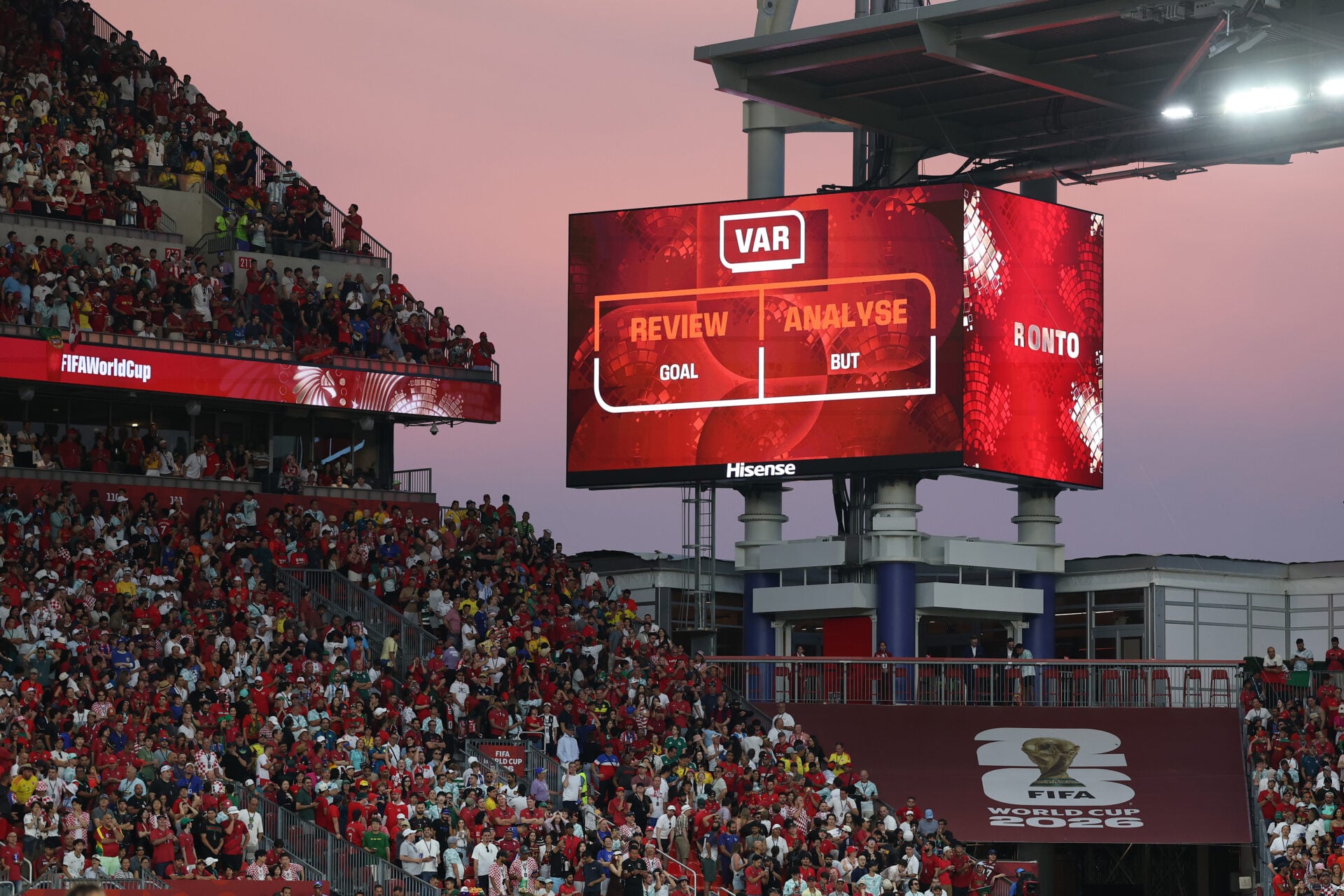
It’s an invisible hand, really, shaping outcomes from a darkened VAR booth. Josko Gvardiol had the net bulging, the Croatian faithful were already celebrating their fleeting glory—a 2-2 deadlock, forged in stoppage time, shortly after Goncalo Ramos had come off the bench to give Portugal the lead. But the elation was short-lived, punctured not by a flag-waving linesman, but by the cold, hard logic of data. [QUOTE_PLACEHOLDER]
His goal got ruled out. Plain and simple. The stated reason: an offside call against Petar Sucic, one of those marginal, hair-splitting decisions football purists often grumble about. Sucic, by all accounts, was indeed offside. But that was not the real snag, the actual flashpoint of disagreement. The contentious bit revolved around whether Igor Matanovic had touched the ball before it ricocheted off Renato Veiga. That’s where the tech stepped in, making its quiet, decisive pronouncement.
Enter the so-called ‘Snicko,’ a bit of kit informally known as the Snickometer. It’s essentially an audiometric sleuth, eavesdropping on the infinitesimal moments of contact within the maelstrom of a football match. Commonly used in sports like cricket (which Pakistan and India, incidentally, are rather fanatic about, having refined their own nuanced debates around DRS — another technology-driven adjudication system), this system’s main gig is picking up sound waves. It figures out if the ball’s actually made contact with something, relaying that info when match officials scrutinize replays in slow motion. And that’s exactly what happened here.
But how does it work its digital magic on the pitch? This season’s official match ball, the Adidas Trionda (a somewhat sci-fi-sounding moniker, wouldn’t you say?), comes pre-loaded with a built-in microchip. This tiny digital brain is constantly logging data, telling the VAR what’s up – detecting when the ball’s been touched, feeding information back, like a nervous junior analyst submitting his first report. The sensor churns out a clear waveform graphic. If there’s contact, the graph spikes, an unequivocal, unambiguous digital exclamation point. VAR assistant Jarred Gillet, probably hunched over a bank of monitors like a particularly intense video gamer, spotted just such a spike. He didn’t even need a huddle; the data spoke for itself. He then instructed the main referee to hit the monitor for a review. Goal disallowed. No fuss, no drama from the tech itself. Just the verdict.
And it’s not a new kid on the block, not by a long shot. FIFA has been deploying Snicko for well over five years now. We first saw it pop up with real prominence at the 2022 World Cup. There, the embedded microchip within the ball wasn’t just checking for contact; it was an entire data observatory, recording highly accurate real-time data on everything: ball movement, its speed, the precise trajectory it took, and every single touch by players. It’s since been used at various other top-tier competitions, Euro 2024 included, solidifying its place as a silent, digital official. Its impact, however, seems more deeply felt, perhaps, than the Snicko used in cricket, where it’s an established, if occasionally argued, part of the furniture.
It brings us to a peculiar point: the increasing digitization of what was once a fundamentally human, often imperfect, game. Global investment in sports technology solutions, including officiating systems like Snicko, surged by approximately 18% in the past year alone, with analysts projecting the market to reach nearly $60 billion by 2030, according to recent industry estimates. This isn’t just about fairness; it’s about big business and the irresistible allure of absolute certainty—or the closest thing to it—even if it comes at the expense of human interpretation, and sometimes, the visceral, emotional surge of a truly spontaneous moment.
What This Means
The ascendancy of technologies like Snicko signals more than just an officiating upgrade; it’s a profound cultural and economic shift for global sports, with ramifications that ripple far beyond European stadiums. Politically, this move towards hyper-accurate, algorithm-driven decision-making centralizes control and legitimizes outcomes through data rather than human judgment. This can be a double-edged sword: while it reduces accusations of bias, it also creates an opaque, technical layer that average fans often struggle to comprehend, potentially alienating them from the game’s raw appeal. It’s why in regions like Pakistan, for instance, there’s often a deep-seated distrust, or at least intense scrutiny, of Western-developed technologies inserted into traditional practices. Whether it’s cricket’s Decision Review System (DRS) or football’s VAR, these tools, while aiming for universality, sometimes clash with local perceptions of fairness, adding another layer to the post-match analysis for players and fans alike.
Economically, the development — and deployment of such sophisticated systems represent a significant investment. Only the wealthiest leagues and international tournaments can currently afford to implement and maintain them, deepening the existing financial chasm between the global footballing elite and federations in less affluent nations, particularly across Africa and South Asia. Think about the prohibitive cost for emerging footballing powers in nations like Bangladesh or even Indonesia to equip every league match with an Adidas Trionda ball (those aren’t cheap, mind you), let alone the entire VAR infrastructure. This technological disparity isn’t just about access to fancy gadgets; it creates an uneven playing field in terms of training, data analytics, and ultimately, competitive advantage. Nations that can’t invest might find their developmental trajectories hampered, unable to keep pace with the hyper-optimized strategies of their tech-enabled rivals. It’s a quiet but forceful stratification, reshaping the global game’s future into one increasingly defined by who can afford the most advanced, invisible official.