


Digital Deception: IS Training Footage Misidentified
Discover how misidentified IS training footage from Afghanistan was spread as Bangladeshi, highlighting critical misinformation risks in South Asian security & media.

POLICY WIRE — Islamabad, Pakistan — It’s often the small, almost accidental moments that rip back the curtain on larger geopolitical deceptions. Imagine a digital flicker, a low-res video making the rounds, supposedly capturing the future architects of regional instability honing their grim craft. The internet, ever hungry for outrage and definitive pronouncements, declared it so—another threat, emerging from an unlikely corner of South Asia, specifically a Bangladeshi madrassa. But sometimes, even the most certain pronouncements get things wrong. Sometimes, they’re not even close.
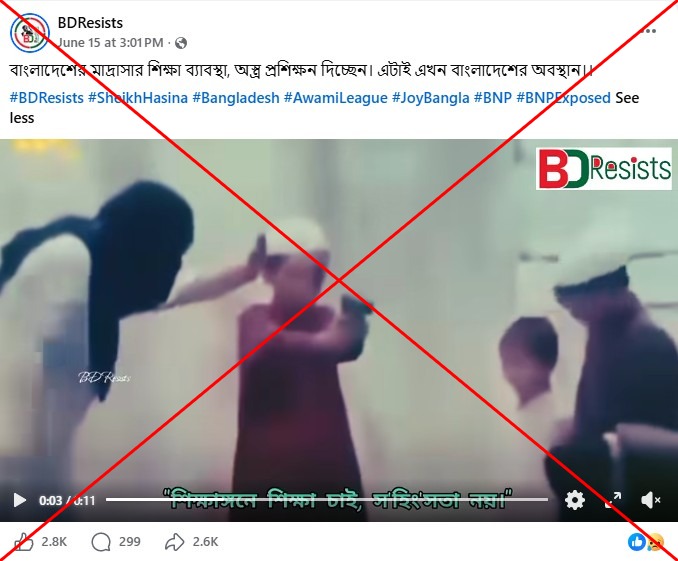
It turns out that highly circulated digital media, purporting to depict a specific jihadi training scenario in one nation, was actually something else entirely. The clip in question, a brief, disquieting visual of alleged recruits undergoing militant instruction, didn’t originate from the congested byways of Bangladesh. Not at all, it turns out. But, its initial spread as a supposed indicator of growing extremism in that particular country managed to cause a considerable stir, underscoring the precariousness of online narratives. People saw what they expected to see—or what they were told to see.
The reality? The entire scene, now confirmed, was staged within the harsh, familiar landscapes of Afghanistan. A classic bait-and-switch, really, perhaps unintentional in its initial misattribution, but profoundly telling regarding the fluidity of information in our connected world. And for governments grappling with persistent security concerns—especially in a region as complex and volatile as South Asia—such mix-ups aren’t just an embarrassment; they’re an operational nightmare, diverting attention, resources, and trust. Because when even fundamental facts are fungible, where do you even begin?
It’s not just a minor slip-up, you see. The quick adoption and widespread sharing of this misidentified content—a clear illustration that a [QUOTE_PLACEHOLDER] could have significantly impacted public perception and, heaven forbid, even diplomatic relations had the mistake not been rectified. This isn’t just about a video; it’s about the credibility of information sources and the almost automatic distrust that sets in once a narrative proves false. We’re swimming in a constant deluge of information, often murky. Social media platforms, by some estimates from industry watchdogs, are contending with over half a million pieces of flagged content daily. Think about that for a second. That’s a lot of noise.
For nations like Pakistan, long at the forefront of the battle against various extremist elements, such misdirection isn’t new. Islamabad’s security apparatus constantly monitors the digital sphere, wary of both indigenous threats and those projected onto the region from afar. The broader Muslim world too, frequently finds itself navigating the thorny issue of misrepresented narratives, particularly when they involve interpretations of faith and violence. It’s a never-ending cycle, isn’t it?
This incident also begs questions about the groups themselves. What was the intention behind the original training clip, regardless of its location? Were they seeking to project an image of omnipresence? Were they hoping to sow discord by implying a reach they might not actually possess? Or was it just another piece of their vast, sprawling propaganda machine, indifferent to the precise details, only concerned with the overall psychological impact? We don’t always know, — and that’s precisely the point.
The original report clearly states the [QUOTE_PLACEHOLDER]. It really was that simple, that concise. But the implications of that misidentification stretch much further than a single news item. It speaks volumes about the vulnerability of our collective perception in an age where information, and misinformation, travel at light speed. It’s a reminder, grim — and persistent, that not everything you see, especially online, holds true. And it certainly reminds us that attributing activity, especially sensitive national security activity, requires more than a casual share and a quick headline. A discerning eye—and perhaps a healthy dose of skepticism—is probably the most powerful weapon in this digital battle.
What’s unsettling is how easily these geographical blurs happen. One day, a video is a chilling proof of concept from one locale; the next, it’s debunked, only to be replaced by another, equally ambiguous piece of media. It’s an exhausting cycle for journalists, policy makers, and anyone genuinely interested in understanding complex realities without getting lost in the weeds of manipulated content. We’re all trying to make sense of the chaos, aren’t we?
What This Means
This isn’t just an ‘oops’ moment for whoever first misidentified the video. This snafu—a straightforward error of geopolitical attribution—carries significant political and security weight. For countries in South Asia, including Pakistan and Bangladesh, the rapid spread of such inaccurate intelligence can complicate already strained counter-terrorism efforts. Imagine the waste of resources investigating a ghost threat in one region while the real concern festers elsewhere.
Economically, persistent, misdirected attention towards specific regions as hotbeds of extremism can deter foreign investment, damage trade relationships, and even impact tourism. No government wants its nation unfairly tarred with the brush of militancy due to shoddy online reporting. It fosters an environment of suspicion, hindering legitimate cross-border cooperation crucial for regional stability. More broadly, it further erodes public trust in mainstream media and official channels, feeding the beast of conspiracy theories. When the facts themselves are elastic, public policy becomes less about nuanced strategy and more about reactive damage control. And that, frankly, is a precarious tightrope to walk.