


Inflation Forces Albuquerque Eatery to Close Doors
Albuquerque's My Mom's Kitchen closes due to inflation, reflecting a national crisis for small businesses. Discover how rising costs and supply chain issues are impacting Main Street.

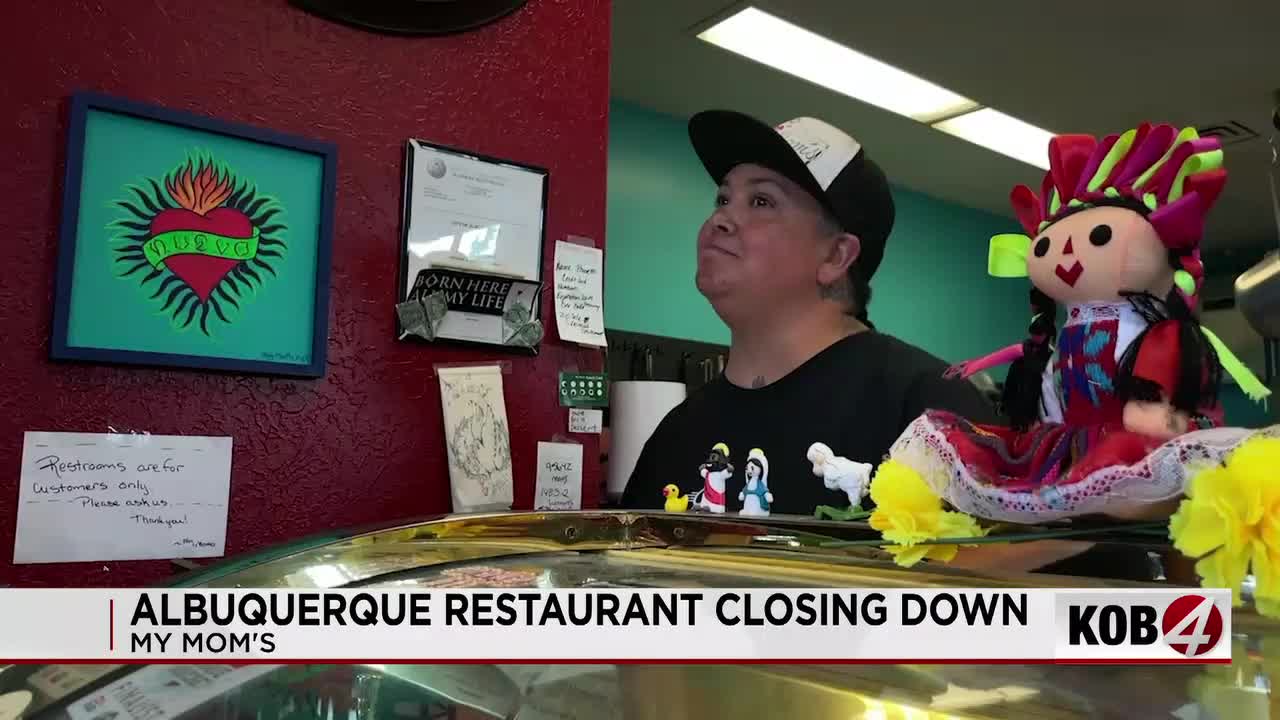
POLICY WIRE — ALBUQUERQUE, N.M. — It’s a cruel sort of physics, this small business thing. You push, you strain, you put in impossible hours. The whole engine runs on your guts, right? But then the treadmill speeds up—unbidden, unrelenting—and suddenly, despite every ounce of effort, you’re not just staying in place; you’re actually losing ground. Chef Marie Yniguez, proprietor of My Mom’s Kitchen here in Albuquerque, knows that particular agony firsthand. She’s calling it quits on July 31st, not for lack of diners, but because the numbers just don’t make sense anymore. Not in this economy, they don’t.
After five years, Yniguez found herself in an unenviable bind: pass crippling cost increases directly onto her loyal clientele, or simply throw in the towel. She opted for the latter, choosing to absorb the blows until there was nothing left to absorb. Think about that for a second. An owner, devoted to her community, actively choosing insolvency over alienating her customers. “I’m running — and I can’t run anymore,” she told local media, a raw, exasperated admission. “It’s time, — and I can’t catch up with the bills. I’m paddling and paddling, but I ain’t getting nowhere.” That isn’t just a lament; it’s a nationwide groan from every corner diner, every struggling storefront trying to make ends meet when ‘ends’ keep moving further and further apart.
Beef, permits, takeout containers – the seemingly innocuous costs that pile up, like small stones in a rucksack that suddenly feels like a boulder. The U.S. Department of Agriculture’s Economic Research Service reported in its most recent quarterly outlook that beef prices, specifically, rose by approximately 18% over the past year for some consumer cuts, a gut-punch for any restaurant serving staples like burgers or steaks. And that’s just one line item. Imagine that across the entire supply chain. Small wonder these places struggle. But the impact isn’t confined to our borders.
Because, really, these are global ripples hitting a local puddle. The very same supply chain fragility, the same inflationary pressures battering Yniguez’s budget, are causing genuine upheaval halfway across the world. Think of countries like Pakistan, perpetually navigating food security concerns, where even a slight uptick in global wheat or fuel prices can trigger mass civil unrest. Food prices, and how nations choose to subsidize or tax them, often form the precarious fault lines of social stability in places like Lahore or Karachi. We’re all connected by these invisible threads of commerce, after all. What rattles a shipping container in Shenzhen eventually shows up on a restaurant’s balance sheet in New Mexico. It’s inescapable.
But how did it get this bad? New Mexico, like many states, has seen its share of small business churn. Sarah Jenkins, Deputy Secretary for Commerce at New Mexico’s Economic Development Department, lamented the situation in a statement to Policy Wire. “These aren’t just numbers on a balance sheet; they’re livelihoods. We’re seeing entrepreneurs, good people who’ve built something, getting squeezed by forces way beyond their control. It’s brutal, truly disheartening, to watch these essential community anchors fade away.” She pointed to various state initiatives aimed at relief, but conceded their limits in the face of what she called “macroeconomic tidal waves.”
The sentiment is echoed further up the political food chain. “What we’re witnessing, from Albuquerque to Akron, is the raw consequence of unchecked inflation—a tax, frankly, on Main Street,” remarked Senator Martin Heinrich (D-NM) in a recent press conference, responding to queries about small business bankruptcies. “We’ve got to confront these supply chain fractures and corporate consolidations that push commodity prices through the roof. It isn’t sustainable. Small businesses like My Mom’s Kitchen are the bedrock of local economies, and when they can’t make it, it impacts us all—from local job losses to a diminished community spirit.”
It’s a situation where the good guys—the ones trying to maintain affordability and decent wages for staff—often end up paying the steepest price. Yniguez, for her part, held out for her crew. “I’m doing it because I want to keep my staff because I love them, I love their families,” she admitted, trying to maintain a safe harbor in a storm. And that’s something you just don’t see from publicly traded behemoths. But personal loyalty, it turns out, can’t defy economic gravity forever.
Her family’s legacy, the very spirit of a mother’s cooking, had built My Mom’s Kitchen. “I wanted to show her off to the world,” Yniguez said. “This place is for all the moms out there.” A sentiment both heartwarming and, now, heartbreakingly ephemeral. Her plans pivot to her food truck, SRB, a leaner, perhaps more agile vehicle for her culinary passion in downtown Albuquerque, proving that entrepreneurial spirit, if nothing else, endures even when the brick-and-mortar dream doesn’t. Perhaps this shadow of scarcity in New Mexico isn’t an ending, but an urgent lesson in adaptation.
What This Means
The closure of My Mom’s Kitchen isn’t just a sad local story; it’s a policy litmus test, a bellwether for the broader U.S. economy. Politically, it exacerbates the ‘cost of living crisis’ narrative that both parties struggle to effectively address, making it a hot-button issue in upcoming elections. For everyday citizens, it’s a stark reminder that inflation isn’t just about gas prices; it eats away at the very fabric of local community institutions. Economically, these closures highlight the disproportionate burden on small, independent businesses lacking the scale and negotiating power of corporate giants. They can’t demand bulk discounts; they can’t simply offshore production. They live and die by razor-thin margins. And the implications stretch beyond state lines. When local supply chains are disrupted by rising commodity prices, for instance for meat, that same pressure can manifest in volatile food prices globally. Even agricultural export strategies often fail to insulate domestic consumers from such shocks. These small, daily decisions in local kitchens collectively tell a story of global economic fragility and the urgent need for resilient supply systems, price stability, and targeted small business support, something that remains largely an aspirational goal rather than a concrete reality.