


D-Backs vs. Brewers: MLB’s Shifting Power & Strategy
Unpack D-Backs vs. Brewers. From crotch chops to strategic card games, discover how MLB's landscape is shifting. Witness success without traditional power.

POLICY WIRE — Phoenix, Arizona — Forget home runs, at least for a minute. Baseball, that grand old game of America, is apparently now grappling with the geopolitical implications of a well-placed crotch chop. Brewers relief pitcher Abner Uribe learned this the hard way, sidelined for a game—a mere flick of the wrist—after delivering a rather explicit WWE-style gesture post-strikeout. Was it worth it? Probably not. Will it become a footnote in baseball lore? Possibly. But here’s the kicker: it’s just one peculiar symptom in a season that feels decidedly… different. It’s not just players getting slapped on the wrist for unorthodox displays, though. MLB itself reportedly put the kibosh on the Brewers’ ingenious (or desperate, depending on your perspective) use of green index cards in the dugout, meant to signal optimal moments for challenging ball/strike calls. Imagine that, clandestine card signals for fairness. Who knew the stakes were so high for stationery?
It’s these little quirks, these moments of absurdity and rule-bending, that paint a more vivid picture of the contest between the Arizona Diamondbacks and the Milwaukee Brewers than any mere stat sheet could. Oh, there are stats, plenty of them. But what truly underpins this matchup isn’t power hitting – because, frankly, there isn’t much to go around. Both these squads find themselves scraping the bottom four in Major League Baseball for home runs this season, through June 24th, with the D-Backs clocking 71 and the Brewers just ahead, or behind, with 70. Small potatoes, when you think about it.
But that’s where the balance tips. See, the Brewers, for all their power deficiency, are punching above their weight in total runs, ranking among the top three teams with a robust 407. They’ve found ways to push runs across. The D-Backs? Well, they’re average. Solid, dependable even, but without that same explosive spark this time around. Ben Clemens, a seasoned baseball analyst, had a pre-season observation that still holds water. “To close things out with my three-axis framework, I think that the Brewers sacrificed some Championship Probability Distribution in 2026 in an attempt to push it higher in future years. Their full organization looks better than it did to me last year, even if the major league team isn’t quite as fearsome.” He’s not wrong; Milwaukee has positioned itself cannily, even if the on-field product feels a touch less menacing.
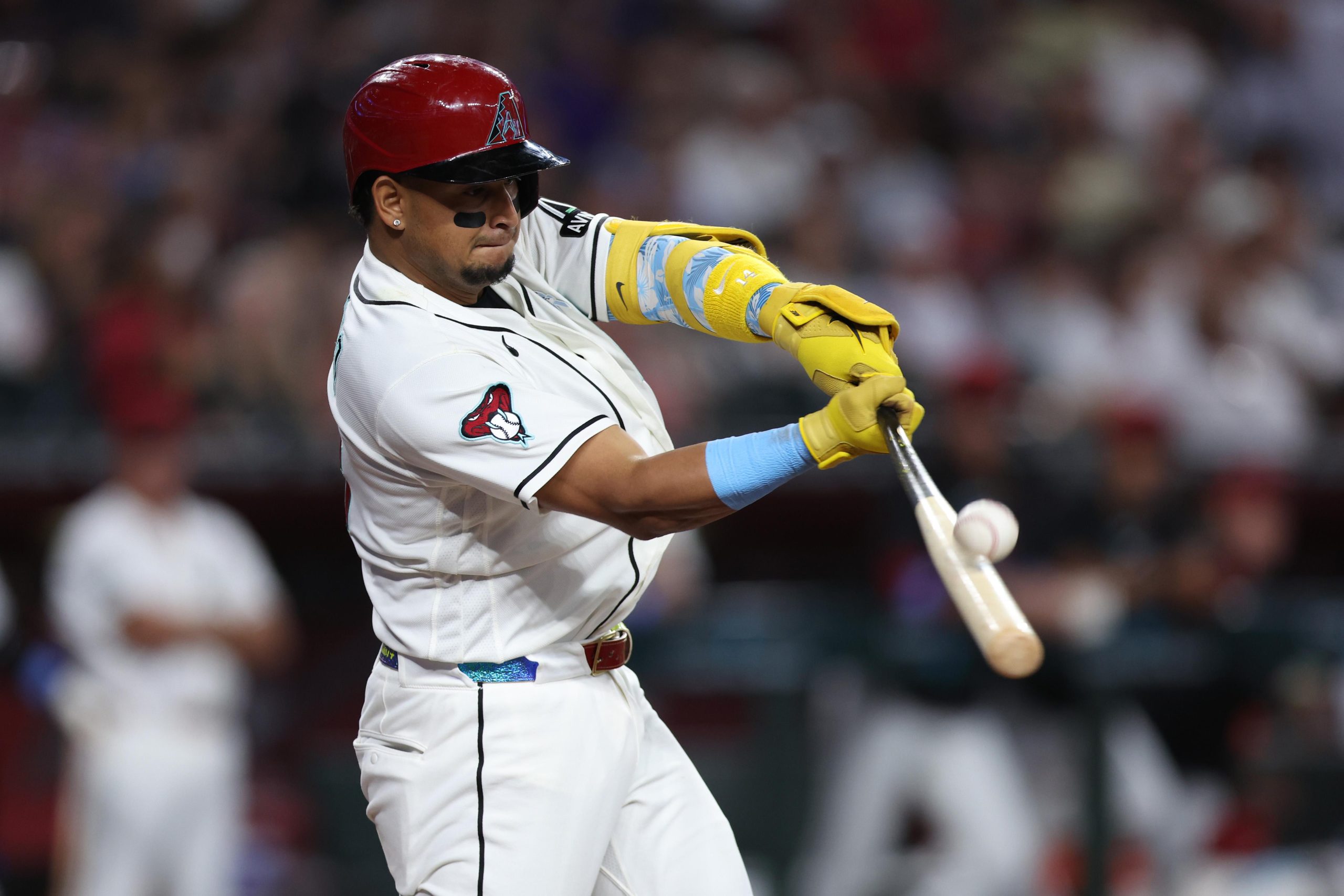
And what’s less fearsome for the Brewers this year is still pretty darn formidable. They not only made the National League Championship Series last year, losing to the Dodgers, but they also currently lead the NL Central with a staggering 95.3% chance of making the playoffs. That’s a juggernaut in the making, or maybe just a masterclass in efficient operations. They don’t just score more runs per game, mind you, averaging 5.18 compared to the D-Backs’ 4.27 as of June 30th. They’ve also been getting exceptional offensive performances from unlikely places. During the June 1st to 24th stretch, when the league average OPS was .746, the Brewers had five players — five! — operating above .900 OPS. Guys like Andrew Vaughn (.1.019) — and Chourio Jackson (1.017) aren’t just contributing, they’re tearing it up. And Gabriel Moreno, the Diamondbacks’ own bright spot with a .931 OPS in that same period, will have to shine especially brightly if Arizona hopes to compete.
The D-Backs do hold some cards, though. Their defense, measured by Outs Above Average (OAA), is significantly better (28 vs 2). They also leave fewer runners on base (6.61 vs 7.45 per game), a small-ball efficiency metric. But Milwaukee isn’t exactly a slouch defensively either; their savvy approach extends beyond batting. It’s a global game now, isn’t it? Teams scour academies from the Dominican Republic to — yes — even emerging markets in South Asia, finding overlooked talent. It’s a reminder that baseball’s economic sprawl creates opportunities in unexpected corners of the world, shaping the future of rosters in ways the average fan might not fully grasp. The Braves, for instance, are notoriously adept at identifying undervalued assets; a stark reminder of baseball’s global economy. And that same diligent scouting applies here.
What This Means
This series, then, isn’t just about who wins three games. It’s a microcosm of baseball’s strategic evolution. You’ve got one team, the Brewers, expertly navigating the trade-offs of future competitiveness versus present performance, proving you don’t need a lineup full of home run sluggers to dominate. It’s an organizational triumph, really—a silent nod to smart management over sheer brute force. And that managerial prowess echoes in every corner of the game, doesn’t it? This Brewers squad represents an interesting shift, where organizational depth and clever acquisition strategies — even those green index cards — supersede what some might call ‘marquee’ power. Their lead in playoff odds, despite an absence of traditional offensive fireworks, highlights a robust system at play. For the Diamondbacks, it’s a test of resilience, of their ability to convert strong defense and solid starting pitching into consistent wins against a team that finds ways to win.
This clash of styles sets the stage for a tight series. Friday sees Jose Cabrera of the D-Backs facing Kyle Harrison, with Cabrera holding a slight statistical edge thanks to his 1.20 WHIP, which seems quite sustainable. Saturday is the big one: Merrill Kelly (D-Backs) versus the Brewers’ Brandon Woodruff. Woodruff, back from injury, looked immaculate in June, boasting a 0.00 ERA in two starts. Kelly, meanwhile, struggled, his June ERA an inflated 7.31, largely due to an unfortunate string of eight home runs. He’ll need to shake that off. And Sunday gives the D-Backs a shot at redemption with Eduardo Rodriguez, who sported a strong 2.02 ERA in June over four quality starts.
Don’t expect fireworks. Do expect calculated moves, strategic pitching changes, and, perhaps, another curious moment that leaves you wondering just what MLB is up to these days. The crotch chops? Those green cards? They’re just the start. But then, it’s never just baseball, is it?