


Ukraine Adoption: 25 Years of Family, Faith & Policy
Discover the Rio Rancho family's 25-year journey adopting four children from Ukraine. Learn how their story reveals profound human connection and evolving international adoption policies.

POLICY WIRE — Rio Rancho, N.M. — It’s a classic American story, right? Firecrackers, picnics, declarations of independence. But for one family out in Rio Rancho, New Mexico, the Fourth of July means something…different. It’s the day, 25 years ago, they staked their own claim: not on land or liberty, but on four small lives pulled from the bureaucratic limbo of post-Soviet Ukraine. And now, there’s a book.
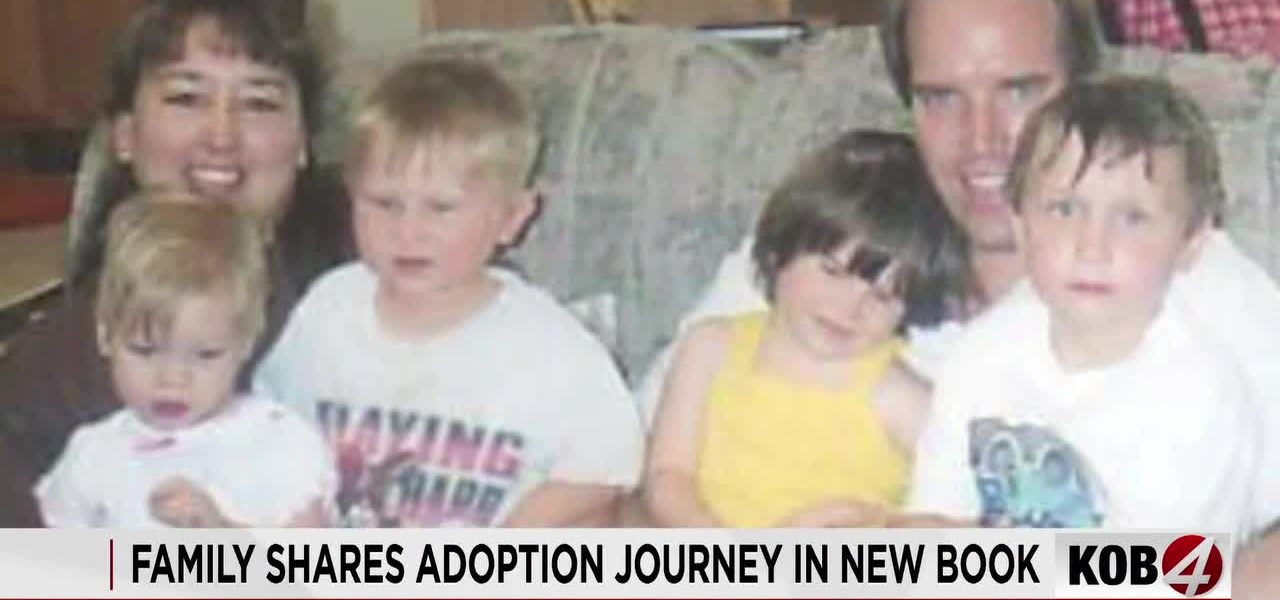
Lori — and Joe Rajunas aren’t your typical flag-waving archetypes. They’re just a couple who watched a local TV segment called “Wednesday’s Child” back in the late 90s, saw some kids who needed a shot, and figured, why not us? What began with a casual flicker on a screen morphed into an audacious international mission—one that makes most holiday parades feel pretty tame by comparison.
Because this wasn’t some tidy local pickup. No. It meant a journey to Kyiv, the capital then still grappling with the seismic shifts after the Iron Curtain fell. Joe Rajunas remembers the drill vividly: “The process was you went to Kyiv, and you looked through these three-ring binders with pictures of kids, and we had no idea how hard that was going to be.” Just imagine that—the sheer human scale of vulnerability reduced to a binder full of fading photographs. It’s stark, isn’t it? A grim reality that policy-makers — and pundits often abstract away.
They chose four—Dasha, Olya, Alex, and Eric. Four small, silent shadows from a distant world, each carrying their own challenges. Lori isn’t one to sugarcoat it: “It’s been a crazy ride. It was not easy to bring four kids home from Ukraine that didn’t speak the language, all four of them, to some degree, had a disability.” And she’s not wrong. It wasn’t easy, not then, and the echoes of that struggle still resonate through their lives, even as they celebrate 25 years.
This kind of cross-border compassion, however fraught, tells us something bigger about human connection than most geopolitical analyses. “You see these moments of profound human connection—kids finding families—and it’s a stark reminder that even as nations jostle, there’s always this deeper human story unfolding,” offered a senior U.S. State Department official, speaking on background about the often-labyrinthine challenges of cross-border adoptions. It’s a sentiment Ukraine itself seems to echo. “Ukraine, of course, prioritizes its children, but we’re grateful for every international hand that helps secure a future for our most vulnerable,” stated Oksana Balenko, a spokesperson for Ukraine’s Ministry of Social Policy, subtly acknowledging the strains on the national system, both then and now.
Their independent adoption method, by the way, isn’t even allowed anymore in Ukraine. The rules change. The geopolitics shift. But the need? That’s tragically constant. Lori Rajunas’ new book, “His Plan Was Bigger,” chronicles all of it, from daycare mishaps to first encounters with American diners. And it’s quite a read.
Alex, one of the now-grown children, frames it neatly: “It’s just a beautiful picture of how He didn’t give up on us, and how He doesn’t give up on anybody.” Olya, pragmatic as ever, just puts it: “I had the best parents over 25 years, and best siblings.” Pretty high praise, that, considering the rocky start. The story, for them, isn’t about overcoming impossible odds. It’s just life—a life built on a leap of faith, some very lengthy paperwork, and a deep, abiding hope.
But there’s more to it than just one family’s perseverance. The Rajunas’ story resonates because it taps into a broader, enduring global issue: the staggering number of children without families. UNICEF data from 2017, for instance, indicated over 26,000 children were living in institutional care in Ukraine alone before the current conflict escalated that catastrophe.
What This Means
This particular story, framed around a family celebrating their unique Fourth of July, pulls back the curtain on how individual acts of profound humanity intersect with, and sometimes directly challenge, grand national narratives. For one, it highlights the quiet policy ripple effects of international adoption. What the Rajunas did 25 years ago—navigating a pre-war Ukrainian bureaucracy—is a policy world apart from today’s landscape. Independent adoptions are now generally prohibited in Ukraine, signaling a shift toward more formalized, often slower, processes. This means families today seeking to adopt from places ravaged by conflict, whether Ukraine or, say, regions struggling with humanitarian crises in Pakistan or parts of the Middle East, face an entirely different set of institutional hurdles, often colored by donor state concerns about child trafficking and national pride issues within the countries of origin.
Economically, every successful adoption story, while seemingly small scale, represents an unburdening, however minute, of state resources, both in the donor and receiving countries. It’s a subtle form of foreign aid, really, a direct investment in human capital where traditional development models often fail. Politically, these narratives serve as potent symbols. They remind us that for all the bluster and brinkmanship between nations, for all the competing ideologies, there’s a persistent, fundamental human desire for safety and belonging that often transcends borders, policies, and even wars. It’s an American family adopting Ukrainian children; tomorrow, it might be a German family taking in Syrian refugees, or a Pakistani family providing shelter for Afghans. The human impulse, sometimes, is just to care. It always wins, doesn’t it, at least in the individual heart? And that’s pretty much the most unyielding policy there’s.