


Albuquerque: Veteran’s Ashes Stolen in Car Theft
A car burglary in Albuquerque wasn't just about property; a veteran's ashes and medals were stolen. Explore the profound emotional toll of 'petty crime' on families and cities.

POLICY WIRE — Albuquerque, N.M. — In the relentless churn of urban crime, the theft of a handbag or a laptop rarely registers beyond a local police blotter. But sometimes, the mundanity of lawbreaking veers sharply into the profound, forcing a re-evaluation of what’s truly lost when a car window gets smashed. An Albuquerque car burglary, routine as such incidents often are, has pulled back the curtain on this harsh reality, leaving not just financial loss, but a gaping, sacred wound for one traveling family.
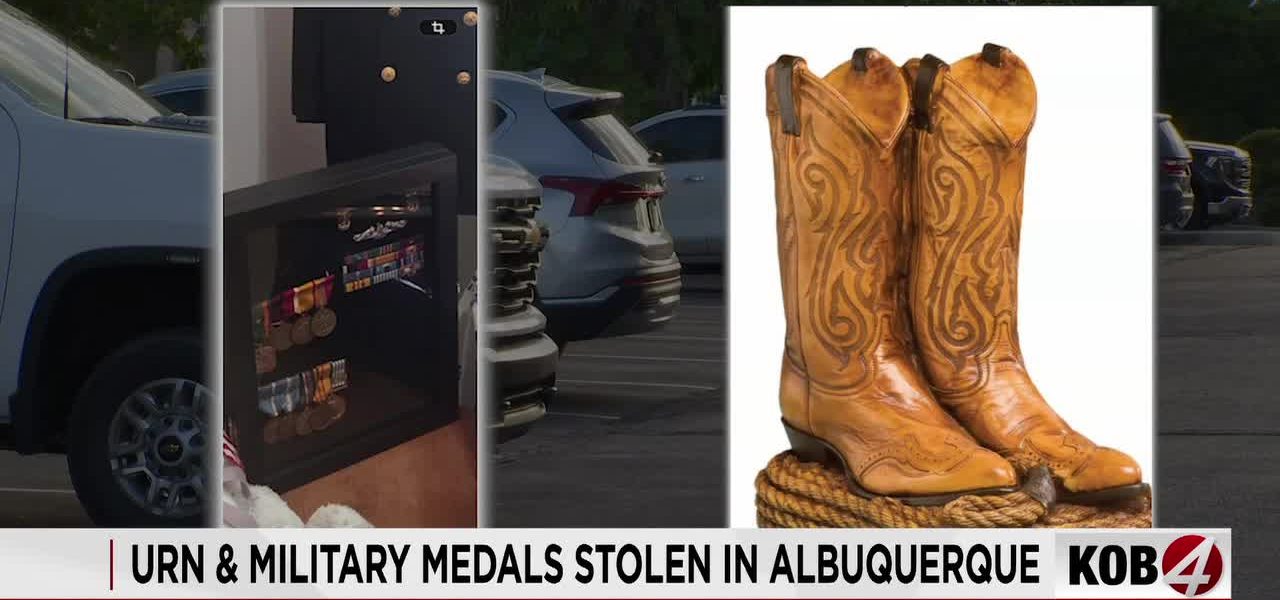
It wasn’t jewelry. It wasn’t cash. No, what vanished from a rental car parked at a Best Western off I-25 last week were the cremated remains of Charles Landrum, a Navy cryptologist and teacher, enshrined in a cowboy-boot-shaped urn, alongside his meticulously earned military medals. Tammy Blevins, Landrum’s daughter, was en route from California to Colorado to fulfill her late father’s final wish: burial beside his beloved wife. Then, Albuquerque happened. It’s an almost unbelievably cruel twist of fate, isn’t it?
Blevins readily admits she shouldn’t have left valuables in the vehicle. “I know you’re not supposed to leave valuables in your vehicle, and I take full ownership of that,” she recounted to local media. But, she added with a raw honesty, “I would have never thought that somebody would do that.” The father, 95 when he passed in February, wasn’t just a cryptologist; he was a teacher, a man with a love for horses that ran so deep it trickled down to his daughter. And now, this deeply personal chapter of grief and remembrance is brutally interrupted, hijacked by opportunists with presumably no concept of the items’ true, irreplaceable worth.
This incident, jarring in its disregard for human sentiment, speaks to a broader challenge many American cities contend with. Property crime, while often dismissed as minor compared to violent offenses, erodes civic trust — and community fabric. Because when a citizen’s final rites, or a veteran’s earned recognition, can be snatched so casually from a hotel parking lot, one has to wonder where the collective moral compass points. FBI data, a sobering indicator of America’s internal battles, revealed roughly 6.5 million property crime offenses were reported across the United States in 2022. It’s a number that doesn’t just represent lost TVs or busted windows; it encapsulates countless instances of lost peace of mind.
Police response to such crimes, inevitably, faces criticism. Chief Randall Stone, head of a medium-sized urban police force not directly involved but speaking broadly on the matter, minced no words in a statement Policy Wire received. “Look, we’re doing what we can with the resources we’ve got. Property crime? It’s a hydra. You cut off one head, another pops up. We prioritize violent crime, that’s just the cold truth. But it doesn’t make these incidents any less devastating for the victims. It absolutely doesn’t.” His candor suggests a frustrating reality for law enforcement everywhere.
And so, a family is left to grapple with an almost unspeakable indignity. The outpouring of support from Albuquerque residents has offered some comfort, a glimmer of shared humanity in the dark. But the question remains: what does it say about a society where such items — sacred vessels of memory and valor — become mere fodder for a petty heist?
📄 POLICY WIRE WHITEPAPER PUBLISHED: PAKISTAN'S NATIONAL SECURITY POLICY PRIORITIES
👉 READ BY CLICKING HERECouncillor Fatima Khan, a municipal leader from a South Asian district with a strong immigrant community, reflected on the universal reverence for ancestors. “In our traditions, as in so many, the sanctity of our departed loved ones, and the honor of our elders—especially those who served—is paramount,” Khan stated, drawing a subtle comparison. “To have a father’s ashes, his very identity — and sacrifice, stolen like this… it’s a profound violation. It challenges our understanding of community ethics. We have a shared responsibility, culturally, across the globe, to protect these memories. This isn’t just about stolen property, it’s an assault on a family’s history, their grief. Our communities deserve better.” Her words underline a universal truth, cutting across borders from Albuquerque to Lahore, that the dead, and their memory, demand respect. Or so they should.
Tammy Blevins hopes someone, anyone, will do the right thing. Because honestly, some things just shouldn’t ever be reduced to mere collateral damage in the routine tragedy of a broken window. For a deeper look at policy impacts in other areas of the country, consider how San Francisco breaks streak in its policy narrative. Also, the politics of cultural artifacts is an interesting lens through which to examine these issues, as detailed in an article about bronze and bureaucracy.
What This Means
This bizarre incident, while seemingly localized, shines a spotlight on a nagging policy dilemma for municipal leaders across the nation: how to balance finite law enforcement resources against a relentless tide of property crime. It’s a political hot potato. On one hand, constituents demand safer streets — and lower crime rates. On the other, budgets are tight, — and violent crime naturally takes precedence. But ignoring the cumulative impact of petty theft—which isn’t just economic, but psychological—can slowly chip away at a city’s livability and its citizens’ faith in institutions. Economically, repeated property crimes can deter tourism and new businesses, giving areas a reputation for instability. Socially, it fosters an environment of fear and mistrust, discouraging community engagement. Policy debates need to move beyond simple statistics and confront the deeper, emotional scars these ‘minor’ offenses leave on individuals and communities.