


New Mexico’s Climate War: Fires, Floods, & Policy
New Mexico battles simultaneous wildfires & floods, straining resources & policymakers. This climate crisis mirrors global struggles, demanding urgent integrated policy.

POLICY WIRE — ALBUQUERQUE, N.M. — In New Mexico, they’re not just predicting the weather; they’re forecasting a recurring nightmare for policymakers and emergency services. While parts of this sun-baked state brace for drenching monsoons, potentially violent downpours, others, sometimes mere valleys away, find themselves staring down the barrel of peak wildfire season. It’s a climate conundrum that forces officials into a perpetual state of fiscal and logistical contortion, a paradox that feels less like an act of God and more like a cruel, seasonal joke.
It’s Wednesday, but it might as well be any day in a warming world. Another one of those early monsoon days. Storms are bubbling up in the south-central mountains, then drifting north and east, dousing parts of the landscape with much-needed moisture—a trace up to a quarter-inch, if you’re lucky enough to be in the bulls-eye. But because weather systems aren’t known for their democratic distribution, central and north-central New Mexico get, well, virtually nothing. Ten, maybe twenty percent chance of isolated sprinkles in Albuquerque. A damp squib, as they say, for those hoping for real relief.
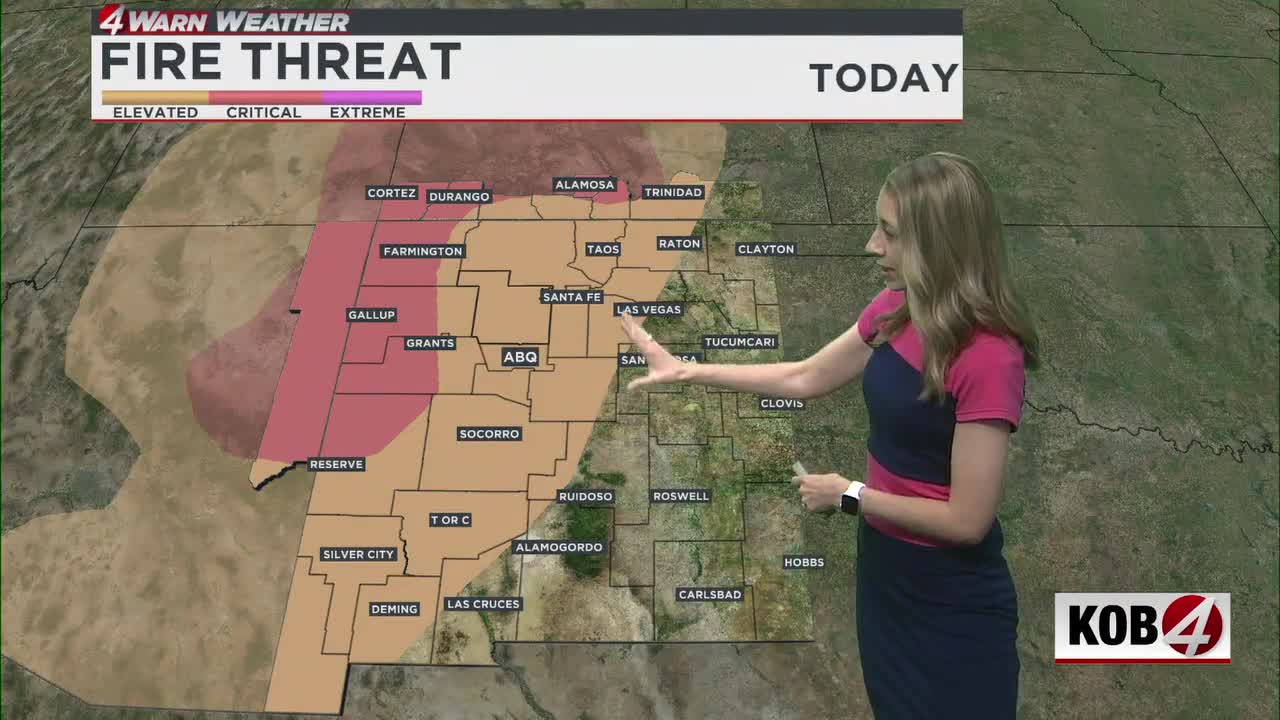
And for those not getting soaked? It’s a dry, brutal heat. We’re talking upper 80s, 90s across the lowlands, nudging up to the state’s climatological average of 92 degrees. But temperature is only half the torment. Westerly winds, bone-dry — and pushing 20-30 mph, with gusts up to 50, whip across a tinderbox landscape. Elevated fire weather conditions mean that a spark, a dropped cigarette, or a forgotten campfire—could morph into an inferno in minutes. Emergency crews, already stretched thin fighting the likes of the Beehive and McCauley Springs fires, just can’t catch a break. They’re literally fighting two very different wars on the same day.
“We’re not just managing a monsoon; we’re wrestling with the chaotic physics of a planet that’s frankly tired of our shenanigans,” Governor Michelle Lujan Grisham told Policy Wire, her voice edged with a mix of frustration and resolve. “Every drop of rain is a blessing, but every dry gust over parched land is a prayer unheard. You budget for one, you pray it doesn’t devastate the other.”
It’s this simultaneous threat that creates a truly intractable policy challenge. How do you allocate resources—firefighters, tankers, flood response units, emergency shelters—when one part of the state needs sandbags and another needs aerial retardant? The state’s roughly 230 active-duty firefighters and personnel, already navigating an average of 400 new wildfire starts annually, according to the National Interagency Fire Center (NIFC) for 2023, face a nearly impossible task. Tim Shafer, New Mexico’s State Fire Marshal, puts it bluntly: “It’s a double-edged season, always has been. But now? We’re seeing more extreme swings, less predictability. It forces us to contingency plan for contingencies—a planning paradox, really.”
But New Mexico’s predicament isn’t some isolated, regional oddity. It’s a mirror reflecting a wider, global instability. Across oceans, in countries like Pakistan, vast arid landscapes endure searing heatwaves one month, then struggle under the deluge of super-monsoons the next—sometimes causing catastrophic floods, sometimes still leaving the land parched as the rain runs off rather than soaks in. Those nations too grapple with infrastructure ill-suited for such extremes, with agrarian economies vulnerable to volatile weather, and populations often on the move because of it. Their water resource planning—like New Mexico’s—is increasingly about crisis management rather than stable allocation.
And let’s not forget the sheer human toll. Not just the physical dangers, but the quiet desperation of ranchers watching pastures wither, farmers praying for the rain that never reaches their fields, or homeowners fearing the approaching blaze. It’s a constant, low-level anxiety permeating everyday life, forcing residents to keep one eye on the sky, and another on evacuation routes.
What This Means
This localized meteorological wrestling match has far-reaching implications, not just for New Mexico but for policy discussions everywhere. Economically, the cycle of fire and flood imposes immense costs—destroyed property, agricultural losses, strained tourism, and skyrocketing insurance premiums. State and federal funds that could be bolstering education or infrastructure development are instead funneled into disaster response and mitigation, a reactive drain rather than proactive investment. Politically, leaders face an unenviable position: how do you convince taxpayers to invest heavily in climate resilience—measures for both too much *and* too little water—when immediate needs are always screaming? This isn’t just about preserving ecosystems; it’s about maintaining the social contract in the face of what feels like climatic capriciousness. It forces states to re-evaluate their entire water management strategies, considering how a century’s worth of engineering, designed for predictable patterns, simply can’t keep up with an accelerating climate. as global humanitarian crises deepen, driven in part by climate migration and resource scarcity, New Mexico’s struggle is a poignant reminder that even developed nations are battling symptoms of a planetary fever. It underscores the urgent need for integrated policy, not just emergency aid, if we’re to survive the growing dissonance of extreme weather.