


Ukraine’s Covert Drones: A New Era of Warfare
Ukraine's deep-strike drone teams, led by civilian innovators, redefine modern warfare. Discover how low-cost, high-impact operations inflict losses and reshape global defense.

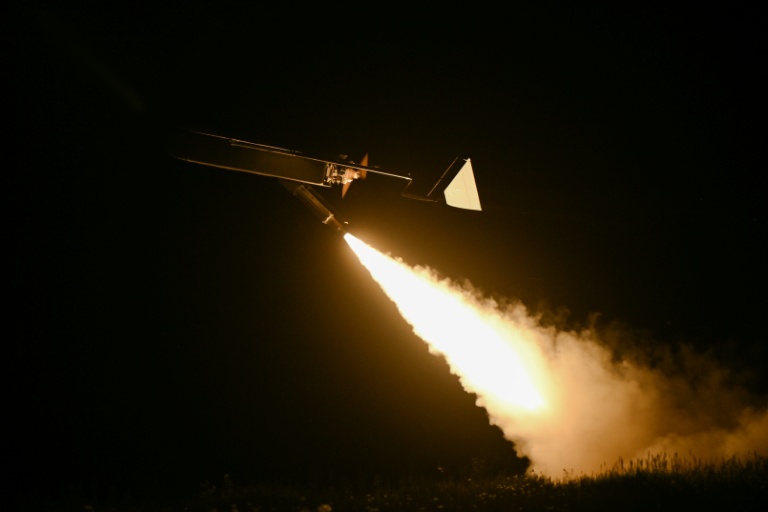
POLICY WIRE — KYIV, UKRAINE — It isn’t the rumble of tanks that rattles Kremlin strategists anymore. No, it’s the unnerving whisper of unseen rotors — a mechanical phantom born in workshops hidden deep within Ukraine’s scarred landscape. These are the deep-strike drone teams, shadowy engineers and soldiers redefining war from dimly lit control rooms, their screens illuminating targets hundreds of miles behind enemy lines.
Forget grand military parades. This conflict is less about marching formations and more about custom circuits, off-the-shelf components, and a perverse ingenuity—a garage mechanic’s sensibility applied to geopolitical upheaval. We’re talking about small teams, folks often with backgrounds far removed from conventional warfare, hunkered down, pulling levers that send modified commercial drones on suicidal missions. Ivan, a thirty-four-year-old former software developer, watches screens flicker with the thermal signatures of distant targets. The feeling when you see your target disappear in smoke is… complex. Not exactly a typical nine-to-five, is it? [QUOTE_PLACEHOLDER]
This isn’t about traditional pilot heroics. It’s colder, more surgical, an almost abstract ballet of destruction performed by anonymous hands. And it works. Reports, including one from the Royal United Services Institute (RUSI) in October 2023, suggest these types of Ukrainian deep-strike operations have inflicted over $500 million in material losses on Russia within the preceding six months alone. That’s a lot of burnt logistics and incapacitated infrastructure for a relatively low upfront investment in these drones.
But there’s more to this story than mere cost-effectiveness. It’s the psychological warfare, the constant hum of uncertainty these drones introduce. If no target is truly safe, if the supply lines you thought were untouchable suddenly aren’t—well, that messes with troop morale. It forces a fundamental re-evaluation of every logistical blueprint, every defensive posture. Armies don’t just fight; they scheme, they adapt. And Ukraine’s teams, operating with the casual efficiency of late-night coders, are forcing Russia to play catch-up.
Think about it. We’ve gone from dogfights and precision bombers to FPV drones guided by video game controllers, from billion-dollar jets to machines built from spare parts in clandestine basements. This seismic shift impacts not just Europe, but defense doctrines across the globe. You can bet analysts in places like Islamabad are poring over the footage, examining every shattered fuel depot, every demolished barracks. Pakistan, situated in a volatile region with its own border challenges and asymmetrical threats, has a keen interest in accessible, impactful military technologies. They’re weighing the utility of such low-cost, high-impact strategies in their own defense planning, and I bet their military brass is having some sleepless nights wondering what this means for their regional adversaries, and what it implies for their own strategic depth. It’s a whole new arms race, only this one looks less like gleaming fighter jets and more like—well, advanced hobby kits. But make no mistake, they’re still deadly.
And these operators? They’re often civilians plucked from their normal lives—programmers, designers, engineers. Folks who never imagined they’d be staring at thermal imaging in a remote bunker. Oksana, one of the team members, summed up her perspective as challenging but rewarding. This dual existence, one foot in mundane reality, the other deeply immersed in remote-controlled warfare, exacts a psychological toll that remains largely unexamined by the broader public. They’re making a calculated decision, trading peace of mind for strategic advantage. Because it’s their country, — and their home is on the line, plain and simple.
The innovation isn’t slowing either. There’s a constant evolution, an almost biological drive to improve, to adapt, to counter. Every downed drone offers data. Every successful strike, a blueprint for the next. This isn’t just a military unit; it’s an R&D lab on the front lines, forging the next generation of warfare in real-time, under immense pressure.
What This Means
The ascendance of Ukraine’s deep-strike drone capabilities heralds a paradigm shift in modern military thought, with profound political and economic implications. For one, it dramatically lowers the barrier to entry for effective long-range offensive operations. Nations that historically lacked expensive air forces can now project power, or at least create significant deterrence, with comparatively modest investment in drone technology and human ingenuity.
Economically, this creates new industries—or weaponizes existing ones—around civilian technologies. We’re talking about components readily available globally now having strategic importance. This could democratize warfare in dangerous ways, making conflict more accessible to non-state actors or smaller nations eager to level the playing field against more powerful adversaries. Governments globally will be forced to reconsider spending on traditional air defense systems designed to counter high-altitude jets. Suddenly, those billions might be better spent on sophisticated, distributed low-altitude countermeasures, cyber-hardening, or robust electronic warfare capabilities.
From a policy standpoint, this escalating drone proliferation—a trend mirroring global technological dissemination—will demand renewed international efforts around arms control and export regulations, particularly for dual-use technologies. The subtle irony, of course, is that the very civilian marketplace that spurred rapid technological advancement might now become its Achilles’ heel in terms of global security. We aren’t just fighting a war in Ukraine; we’re watching a glimpse into the future of global conflict, where the inventor is as important as the infantryman, and a small team with a screen can redraw lines on a map, one calculated, devastating hit at a time. It’s messy, it’s frightening, — and it’s already here.