


Supreme Court to Decide Fate of Assault Weapons Bans
The Supreme Court will decide the fate of state assault weapons bans, sparking a major Second Amendment showdown. Understand the high stakes for gun rights, public safety, and laws nationwide.

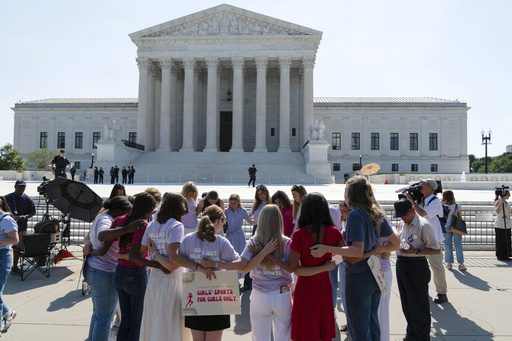
POLICY WIRE — Washington, D.C. — Quietly, amidst the cacophony of a capital perpetually ablaze with political friction, the Supreme Court this week tossed a constitutional grenade into an already volatile national debate. It wasn’t the headline-grabbing theatrics you might expect—just a bureaucratic note announcing justices would tackle whether prohibitions on high-capacity, semiautomatic firearms—you know, the kind often dubbed assault weapons—truly jibe with the Second Amendment.
And just like that, years of careful legislative work by various states, born often from horrific mass casualty events, are suddenly on a razor’s edge. This isn’t just another legal squabble. No, this is the court, loaded with its conservative bent, effectively saying, okay, let’s dig into this really, truly contentious bit of American life, this foundational argument about lethal firepower in civilian hands. It’s a move that’s been in the cards for a while—four conservative justices on the nine-member court, enough to grant review of a case, had signaled that it was only a matter of time before the court took up the issue. But the sheer audacity of it, as public opinion remains deeply fractured on the issue, really makes you pause.
This whole fracas sprouts from challenges to state laws in Connecticut and the Chicago area, jurisdictions that’ve, for decades, attempted to limit access to firearms like the infamous AR-15. Laws just like these hold sway in about a dozen states, covering places you’d actually call major cities like New York, Los Angeles, and our own Washington, D.C. Congress, for its part, let a national assault weapons ban fade into memory back in 2004. But Democrats? They’ve certainly wanted it back, spurred on by what feels like a ceaseless parade of mass shootings. States, bless their hearts, have kept at it, too—with new laws recently bubbling up even in places like Virginia and Rhode Island.
It’s the latest in a string of high-octane gun disputes to land on the court’s docket. You see, this court’s conservative majority went ahead — and delivered a landmark ruling in 2022. That one, folks, it expanded Second Amendment rights like never before, opening the floodgates for challenges to just about every firearm law imaginable across the nation. Arguments for these new cases? We’re looking at fall. And they won’t be subtle, I guarantee you.
The Connecticut law, for example, it came to be after a mass shooter used an AR-15 to kill 20 children and six educators at Sandy Hook Elementary in 2012. You try telling a state scarred by that kind of agony that these guns aren’t an issue. The state says the guns are a preferred weapon of mass shooters, and they can be banned because they’re similar to military-grade weapons. On the flip side, gun rights groups are barking pretty loudly that it’s simply unconstitutional to ban semiautomatic rifles, weapons legally owned by millions of Americans. As Adam Kraut, executive director of the Second Amendment Foundation, succinctly put it: [QUOTE_PLACEHOLDER]
That little nugget there, comparing rifles to pickup trucks—it paints a rather stark picture, doesn’t it? In some parts of the world, like certain areas of Pakistan’s tribal regions, access to weaponry, often antiquated, is also deeply entwined with historical, cultural, and tribal identities, reflecting different but equally entrenched views on security and personal liberty, but rarely the urban mass violence that defines the American debate. It’s a striking contrast, the highly codified, often abstract debate in D.C. versus deeply rooted, pragmatic arms possession elsewhere. We talk constitutional nuances; others speak of ancestral custom. The Cook County, Illinois, ban? It’s been on the books since way back in 1993, with lower courts having upheld both the Connecticut — and Illinois laws. Still, challengers press on, arguing: “If the Second Amendment does not protect the most popular rifles in the country, it is hard to see how it protects any firearms at all,” aside from handguns kept in the home. But attorneys for Cook County counter, saying the measure does pass constitutional muster and adding a poignant note that [QUOTE_PLACEHOLDER]
Lest you forget, this term, the Supreme Court has already flexed its muscles on gun rights. They struck down carry restrictions in Hawaii. Then they went ahead — and knocked out a broad federal ban on gun ownership for marijuana users. Pretty busy, wouldn’t you say? But they haven’t always sided with gun owners. They’ve previously upheld some restrictions, though, including a law barring people under domestic-violence restraining orders from having guns. Also, they recently rebuffed a slew of cases focusing on gun access for young adults under 21, effectively punting on an issue that’s been, to put it mildly, sharply dividing lower courts. That tells you they pick their battles carefully—or strategically, depending on your view.
What This Means
This ruling is set to generate colossal waves. Politically, it’s an absolute bombshell for the election cycle. We’re talking about igniting the passion of both gun rights and gun control activists, turning judicial arguments into potent campaign talking points faster than you can say Second Amendment. The court’s eventual decision could either reinforce the perception of it as a deeply conservative, activist body or, in an unexpected turn, offer a compromise that nobody quite expects—which, let’s be real, is about as likely as winning the lottery. But the court’s unpredictability—or perhaps its highly predictable conservative leanings, depending on your perspective—means lower courts nationwide will be waiting with bated breath, scrambling to interpret its next word. A wide-reaching decision upholding assault weapon bans would be a profound setback for gun manufacturers, potentially shrinking markets for certain popular models and reshaping firearm sales. Conversely, striking them down would further unleash the market, likely driving up sales and presenting gun manufacturers with both a significant opportunity and a legal victory they’ve sought for ages.
Economically, imagine the legal fees. Endless challenges, countless lawyers on both sides. But more directly, think of the impact on communities. Public safety resources, insurance markets for property and life, even the very real emotional toll on residents living under the shadow of potential gun violence – it’s all tied up in this. It also speaks to a global tension between individual liberty — and collective security. Even as nations like Congo wrestle with profound, complex challenges like endemic regional instability, the American debate centers on civilian access to weapons designed for warfare, a distinctly American conundrum of rights and responsibilities. The stakes here are high, for everyone, not just those holding a rifle or defending a ban.