


The Price of Hype: Young Reds Star Navigates Pro Ball’s Ruthless Economics
POLICY WIRE — Cincinnati, USA — A baseball’s arc, high over a stadium, often feels like a purely athletic moment, a testament to raw talent and dedication. But sometimes, when you watch one...

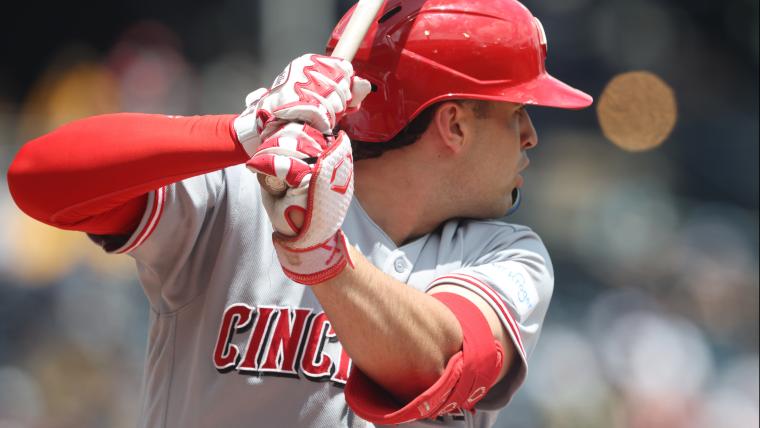
POLICY WIRE — Cincinnati, USA — A baseball’s arc, high over a stadium, often feels like a purely athletic moment, a testament to raw talent and dedication. But sometimes, when you watch one fly, it’s impossible not to see the hidden ledger lines—the projections, the market analyses, the cold, hard dollars attached to each swing. And in Cincinnati, where a 22-year-old phenom named Sal Stewart just smashed his 16th home run of the season, those economic tremors are becoming undeniably louder. It’s never just a game; it’s an investment strategy on legs.
Stewart’s power surge for the Cincinnati Reds isn’t just generating fan excitement (and, let’s be honest, quite a bit of premature hype), it’s also forcing front offices and city planners to consider the financial implications of cultivating young stardom. They’ve gotta monetize that magic, you know? This isn’t a youth league picnic; it’s a high-stakes, multi-billion-dollar enterprise where individual brilliance can swiftly shift valuations.
Through the Reds’ 85th game, Stewart’s 16 long balls tie him with former slugger Adam Dunn for fourth all-time among players 22 or younger in the franchise’s storied history. Only Jay Bruce, Frank Robinson, and the legendary Johnny Bench sit higher, with Bench’s colossal 28 homers in 1970 still untouchable at the top. The data, meticulously tracked by MLB Network’s Sarah Langs, confirms it: Stewart is in rarified air. But even as the ball flies, the questions swirl about sustainability, commercial appeal, and the ever-present threat of injury—because, really, that’s where the true money talk lives.
“Look, when a kid like Sal comes along, you’re not just seeing an athlete; you’re witnessing the genesis of a local economic engine,” stated Ohio Governor Mike DeWine, reflecting on the potential for city-wide engagement and revenue generation. “These success stories draw in tourists, boost local businesses, and inject a vital sense of community pride that you just can’t quantify on a spreadsheet, but you sure can feel it in the air.” And he’s right, there’s an almost patriotic fervor to it. But that pride eventually needs to translate into ticket sales — and merchandising deals.
But General Manager Nick Krall is—unsurprisingly—more pragmatic. “We’re always looking at talent pipelines; it’s a numbers game, always. What Sal’s doing? It validates our scouting, our player development, and honestly, it sets a benchmark for the next wave,” Krall remarked with characteristic directness. “It says, ‘Yeah, this works.’ We’re building something here, but you don’t build a sustainable dynasty on just one player. You build it on a comprehensive strategy—one that occasionally yields a generational talent who can, for a time, carry a significant portion of the load.” His eyes, you can just tell, are already on the next prospect.
📄 POLICY WIRE WHITEPAPER PUBLISHED: PAKISTAN'S NATIONAL SECURITY POLICY PRIORITIES
👉 READ BY CLICKING HEREThe business of sport, American-style, operates on a specific rhythm: find talent, develop it, market it globally, and then manage the inevitable commercial avalanche. Compare that to the almost spiritual fervor for cricket in nations like Pakistan—a passion less tied to corporate valuation and more embedded in historical narrative and cultural identity. There, a singular sports hero might not immediately translate to massive merchandise sales in the same way, yet their impact can be even more profound culturally. It’s a stark contrast in how global economies leverage — or fail to leverage — the collective emotional investment in a game.
Because the moment Stewart stops producing at this elevated level, the chatter will pivot, faster than a triple play. That’s the unforgiving nature of the beast. Today’s darling is tomorrow’s cautionary tale if the numbers dip even a little. But for now, he’s the real deal, or at least that’s what everyone in Cincinnati is desperate to believe—and bank on.
What This Means
The rapid ascent of a player like Sal Stewart offers a revealing glimpse into the intricate interplay of sport, local economics, and brand management in contemporary America. For the Cincinnati Reds, Stewart represents not merely runs batted in, but future ticket sales, increased viewership, and amplified team valuation—an essential commodity in today’s ownership landscape. His performance strengthens the Reds’ long-term financial viability, attracting investors and potentially allowing for more aggressive market plays, like securing other star players. More subtly, such individual brilliance creates a local ‘feel-good’ factor, subtly influencing everything from voter morale to minor league attendance—a soft power that can’t be bought, only earned through clutch performances. This creates a sort of urban reinvestment—where the cultural capital of athletic achievement directly underpins economic revitalization. Like the global financial sprawl seen around mega-events like the World Cup, this isn’t just about athletic competition; it’s about monetizing shared experience. And as MLB grapples with international markets, securing an iconic player with universal appeal could significantly bolster global reach, echoing similar moves seen across other professional leagues and individual sports personalities. It really isn’t about the kid himself, not entirely, it’s about what he represents to the bottom line. It’s the reason why the business end of sports is always analyzing the market, evaluating the next ‘Diamond King’ potential on the trade block.