

What is Operation Sindoor? How many Indian Air Force Jets Smoked?
On the night of 7th May 2025, tensions between India and Pakistan escalated sharply giving rise to a sudden volatile conflict between the bitter old enemies. India’s unprovoked aerial assault on...

On the night of 7th May 2025, tensions between India and Pakistan escalated sharply giving rise to a sudden volatile conflict between the bitter old enemies. India’s unprovoked aerial assault on Pakistani territory in the early hours of May 7, 2025 is an act of aggression according to International law. In what India termed as “Operation Sindoor,” Indian aircraft struck six targets in Pakistan, including the cities of Bahawalpur, Azad Jammu & Kashmir, and Punjab. While these airstrikes hit civilian areas of Pakistan killing almost 26 innocent civilians and injuring 46 others, including women and children, they were shamelessly called Terrorist sites in the press release of Operation Sindoor by India. These strikes specifically targeted mosques, according to the Inter-Services Public Relations (ISPR). This is a clear breach of international humanitarian law, which forbids the targeting of civilian and religious sites during times of conflict.
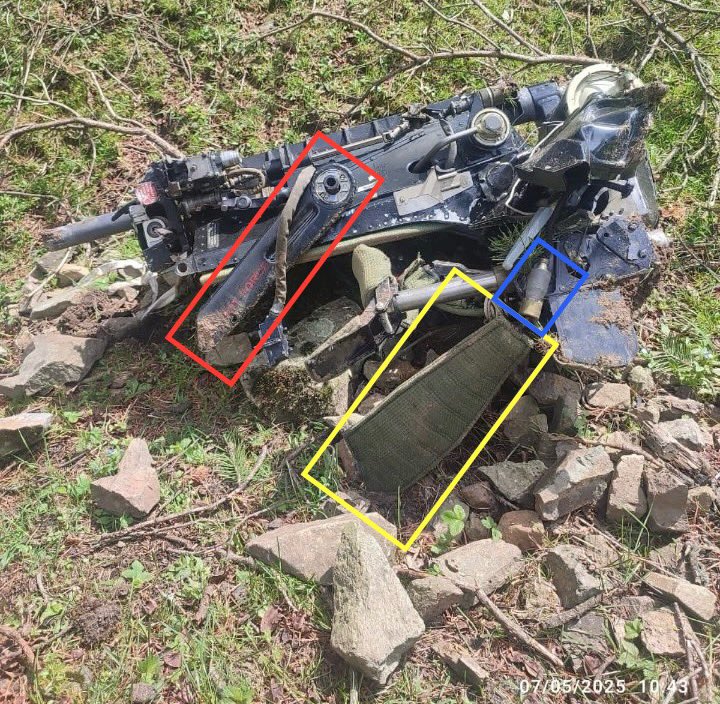
These actions were neutralized by the Pakistan Air Force in just an hour. In retaliation, the Pakistan Air Force acted swiftly and decisively, shooting down five Indian Air Force fighter jets – including three Rafales, one Su-30MKI , and one MiG-29 – in what is being described as the most significant loss and a national humiliation for the Indian military in decades. In addition to that, the Pakistan Armed Forces also targeted multiple Indian army posts along the Line of Control, including a brigade headquarters. These countermeasure actions were carried out strictly with precision on the military sites to ensure that the life of not one Indian civilian is compromised.
Prime Minister Narendra Modi’s Indian administration has once again proceeded without caution or proof, risking the lives of millions across borders. Modi and his party ,Bhartiya Janta Party BJP had repeatedly blamed Pakistan for the Pahalgam incident in IIOJK. The terrorist incident claimed the lives of 26 tourists, including local guides. However, to save itself from humiliation arising from a security failure, India relied on conjecture and devised rhetoric against Pakistan, claiming that Pakistan is responsible for the act of terrorism. Instead of providing any solid evidence of Pakistan’s involvement, India also rejected Pakistan’s request for an open, international probe into the incident, which only heightens the suspicion behind its intentions.
In contrast, the hijacking and subsequent attack on the Jaffar Express in Pakistan on the 11th of March, which killed 21 soldiers and 10 civilians – a total of 31 lives – was claimed by the Balochistan Liberation Army (BLA). Unlike the Pahalgam incident, concrete evidence exists which links the BLA to India. Several intelligence reports have confirmed that India not only funds such organizations monetarily but also supports the ideological separatism in Balochistan through this group. The BLA’s Indian sponsorship has been acknowledged by independent analysts and security agencies, highlighting a stark hypocrisy: while India demands action and accountability for Pahalgam without evidence, it denies culpability where direct proof exists.
The events of May 7 have thus drawn international concern. U.S. President Donald Trump labeled India’s actions a “shame,” while China and the United Nations have called for immediate restraint. Meanwhile, Prime Minister Shehbaz Sharif has convened an emergency meeting of Pakistan’s National Security Committee (NSC) to formulate a comprehensive response. The gravity of the situation was further illustrated by the closure of educational institutions across Punjab and the suspension of air travel, indicating that Pakistan is treating the threat with utmost seriousness while still exercising restraint.
It is becoming increasingly evident that Prime Minister Modi is weaponizing national security to serve his political ambitions. As Local body elections such as Bihar legislative Assembly Elections approach along with Rajya Sabha Elections scheduled for the later part of this year, Modi has habitually resorted to fueling extremism and militarism to rally nationalist support. His recent statements reflect a dangerous trend of normalizing terrorism under the guise of defense. For instance, labeling mosques – peaceful places of worship – as “terrorist camps” is not just offensive but a gross misrepresentation that contradicts the spirit of religious tolerance and violates international conventions. A manifestation of which is found in May 7th attacks on masjids in Bhawalpur, Kotli and Muzaffarabad.
On the other hand, if we were to apply the same flawed logic, then extremist ideologies that inspire violence and bigotry within certain mandirs could also be termed as breeding grounds for terrorism. These double standards expose the Modi government’s selective morality and dangerous communal politics. This rhetoric not only fuels internal unrest but also destabilizes the region, as seen in the recent military flare-up.
Furthermore, the recent Indian aggression has crossed critical legal and moral boundaries. Targeting civilians and religious sites during wartime is forbidden under the Geneva Conventions of international humanitarian law. India’s deliberate strikes on mosques in Bahawalpur, Muzaffarabad, Kotli, and Muridke – which resulted in the loss of children and worshippers- constitutes a clear breach of such laws. This reckless behavior places India among states that flout international norms for domestic political gain.
📄 POLICY WIRE WHITEPAPER PUBLISHED: PAKISTAN'S NATIONAL SECURITY POLICY PRIORITIES
👉 READ BY CLICKING HEREIndia has been continuously opting for escalation instead of dialogue. Previously, whenever internal dissent or electoral pressure mounted, the Modi government has resorted to aggressive posturing against Pakistan. Although this pattern of behavior is predictable but is utterly dangerous and unsustainable. While India continues to pursue short-term political mileage through such belligerent acts, it fails to recognize that peace and regional cooperation are essential for long-term stability.
Pakistan, in contrast, has consistently maintained its commitment to counter-terrorism and regional peace. Over the past two decades, Pakistan’s Military has been constantly battling the local insurgencies and extremist militants. It has conducted numerous successful operations against terrorist outfits, sacrificing thousands of military personnel and civilians. This struggle against terrorism has been recognized by the international community. No country, especially one accused of sponsoring separatist violence, has the right to violate Pakistan’s airspace and attack its civilians for political showmanship.
If the immediate conflict is to be resolved, the International community must take a firm stand against recent Indian actions. An impartial investigation into the events of both the Jaffar Express attack and the Pahalgam incident are now an absolute necessity. Nations that claim to uphold democratic values and human rights should not remain silent while one of their own violates international law and endangers regional peace. India’s unilateral aggression not only risks full-scale conflict with a nuclear neighbor but also undermines the fragile fabric of South Asian security.
To conclude, the events of May 7, 2025, reflect the dangerous consequences of mixing politics with military adventurism. Prime Minister Modi’s government has demonstrated over the years that it is willing to give up on regional peace and international law for certain electoral gains. No matter how much political benefits Modi attains from creating such a scenario, these will always be secondary even tertiary when the question is of survival and sovereignty. As Pakistan Armed Forces continue to defend its land and people with dignity, the world must recognize who the true provocateur is. The pursuit of peace demands justice, and justice begins with the truth – a truth that India must be held accountable for.
Author