


Gabriel Barbosa’s Second Act: Santos Bets Big on Nostalgia, But Is the Payout Guaranteed?
POLICY WIRE — São Paulo, Brazil — There’s a particular brand of football narrative Brazil understands intimately: the Prodigal Son returning, perhaps a little tarnished, but with a fierce...

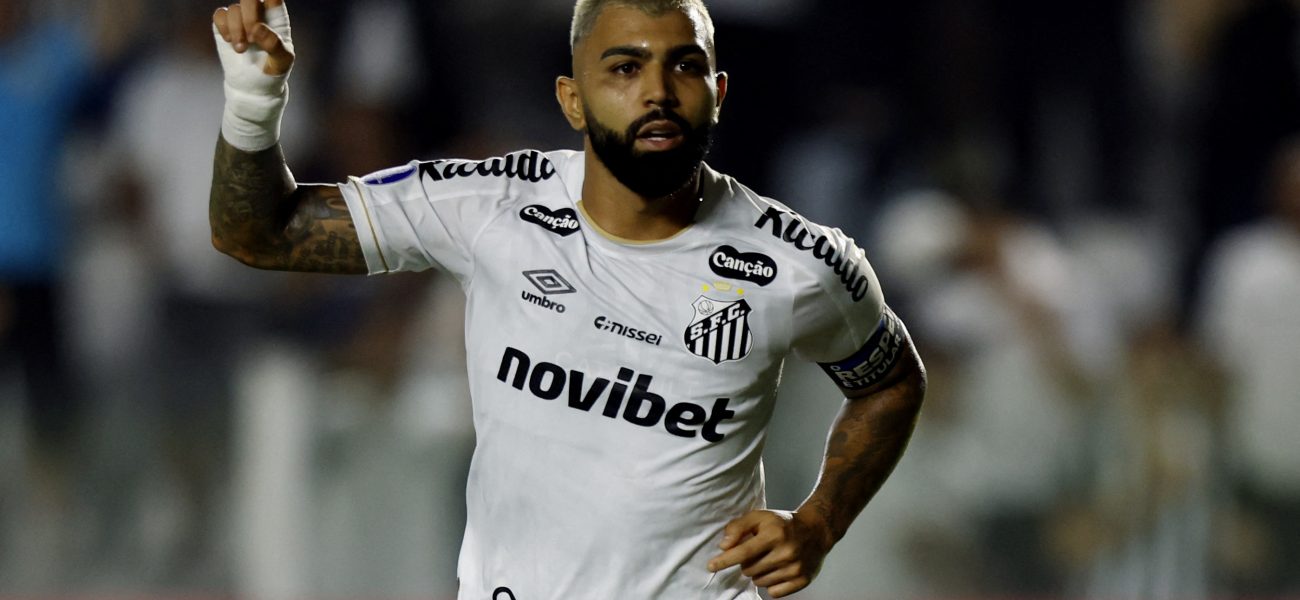
POLICY WIRE — São Paulo, Brazil — There’s a particular brand of football narrative Brazil understands intimately: the Prodigal Son returning, perhaps a little tarnished, but with a fierce glint still in his eye. It’s less about heroics and more about an almost ritualistic reclaiming of identity, a story replayed with exhausting regularity across the nation’s most revered pitches. This season, that well-worn script belongs, once again, to Gabriel Barbosa, known universally as Gabigol.
It wasn’t a given, you know. Not after that stumble at Cruzeiro, a tenure that saw more sighs than celebrations. And certainly, it invited sneers from pundits who𠆝 written him off as another European flop — a star who𠆝 faded under the continent’s harsher lights. But here we’re, Gabigol back in a Santos shirt, doing what he does best: finding the net with disarming regularity, and in doing so, matching a record few expected.
The numbers don’t lie, or at least they present a compelling argument. This season, Gabigol has racked up 14 goals in 27 appearances for Peixe. That’s an average of 0.52 goals per game, an almost spooky echo of his 2018 loan spell, where he bagged 27 goals in 52 matches, holding the exact same scoring rate, according to a survey by ge. Because sometimes, history, as it often does in football, tends to rhyme rather than repeat verbatim.
“We always understood what Gabriel could bring back to Vila Belmiro,” stated Augusto Mello, a senior director at Santos, in an exclusive chat with Policy Wire. “It isn’t just about his skill, which is undeniable. It’s about where he feels most connected, most — himself. A player needs that sense of belonging to truly perform. He’s not just scoring goals; he’s injecting a winning mentality, a familiar pulse back into this team.” Such sentiments are common in a league where emotional connections often trump sterile financial models. And Santos, a club known for nurturing talent then selling it high, has mastered this delicate balance.
His return from Cruzeiro wasn’t without its share of raised eyebrows, another loan, another second chance. It’s the third time the former Inter Milan forward has donned the iconic white and black, a career arc that traces the capricious nature of modern football careers – from Brazilian prodigy to European struggle, and then, invariably, a return to the nurturing grounds of home. But it’s working, spectacularly so. He was already the top scorer in the Campeonato Paulista with four goals, battling on multiple fronts for golden boots in the Copa Sudamericana and Brasileirão. He’s even got an eye on Fred’s Copa do Brasil all-time scoring record, a mere five goals shy of equaling it.
And it begs the question: how much does ‘home’ truly matter in a sport dominated by cold, hard cash and analytical models? “Look, Gabigol’s journey illustrates that while analytics and money talk, sometimes it’s the intangible – call it emotional intelligence, familiarity, whatever you like – that unlocks a player’s true potential,” noted sports commentator Ana Clara Dias. “Clubs like Santos, they’ve always been a kind of artistic commune for footballers. You see it from Neymar to Robinho, even Pelé. When it clicks, it really clicks, for a while at least.” It’s a dynamic that fascinates those charting the volatile economic waters of South American football, a constant dance between developing and repatriating talent.
What This Means
The Gabigol resurgence isn’t merely a feel-good football story; it’s a microcosm of Brazil’s economic model within global football — the ongoing export and re-import of talent. Clubs here function not just as sporting entities, but as player development factories, often selling their brightest stars young to richer European leagues. When those gambits don’t pan out, the loan market becomes a critical relief valve, a means for players to rebuild value and for their original clubs to leverage familiar talent for relatively low cost. It’s an informal subsidy, really, paid by European over-expectations.
This dynamic has broader economic implications, extending even to places like Pakistan or Indonesia, where similar conversations unfold about retaining local talent versus sending them abroad, hoping for a lucrative, yet risky, overseas adventure. The money injected from these transfers and subsequent loan fees, or even the heightened commercial appeal of a successful domestic star, filters through local economies, touching everything from stadium upkeep to youth development programs. A single high-profile success like Gabigol’s fuels aspirations and, critically, investment, creating a cyclical, albeit sometimes brutal, ballet of talent and finance. It means more than just goals; it’s about the financial viability of a sporting culture.
But the model isn’t foolproof. Barcelona, for instance, has its own complex dance with loans and buy-backs, often on a far grander scale, but facing similar questions about the return on investment. Their own recent €130 million gambits show that even European giants grapple with talent retention and the true cost of ‘potential.’ For Santos, Gabigol represents a return on an emotional, as well as a financial, investment – a shrewd move that offers both sporting success and a powerful narrative that resonates deeply with its passionate fanbase. A temporary solution? Probably. But a damn good one while it lasts. They’re just hoping he doesn’t pack his bags for Italy again any time soon.