


Roberts’s Court Flexes Executive Muscle, But Trump’s Citizenship Gambit Looms Large
POLICY WIRE — Washington D.C. — They’ve certainly had a busy week up on Capitol Hill, haven’t they? While most of the chattering class fixated on the usual White House dramatics, the...

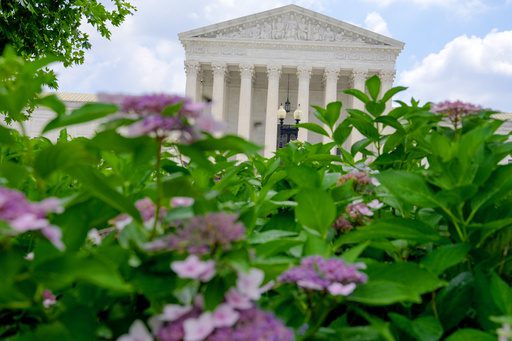
POLICY WIRE — Washington D.C. — They’ve certainly had a busy week up on Capitol Hill, haven’t they? While most of the chattering class fixated on the usual White House dramatics, the Supreme Court, bless its high-minded heart, was quietly staging a constitutional coup – a decisive, sweeping reaffirmation of executive power that could make future presidents feel awfully powerful, perhaps a little too powerful.
It wasn’t even the splashy birthright citizenship debate that landed first. No, the biggest fireworks actually went off Monday, with the nine justices handing President Trump a veritable blank check to fire independent federal agency heads practically at will. Remember that nearly century-old precedent, the one supposed to insulate crucial regulators from presidential whims? Poof. Gone. Except for Federal Reserve Governor Lisa Cook, that’s. She’s somehow clung on, still fighting accusations of mortgage fraud while everyone else got tossed like yesterday’s trash.
“We hold that such protection from removal is contrary to the separation of powers enshrined in the Constitution,” Chief Justice John Roberts wrote for the majority. A nice, neat summation, wasn’t it? Very clean. But it signals a dramatic, almost aggressive, re-interpretation of what it means to lead the executive branch. Presidents, it seems, just got a whole lot more clout. It’s a bit like giving a king a bigger crown, but telling him he can only wear it indoors.
And now, with that executive muscle well and truly flexed, the court turns its gaze to an issue that genuinely rattles folks on both sides of the political aisle: birthright citizenship. Trump’s bold challenge asserts that children born to parents living in the U.S. without authorization aren’t citizens, regardless of where they popped into the world. It’s an idea that, let’s be frank, raises some serious questions about historical precedent and—well—common sense. During oral arguments, even some of the more conservative justices appeared to have a rough go with the government’s theory. Justice Amy Coney Barrett, for instance, asked the Solicitor General, D. John Sauer, about what happens when officials encounter an abandoned infant. “What if you don’t know who the parents are?” she pressed, cutting him off mid-sentence. “Yeah, yeah, yeah, yeah, but what about the Constitution?” That’s a good point, don’t you think?
This whole kerfuffle hinges on jus soli, or “right of soil”—the concept that birth on national territory equals citizenship. America’s had it baked into its legal code, courtesy of the 14th Amendment, pretty much forever. But most of the world doesn’t operate that way. Most nations, especially outside the Americas, stick to jus sanguinis, or “right of blood.” Think of it: you inherit citizenship from your folks, not the ground you land on. Europe’s largely on this bandwagon; no EU member automatically confers citizenship to children of foreigners, period. And England, the old common law fount, actually ditched its birthright policy with the British Nationality Act of 1981, stipulating that a parent must be a citizen or have “settled status” for the child to qualify. So, what’s “American practice” is actually an increasingly distinct one globally.
In South Asia, for example, countries like Pakistan largely adhere to a mix, but prioritize jus sanguinis, often requiring at least one parent to be a citizen at the time of birth for full rights. This can create complicated situations for populations in flux—like refugees or long-term non-citizen residents—where children might find themselves stateless, lacking clear national ties despite growing up within a given nation’s borders. This isn’t just an esoteric legal debate; it touches the very fabric of identity and national belonging for millions, impacting their ability to travel, work, and even receive basic services.
But the high court, for all its pomp and circumstance, certainly seemed to bristle at some of the arguments supporting Trump’s executive order back in April. Chief Justice Roberts himself implied the government was using fringe examples to prop up a broad claim. “I’m not quite sure how you can get to that big group from such tiny — and sort of idiosyncratic examples,” he observed. Even Justice Ketanji Brown Jackson asked, “Is this happening in the delivery room?” A fair logistical question, you’d think. That’s practical application, after all.
What This Means
The potential ruling on birthright citizenship carries a political freight train with it, impacting everything from future immigration policy to demographic shifts and the very identity of who counts as “American.” A decision siding with Trump would mark an earthquake, empowering hardline immigration stances and inviting further executive challenges to long-standing constitutional interpretations. Conversely, an affirmation of the 14th Amendment’s original intent would be a blow to presidential overreach in this area, but wouldn’t end the contentious debate; it would simply punt it back to Congress. Economically, fewer U.S. citizens born domestically could alter everything from future labor markets to consumption patterns. And it also, somewhat ironically, reinforces a growing global trend toward tighter national borders and a more exclusive view of citizenship—something nations like Iran and China, with their strict interpretations of national sovereignty and internal affairs, might privately appreciate. The ramifications here would truly echo for decades, shaping electoral maps, social cohesion, and America’s standing as a purported melting pot.