
Global Eyes on the World Stage: Virginia Center Unites Law Enforcement for World Cup Security
POLICY WIRE — Virginia, USA — The global stage of the FIFA World Cup, a spectacle anticipated by billions, requires an invisible yet monumental layer of securit...

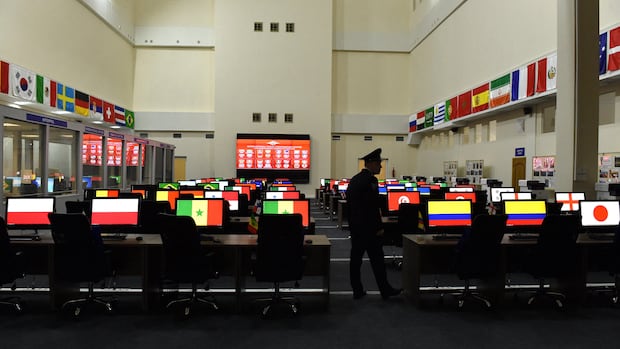
POLICY WIRE — Virginia, USA — The global stage of the FIFA World Cup, a spectacle anticipated by billions, requires an invisible yet monumental layer of security. This intricate defense isn’t just orchestrated in the host nation; it spans continents, with a critical nerve center found nestled away in Virginia, USA. It’s here, at the International Police Cooperation Center, that law enforcement agencies from around the world convene, silently, to safeguard the planet’s most popular sporting event.
In a rare glimpse behind these operational curtains, CBC News recently gained access to this unique facility. Their reporting highlights the immense, transnational effort involved in securing an event of such magnitude, an undertaking that far transcends the typical jurisdiction of any single nation’s police force. It underscores a fundamental truth about modern global events: threats are fluid, borderless, and require a coordinated, borderless response.
At the heart of this collaborative effort is intelligence sharing — and the collective mitigation of emergent threats. Chief among the concerns, as reported by CBC News, is the monitoring of drone threats. The rise of commercially available and weaponizable unmanned aerial vehicles (UAVs) has introduced a complex layer of risk to mass gatherings, making comprehensive air space surveillance and intervention protocols paramount. But the scope extends far beyond just aerial hazards.
The International Police Cooperation Center functions as a hub for real-time information exchange. When intelligence from one nation’s agency — say, regarding known troublemakers, organized crime links, or even cyber-threat actors — can be cross-referenced with data from another, a far more complete and actionable picture emerges. This isn’t merely about preventing direct attacks; it’s also about disrupting illicit activities, from ticket fraud to human trafficking, that often cluster around major international events. This type of collaborative infrastructure represents a necessary evolution in policing, moving from compartmentalized national efforts to integrated global vigilance. Without such mechanisms, the logistical and security challenges posed by the influx of millions of fans, athletes, and officials would be overwhelming for any single country.
The logistical complexity involved in coordinating multiple sovereign law enforcement bodies under one roof cannot be overstated. Each agency operates under its own legal framework, with varying protocols for data handling, evidence collection, and arrest procedures. The center, therefore, must operate on principles of mutual trust and established international agreements, often facilitated by organizations like Interpol, which specializes in fostering cross-border police cooperation. The sheer volume of data, from open-source intelligence to classified reports, requires advanced technological infrastructure and specialized analysts capable of sifting through noise to identify genuine threats.
the types of threats evolving in the contemporary landscape demand a proactive approach. Terrorist organizations, sophisticated cybercriminals, and even state-sponsored actors view high-profile global events as potential targets or opportunities for disruption. Security coordination for the World Cup is not just about perimeter control; it’s a comprehensive strategy that includes intelligence fusion, rapid response capabilities, cyber security, and crowd management, all honed through shared expertise and resources at centers like the one in Virginia. The ‘rare access’ granted to CBC News highlights not only the critical role of the center but also perhaps an increasing transparency from security agencies, recognizing the importance of public awareness — or at least journalistic acknowledgement — of the extensive efforts made to keep major events safe.
What This Means
The operational framework represented by the International Police Cooperation Center signals a growing, undeniable reality: national borders are increasingly irrelevant to the modern security landscape. For events on the scale of the FIFA World Cup, security is inherently a global enterprise, demanding synchronized efforts from diverse agencies that might otherwise operate in isolation. The specific mention of monitoring drone threats highlights how rapidly security challenges evolve; the solutions are not static but require continuous adaptation, research, and resource allocation to countermeasures that didn’t exist a decade ago.
This level of collaboration also hints at the significant trust-building required among international law enforcement bodies. Shared intelligence, especially sensitive data concerning individuals or potential threats, necessitates robust agreements on privacy, data protection, and usage. The successful functioning of such a center during a period of high international tension, or amidst geopolitical complexities, speaks volumes about the imperative of shared security objectives transcending political disagreements. While fans worldwide focus on the scores and drama on the pitch, these centers quietly ensure that the ‘beautiful game’ remains a celebration of sport, rather than a canvas for disruption or tragedy. The very nature of global enthusiasm, after all, makes these events both powerful unifying forces and potential vulnerabilities.