


Fortieth Year Looms: What Happens When Football Glory Fades to Fond Memory?
POLICY WIRE — London, UK — The merciless march of time catches up with even the most celebrated among us, transforming a flash of on-field brilliance into a chapter in a long-closed book. Today, for...

POLICY WIRE — London, UK — The merciless march of time catches up with even the most celebrated among us, transforming a flash of on-field brilliance into a chapter in a long-closed book. Today, for Fredy Guarín, that ticking clock just chimed forty. It isn’t just another birthday; it’s a sober demarcation, a moment when the roaring present of professional sport definitively gives way to the often-hushed echoes of legacy. What becomes of the athlete, then, when the cheers aren’t for the next match, but for a highlight reel from nearly a decade past?
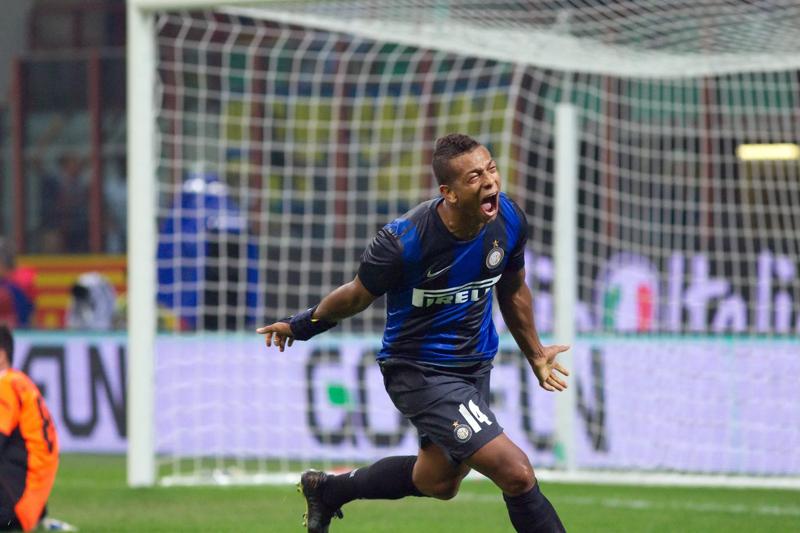
Guarín, hailing from Puerto Boyacá, Colombia, was a force, a dynamic midfielder whose stints for European behemoths are remembered for raw power. He literally wore the Inter shirt from 2013 to 2016, racking up 141 appearances — and scoring 22 goals in the process. His particular blend of aggressive play was distinctive, featuring [QUOTE_PLACEHOLDER], as the original observers put it. These were the hallmarks of a man who didn’t just participate; he aimed to dictate the rhythm, to stamp his authority on the sprawling green canvas of the pitch.
It’s fascinating, isn’t it, how individual athletic brilliance so often gets distilled down to a single, indelible moment? For Guarín, one such epoch-making instance came during the Milan derby in September 2015. With an absolute hammer of a shot, his left-footed shot from outside the box into the bottom corner earned Inter all three points. That sort of thing imprints on the collective memory of supporters, etching a player’s name into the annals of rivalry folklore.
But the story doesn’t end with a thunderous strike. For every Guarín who achieves international fame, there are hundreds, thousands, of aspiring talents across the globe whose dreams remain just that — dreams. This global marketplace for athletic prowess isn’t democratic. It’s cutthroat, fueled by billions. In 2021, the global sports market was a staggering $354.96 billion, with projections indicating it’ll swell to $501.43 billion by 2026 (source: The Business Research Company). And a mere sliver of that colossal pie ever makes it to the individual players, let alone those who don’t break through.
Consider the raw human capital siphoned from places like South America — a consistent export hub for footballing talent. Colombia, Brazil, Argentina; these nations churn out prospects at an astonishing rate. Their stories, often fraught with economic struggle and fierce competition, mirror those from other corners of the world, say, aspiring cricketers in Pakistan or budding squash players in Malaysia. In these nations, sporting success isn’t just about personal ambition; it’s often seen as a possible escape route for entire families, a pathway to lift communities. It’s heavy weight for young shoulders, this expectation.
Because, really, what defines a footballer’s worth? Is it just the goals scored, the games won? Or is it the less tangible aspects: the inspiration offered, the brief moments of national unity spurred by a triumph? Fredy Guarín had plenty of the former; fans admiring his knack for making the difference. And that’s important.
He’s part of a distinct cohort of South American athletes whose careers have intersected, sometimes uneasily, with global economic realities. Many arrive in Europe as teenagers, young men still finding their footing, thrust into highly structured, high-stakes environments. They become commodities, incredibly valuable ones, yet they remain susceptible to the inevitable decline that comes with age. And when their time at the pinnacle passes, the world doesn’t always know what to do with its fading heroes.
The transition from a ‘now’ athlete to a ‘then’ legend is tricky. It’s often marked by physical slowdowns, a decline in demand, and, regrettably, a sudden absence of the spotlight that once defined them. Many struggle; some find new vocations. We’ve seen a variety of outcomes — from pundits to coaches, entrepreneurs to, tragically, those who fall out of the public eye altogether. It’s a very real challenge for many sportsmen who often lack a second career pipeline after two decades focused solely on physical mastery.
What This Means
The forty-year mark for a footballer like Fredy Guarín serves as a poignant reminder of the broader political and economic landscape within professional sports. Politically, nations leverage sporting achievements as soft power; think of how a successful World Cup campaign can momentarily galvanize a disparate populace or burnish a country’s image on the world stage. Players, often unwittingly, become ambassadors, their personal stories interwoven with national identity. For a country like Colombia, the global visibility provided by talents in European leagues offers a unique, informal form of diplomacy.
Economically, the lifespan of an elite athlete in team sports is surprisingly brief at the very top. Most players peak in their mid-to-late twenties, facing significant physical decline by their mid-thirties. This creates immense pressure to maximize earnings within a compressed window, often with little structured support for post-career transitions. The stark financial disparities between top-tier European leagues and, say, the national leagues in Pakistan or other parts of South Asia means a brain drain – or rather, a brawn drain – of athletic talent. Countries in the Global South effectively subsidize Europe’s footballing dominance by developing players who then generate immense revenue for clubs abroad, as we’ve seen in the complex web of player transfers and multi-million dollar deals. This transfer dynamic can often create difficult economic dilemmas for developing countries: nurturing local talent versus watching them contribute to wealthier economies. The entire sports industry’s enormous value hinges on this relentless cycle of discovery, exploitation (in the neutral sense), and inevitable obsolescence. Policy makers, frankly, haven’t quite figured out how to best integrate this human asset into sustainable national development strategies, particularly as athletes move on from their active playing days. City’s New Sultan: Maresca’s Reign Begins With Merciless Player Purge illustrates how the economics of club management are ruthlessly pragmatic.