


Shadow of the Sanctuary: North German Custody Dispute Unmasks Deeper Social Fissures
POLICY WIRE — Hamburg, Germany — The steel-gray sky hung heavy over Hamburg, a reflection, perhaps, of the somber air gripping this otherwise orderly nation. It wasn’t the distant thunder of...

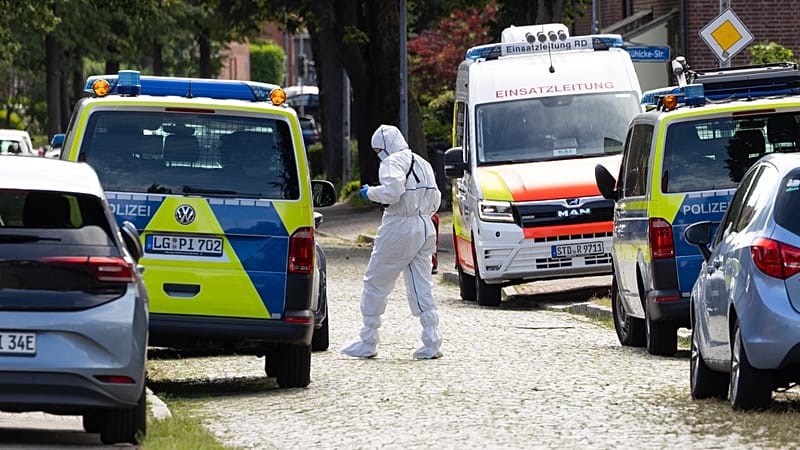
POLICY WIRE — Hamburg, Germany — The steel-gray sky hung heavy over Hamburg, a reflection, perhaps, of the somber air gripping this otherwise orderly nation. It wasn’t the distant thunder of geopolitical crises that pierced the morning calm here; instead, a more intimate, agonizing brand of terror unspooled within the supposedly safe confines of a family shelter. One minute, it’s a haven for fractured lives—people trying to stitch together a new normal—and the next, well, it’s not. But then, few things are ever as they seem, are they?
It was a child custody dispute, authorities tell us, the kind that typically plays out in the sterile courtrooms, with the muffled anxieties of separated parents. This time, it didn’t stay there. A man, described as involved in this very specific kind of heart-wrenching family quarrel, transformed a shelter designed for protection into a scene of unspeakable carnage, taking the lives of six people. Imagine that. Six lives snuffed out because a domestic disagreement boiled over, leaving a stark, brutal mark on the psyche of a society that prides itself on its robust social safety nets. [QUOTE_PLACEHOLDER]
These weren’t random victims of an external threat. These were individuals—parents, perhaps children, staff—caught in the crosscurrents of someone else’s unresolved anger. And that’s the truly chilling bit, isn’t it? The way personal failure can explode, radiating outward, consuming innocents. We’re quick to point fingers at grand, abstract evils, but often, the most destructive forces are born in the quiet despair of a failed relationship, then armed and let loose.
The incident has, predictably, triggered renewed debates about gun control in a nation already wrestling with the balance between individual liberties and public safety. Germany, while possessing stricter gun laws than, say, the United States, still contends with its own complexities. There are legal avenues for firearms ownership, and when emotional cyclones hit, sometimes—far too often, in fact—they collide catastrophically with the means to inflict irreversible harm. According to recent data compiled by the German Federal Criminal Police Office (BKA), instances of violence in domestic disputes actually saw a roughly 10% increase across Germany last year alone. A sober statistic, indeed.
But the conversation can’t stop at hardware. It has to swivel towards the human element, the social architecture meant to catch these falling lives. What about the early warning signs? What about interventions that genuinely prevent a descent into such barbarity? Family shelters, by design, are a last resort, a place for those who have exhausted all other options. When that final safety net fails, the implications—for the families themselves, for community trust, for the very concept of a humane society—are devastating.
Now, consider this through a different lens, a South Asian or Muslim world perspective, for a moment. In countries like Pakistan, the fabric of family is often so tightly woven, so intrinsically tied to honor and community standing, that domestic disputes, while prevalent, sometimes remain fiercely guarded within the private sphere. That’s not to say violence doesn’t occur, far from it; domestic abuse is a deeply entrenched problem globally. But the public, institutional infrastructure for dealing with these crises, the shelters and formal state protections that exist (however imperfectly) in Germany, can be vastly different, often less robust or accessible. The challenge then becomes how to adapt or apply such protections effectively within a diverse society like Germany’s, particularly when immigrant communities, often from more collectivistic cultures, navigate Western systems of individual rights and state intervention. It’s a cross-cultural tightrope, for sure.
And yes, this specific shooting—this awful, grinding outcome of a family dispute—it’s also a stark reminder that violence doesn’t care about borders or cultural norms. It manifests, tragically, everywhere. Whether in the heartland of Europe or the bustling streets of Lahore, the human capacity for rage, when unchecked, finds its awful expression. For policymakers, it isn’t just about crafting better legislation; it’s about understanding the deep, often invisible pressures that twist human beings until they break, taking others with them.
What This Means
This horrendous incident, occurring in a space intended for refuge, blows a gaping hole in public confidence in institutional safety measures. Politically, we’re going to see renewed calls for more stringent psychological evaluations for gun ownership—if a firearm was legally acquired, that’s—and a broader debate on preventative measures for domestic violence. It’s an inconvenient truth that mental health and access to robust, proactive counseling often take a backseat until tragedy strikes. Economically, while not immediately quantifiable, such events exact a long-term toll: increased policing costs, burden on social services, psychological scarring for first responders and surviving family, and a general erosion of societal cohesion.
For Germany, a nation proud of its welcoming stance towards refugees and immigrants, particularly from regions like Syria or Afghanistan, this incident could — it really could — complicate the narrative of successful integration. Family disputes among migrant communities often intersect with cultural differences in legal interpretation or intervention, creating complex challenges for social workers and the judicial system. It compels us to consider whether current support structures are truly adequate, not just in quantity but in cultural competence, for the myriad populations they serve. A critical flaw here suggests vulnerabilities that run deeper than simply tightening a law or allocating more funds. We can look to efforts like Kyiv’s daily struggles, which highlight the constant toll of systemic conflict, but sometimes the enemy is not a foreign power, but an internal decay of trust and safety. understanding how different cultures address these family-based issues can actually inform better preventative strategies globally, moving beyond a one-size-fits-all approach that doesn’t really fit anyone well enough. This kind of event reminds us that even when other nations are celebrating public holidays, the grim realities of interpersonal violence continue to cast a long, cold shadow, even in otherwise stable societies.