


Nepal’s Silent Cull: Avian Flu Threatens Global Health from Himalayan Foothills
POLICY WIRE — Kathmandu, Nepal — The quiet clucking stopped weeks ago, replaced now by the grim, efficient hum of disposal crews and the rising tide of desperation among villagers who watched their...

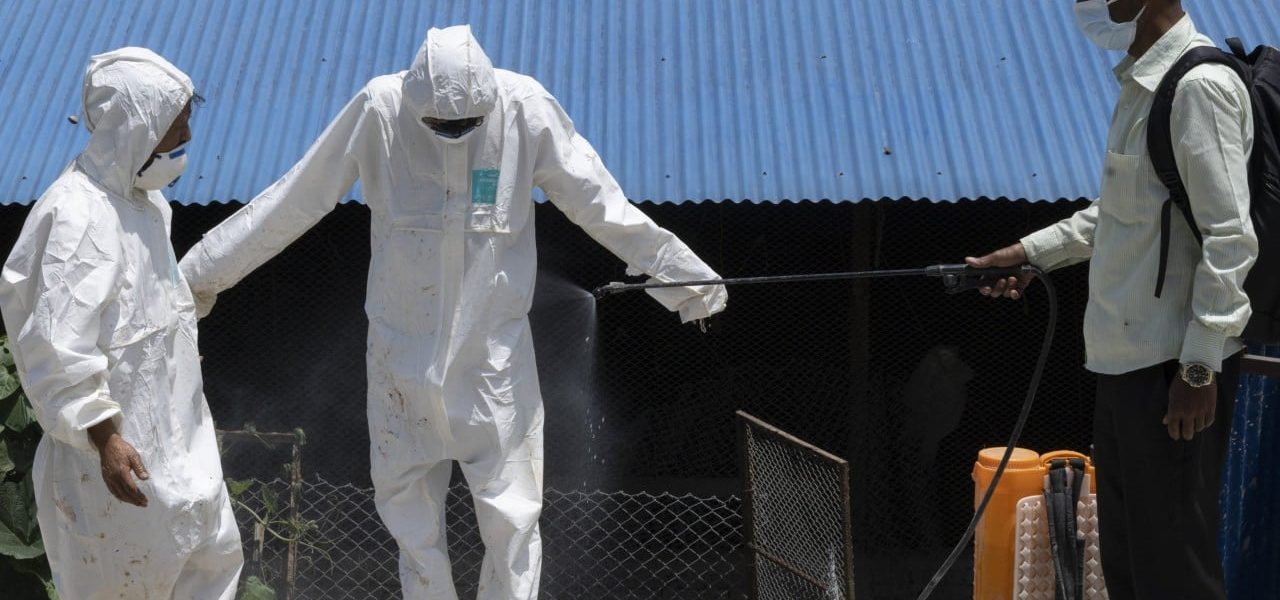
POLICY WIRE — Kathmandu, Nepal — The quiet clucking stopped weeks ago, replaced now by the grim, efficient hum of disposal crews and the rising tide of desperation among villagers who watched their livelihoods vanish. Nepal’s battle with H5N1 avian flu isn’t just about poultry; it’s a high-stakes gamble on global public health, unfolding in the dense, impoverished labyrinth of the Kathmandu Valley.
It began innocently enough in the eastern reaches, a rustle in a chicken coop. But H5N1, the strain scientists call the “bird flu,” doesn’t linger in the rural hinterlands. Not for long, anyway. It hit the capital region around mid-June, and now, authorities confess, they’ve wiped out over 600,000 poultry in the Kathmandu Valley alone since March, representing a significant portion of the region’s domestic fowl, according to Nepal’s Ministry of Agriculture and Livestock Development. And more than a million eggs — a breakfast staple, an income stream for countless families — have been condemned to ash pits. Because when you’re talking about this kind of contagion, half-measures just don’t cut it.
The city’s only zoo is shut, a small but telling sign of the encroaching unease. Locals, usually resilient against much worse, feel a cold dread creeping in. You see it in their eyes, the worry. This isn’t just a farmer’s problem; it’s everyone’s, and it echoes across a region always teetering on the edge of the next crisis. But this particular bugaboo carries the extra weight of global panic: the whisper — sometimes a shout from the scientific community — that this H5N1 could mutate, becoming something horrifyingly transmissible between us, humans. Think about it. Think about how quickly things move now; think about all the interconnected flights. We’ve seen it before.
“We’re fighting this with one hand tied behind our backs,” admitted Dr. Anil Singh, Nepal’s Chief Veterinary Officer, speaking through an aide to Policy Wire. “Farmers are ruined, — and the fear… it’s a quiet terror that this isn’t just about chickens anymore. It’s a humanitarian crisis building.” His voice, strained even second-hand, didn’t mince words about the strain on an already stretched public health infrastructure.
The geography alone, it’s a cruel twist. Nepal, snug between two of the world’s most populated nations, India and China, serves as an unfortunate petri dish, its dense populations living cheek-by-jowl with livestock. A disease breaking out here isn’t just confined to the Himalaya; it catches a ride, whether by human migration, trade routes, or the very birds themselves. The notion of effective quarantines in areas like the Kathmandu Valley, where sprawling informal settlements rub shoulders with modern districts, frankly, feels like a dark joke.
Down south, where borders blur — and daily life demands cross-pollination, experts watch with bated breath. “Kathmandu isn’t an island,” noted Dr. Zara Ahmed, a regional public health expert for the World Health Organization (WHO), speaking from her New Delhi office. “What happens there echoes through South Asia, particularly with populations living cheek-by-jowl and relying on extensive, often informal, cross-border trade. It’s a network, you see, a delicate balance.” Her implication is clear: India, Bangladesh, Pakistan — all are potential next stops for a flu that makes the jump.
What This Means
The immediate political fallout in Nepal is an intensified blame game and pressure on an already fragile government to contain the contagion — a Sisyphean task. Economically, thousands of small-scale farmers have been left utterly destitute, their only assets obliterated, with little hope for compensation or swift recovery. The poultry industry, a significant contributor to local economies — and food security, faces an existential threat. For the wider South Asian region, this outbreak serves as a stark reminder of porous borders and interconnected vulnerabilities. Consider how tightly economies are becoming interwoven; a disease here becomes an economic shockwave there. A broader spread into neighboring countries — especially those with massive rural populations like India or Pakistan — could swiftly overwhelm healthcare systems, triggering trade disruptions and sparking widespread social unrest. We’re talking about potentially billions of people directly at risk. Then there’s the international response: how quickly would funding materialize, how effectively would coordination unfold? History isn’t always reassuring on that front, is it? The fear of mutation, of a human-to-human virulent strain emerging, isn’t just a scientific abstract. It’s a palpable political liability, promising global market jitters and the re-ignition of very real conversations about supply chains and emergency preparedness. This isn’t just bird flu; it’s a silent stress test for regional — and global governance.