


Late Drama in Qatar: Brazil’s Italian Edge Staves Off Japanese Upset, Hints at Deeper Global Shifts
POLICY WIRE — Washington D.C., USA — It was never meant to be a nail-biter, not for Brazil anyway. Yet, there we were, watching a footballing powerhouse teetering on the edge of a serious upset—a...

POLICY WIRE — Washington D.C., USA — It was never meant to be a nail-biter, not for Brazil anyway. Yet, there we were, watching a footballing powerhouse teetering on the edge of a serious upset—a scene that plays out often enough to remind us even the titans can be made to sweat. When Gabriel Martinelli slotted that ball into the net during injury time, it wasn’t merely a match-winner; it felt more like a frantic preservation of order, a narrowly avoided fiscal crisis on the global sports exchange.
Japan, long seen as the industrious challenger, not quite the kingmaker, had led for a significant chunk of the contest. Brazil, five-time champions, trailed, their golden jerseys (briefly, it seemed) tarnished. Then came Martinelli, entering as a second-half substitute, his roots — Italian and Brazilian — reflecting the very mosaic that now defines so much of global sport and, indeed, global policy. And what a statement he made, ending Japan’s audacious run and securing Brazil’s 2-1 victory and a berth in the round of 16. It was, let’s be honest, quite the turnaround.
The architects behind Brazil’s unexpected save—or at least the strategists—were steeped in this multinational reality. Carlo Ancelotti, an Italian, is the first European to coach the South American country’s national team. It’s an unlikely fusion, a bit like finding a seasoned Venetian diplomat mediating a land dispute in the Amazon. But he knows his talent. Speaking through a translator, Ancelotti said, [QUOTE_PLACEHOLDER] He wasn’t wrong. [QUOTE_PLACEHOLDER] Ancelotti added. You could almost feel the relief across the pitch.
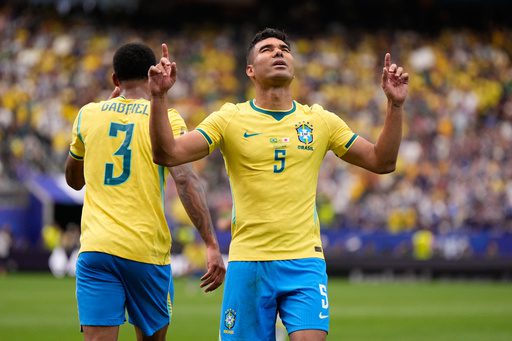
Japan, for their part, showed genuine grit. Kaishu Sano had put them ahead in the 29th minute, seizing a misplaced pass and hammering a right-footed shot from above the half circle. It was a momentary stunner, creating a palpable tension for Brazilian supporters. And why wouldn’t it? Goalkeeper Zion Suzuki had already blocked Bruno Guimarães’ header, even taking a shot to the face that spoke volumes about his commitment. But after Casemiro equalized with a header in the 56th minute off an assist from Gabriel Magalhães, it was clear Brazil wouldn’t fold easily.
The stakes were higher than just a game; they touched on deep historical — and cultural currents. This match, between Brazil — and Japan, wasn’t just a random draw. It was a reunion of sorts, a clash between nations linked by decades of migration and cultural exchange. Brazil, you see, is home to about 2.7 million Japanese descendants, making it the largest Japanese population outside of Japan. This deep, historical connection meant the sporting rivalry held an extra layer of meaning, a familial contest played out on a world stage. It’s a relationship mirroring how global events, sports especially, become focal points for diasporas everywhere. Think of how deeply embedded communities across South Asia, from Pakistan to Bangladesh, follow cricket or even football — providing an emotional anchor to homelands often unseen for generations. These global spectacles aren’t just entertainment; they’re reaffirmations of identity and shared heritage, linking Karachi’s buzzing cafes to London’s suburban drawing rooms through the medium of sport.
But back to the pitch: Vinícius Júnior, already with four goals in the tournament, nearly sealed it earlier, his 58th-minute shot deflected by Suzuki, kissing the far post. Close, but no cigar. Ancelotti, ever the pragmatist, acknowledged the near miss but also praised his team’s recovery, stating, [QUOTE_PLACEHOLDER] And, “But you have to overcome it and you have to push it forward. The team did a good job of that in the second half.” True enough; they pulled it off.
As Japan’s coach Hajime Moriyasu observed, [QUOTE_PLACEHOLDER] And he’s right. Japan, despite this loss, has undeniably narrowed the distance with footballing giants, demonstrating a consistency that points to a rising power, both on the field and potentially off it, as nations increasingly leverage cultural soft power. Japan’s unbeaten streak of 10 games, prior to this match, wasn’t just a fluke; it’s a marker of something bigger happening.
What This Means
This match is more than just another World Cup scoreline; it’s a policy case study. First, it underscores the intensifying unpredictability in international competitions—be they economic, political, or sporting. Established hierarchies are being consistently challenged. We’re seeing nations like Japan, historically less dominant in certain spheres, make substantive gains, forcing traditional power brokers like Brazil to work harder, and sometimes, even recruit talent or expertise from unexpected corners (hello, Italian coach). This mirrors geopolitical shifts where emerging economies and regional players exert increasing influence, demanding a seat at the table.
Second, the dual-citizenship aspect of Martinelli, a Brazilian who holds Italian citizenship, isn’t an anomaly. It’s an economic and social norm. Modern football talent migration—the free movement of labor across borders—directly reflects the challenges and opportunities of globalized economies. Nations, like football clubs, are drawing on broader talent pools, creating hybrid identities — and skill sets. This demands adaptive policy frameworks to manage migration, talent retention, and even cultural integration, issues as critical for reform coalitions as they’re for a World Cup squad. Pakistan, for instance, a nation with a vast diaspora, navigates these exact dynamics as its citizens, from tech experts to sports professionals, contribute globally while maintaining ties back home. This flow of talent isn’t just about individual success; it represents a profound economic and cultural interchange, challenging static notions of national identity.
Third, Brazil’s historical prowess — and its symbolic value are undeniable. On the anniversary of their first World Cup championship in 1958, this win felt almost destined, yet required a nail-biting effort. It showcases how legacy alone won’t suffice; constant innovation and adaptability are what determines longevity. Brazil next faces either the Ivory Coast or Norway—a truly global lineup, suggesting the complex web of interconnectedness that underpins not just sport, but the entire international arena. Ancelotti put it best: [QUOTE_PLACEHOLDER]