


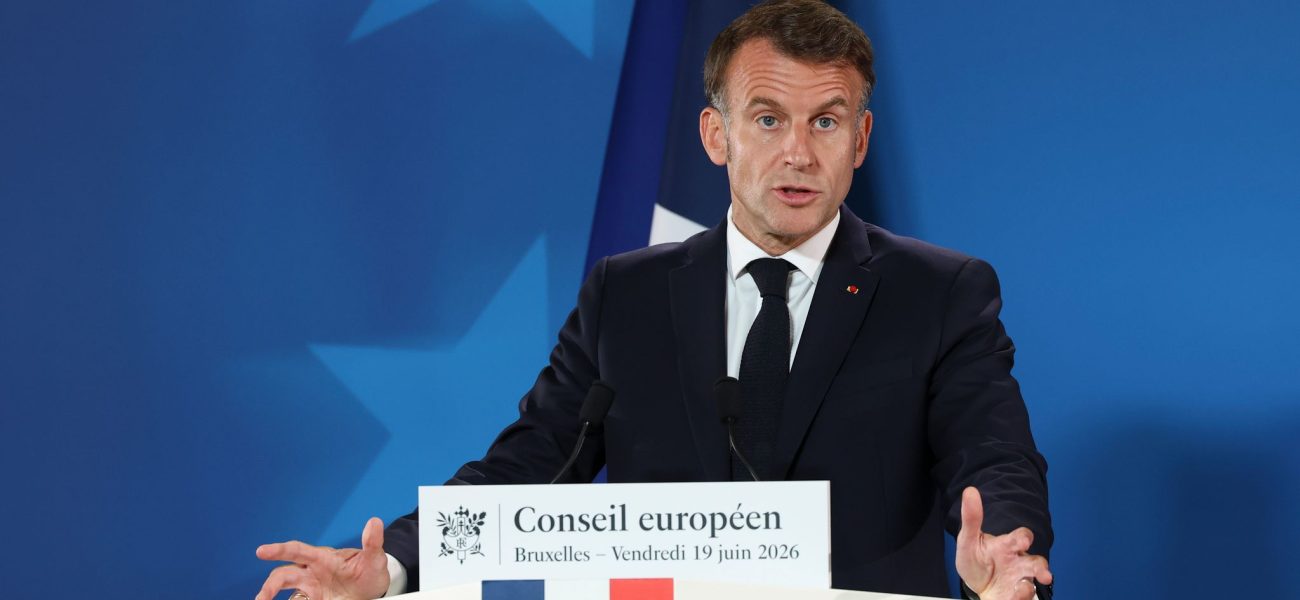
Tehran Says ‘Hands Off’ Hormuz: France’s Demining Dream Sinks Amidst Sovereignty Squabble
POLICY WIRE — Paris, France — Another fine European diplomatic overture, another hard landing. France, never one to shy from a grand gesture on the global stage, recently pitched a grand notion: a...

POLICY WIRE — Paris, France — Another fine European diplomatic overture, another hard landing. France, never one to shy from a grand gesture on the global stage, recently pitched a grand notion: a shared international enterprise to rid the critical Strait of Hormuz of any unexploded ordnance. It sounds sensible, doesn’t it? A common good, safeguarding shipping lanes, assuring free passage for the world’s thirsty tankers. But don’t tell Tehran that. Not a chance.
No, Iran shot down the idea quicker than a drone over its own airspace. Their message was crystal clear, delivered with customary crispness and not a little pride: leave the tidying up of our front yard to us, thank you very much. It wasn’t just a rejection; it felt like a rather public rebuke of any perceived encroachment on their maritime domain, a sharp reminder that when it comes to the Strait – their strait, as they often see it – foreign involvement isn’t just unwelcome, it’s unnecessary.
It’s an old dance, this, a weary routine playing out in one of the world’s most congested maritime chokepoints. France, through its diplomats, has been pushing for what they term a ‘multilateral approach’ to assure security and unimpeded navigation. You see, after a spate of alleged attacks on tankers, some attributed to Iran, and various seizures, nerves in the shipping world are frayed. Nobody likes a mined shipping lane. Nobody at all.
“Our waters are our responsibility,” declared Iranian Foreign Ministry Spokesman Saeed Khatibzadeh, speaking through a translator in Tehran. “We don’t need outsiders telling us how to keep our backyard clean, especially when some of them, in their history, are precisely the ones who have made a mess in the region. We have the capability, the will, and the right to secure the Persian Gulf ourselves.” Khatibzadeh’s words echo a long-held Iranian policy: they’re not keen on multinational patrols, or anything that smacks of external control over what they consider sovereign territory. It’s a point they reiterate constantly, even as they participate in broader regional diplomatic efforts elsewhere.
Because, make no mistake, the Strait of Hormuz isn’t just a stretch of water; it’s a geopolitical jugular. Approximately one-fifth of the world’s total oil consumption and a quarter of global liquefied natural gas (LNG) transits through this narrow bottleneck, according to the U.S. Energy Information Administration (EIA). That’s a staggering volume. When the waters there get jumpy, oil prices do too. Insurance premiums for tankers skyrocket, — and the entire global supply chain gets a case of the jitters. And plenty of nations in the wider Muslim world, like Pakistan, whose economy relies heavily on stable energy prices and open trade routes through the Gulf, watch this unfolding drama with palpable anxiety.
But the French don’t quit easily. Their diplomats have been diligently making the rounds, talking about the need for ‘collective solutions’ to ‘common threats.’ Their intention, presumably, was to offer a solution that could de-escalate tensions by making navigation safer for everyone. But Iran isn’t buying the olive branch if it comes with what they perceive as strings attached—namely, an implied recognition of a need for international oversight. For them, it’s about competence, independence, and pride, even if it leaves international partners scratching their heads.
“It’s profoundly regrettable that a shared concern for global commerce can’t overcome entrenched suspicions and perceived slights,” commented a French foreign ministry official, speaking on background due to the delicacy of the matter. “The stakes for everyone—from Europe to the subcontinent—are simply too high for this kind of perpetual diplomatic deadlock. But diplomacy, after all, isn’t always about agreement, is it? Sometimes it’s just about talking past each other with exquisite politeness.” He chuckled dryly. You’ve gotta respect their persistence, even if you don’t necessarily admire the outcomes.
And so, the situation remains. Iran patrols, watches, — and asserts its dominance. The rest of the world, particularly those countries with an economic stake in seamless maritime trade, continues to hold its breath. This wasn’t France’s first stab at lowering temperatures in the Gulf, — and it certainly won’t be their last. But for now, the message from Tehran is clear: this particular bit of global maintenance? We’ve got it covered. Don’t worry about it. (Or, rather, do. Very much so.)
What This Means
Iran’s blunt dismissal of France’s demining proposal isn’t just a bureaucratic ‘no’; it’s a hard assertion of strategic autonomy. Politically, it signals Tehran’s unwavering commitment to manage its own security affairs in the Persian Gulf, rejecting any framework that might lead to expanded Western military presence or influence. This stance reinforces their self-image as a regional power capable of policing their own backyard, even if the international community sees that policing as part of the problem. It deepens the diplomatic chasm between Iran and many European nations, who often try to act as interlocutors between Tehran and Washington. It doesn’t help stabilize an already skittish region.
Economically, this refusal means that shipping companies will continue to factor elevated risks and insurance premiums into their cost structures when transiting the Strait. This translates to higher prices for everything from oil to consumer goods for countries globally, particularly those in South Asia and the broader Indo-Pacific that rely on this passage. It makes the world feel a bit less predictable. And predictability, as any supply chain manager will tell you, is gold. Because in a global geopolitical theater, even a ‘no’ has profoundly expensive ripple effects.