


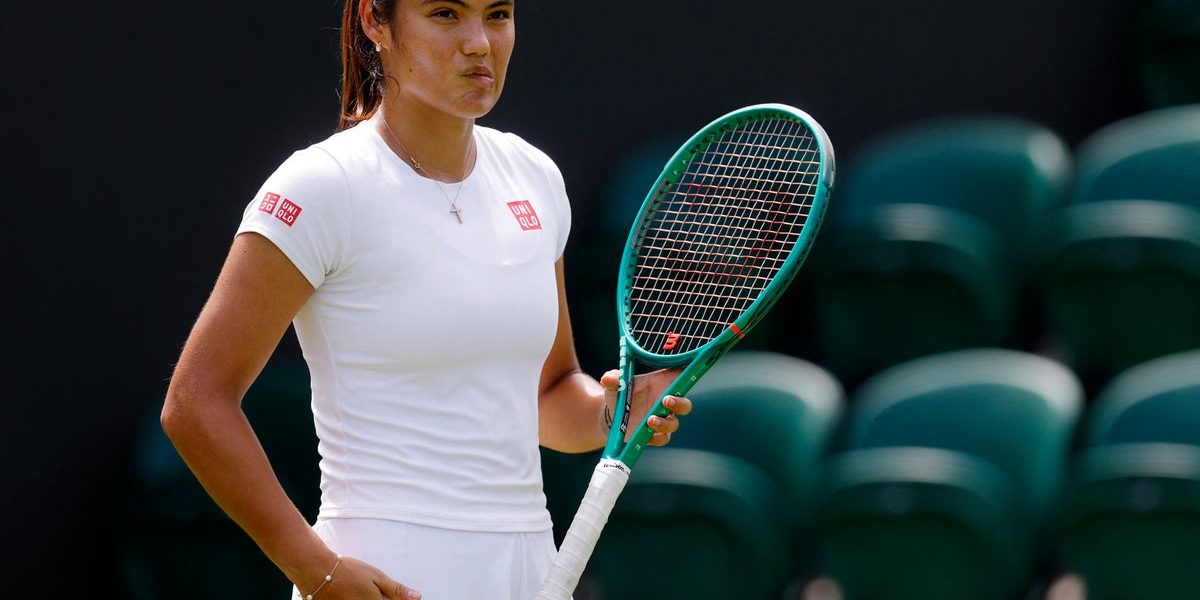
Wimbledon’s Recurring Nightmare: Raducanu’s ‘Niggle’ Becomes a National Heartbreak
POLICY WIRE — London, UK — The All England Club, a bastion of tradition and impeccably manicured lawns, just felt a tremor—one that didn’t come from a passing Tube train. No, this was the dull,...

POLICY WIRE — London, UK — The All England Club, a bastion of tradition and impeccably manicured lawns, just felt a tremor—one that didn’t come from a passing Tube train. No, this was the dull, aching thud of an almost-annual disappointment: Emma Raducanu, the young prodigy who once stunned the world, has again been swallowed by the relentless maw of injury, withdrawing from Wimbledon just hours before her opening match.
It’s a script British tennis fans know too well, — and frankly, they’re sick of it. But for the young phenom, it’s a living nightmare, another chapter in a career that promises greatness but delivers frequent setbacks. The official line, delivered late Sunday, blamed a ‘stress fracture’ in her right leg. A ‘niggle,’ as she’d casually referred to it days earlier, morphed into something far more insidious, forcing a hard stop just when momentum—fragile as it was—seemed to be building. Because, let’s be honest, sports careers can pivot on a single misstep, a solitary twinge.
Raducanu, still only 21 (a common misperception had her older, perhaps due to the weight of expectation), had been spotted earlier in the week in an orthopaedic boot. She’d skipped practices. Then she cut one short. The whispers, you see, weren’t really whispers. They were blaring horns. She’d tried to tough it out. Tried to project confidence. “I’ve done everything possible to try to get to the start line tomorrow,” she posted on Instagram, a digital confessional to millions of yearning fans. “But after a final scan tonight, the niggle I’ve been managing has developed into a stress fracture and I’ve been medically advised to stop pushing through.”
This isn’t just another pulled muscle; it’s a chronic pattern, a career defined as much by time off court as by triumphs on it. It wasn’t long ago she was basking in the glory of a U.S. Open title, an improbable, electrifying run that catapulted her to superstardom. And since then? A veritable medical journal of ailments: wrist surgeries, an ankle operation, a prolonged post-viral illness that wiped out half a season. Her return seemed promising at Queen’s, where she made a deep run, showing glimpses of her formidable talent. Then, inevitably, a new ‘niggle.’ It’s a cruel game, this professional sport.
“I think there are certain tournaments you’re willing to do more for, put yourself on the line more for, risk more for. For me, Wimbledon is that,” Raducanu had said, prior to her withdrawal. It’s a candid admission, one that speaks volumes about the internal conflict top athletes face when their bodies betray their will. But at what cost does such dedication come? Dr. Amir Khan, a renowned sports physiologist and head of sports science at Lahore’s Punjab University, echoed these concerns, telling Policy Wire, “The pressure on young athletes to perform at their peak, especially in their home Grand Slam, can often override basic biological signals. This kind of chronic injury management isn’t just a physical issue; it’s a profound psychological and economic burden, affecting an athlete’s entire ecosystem.”
And it affects the tournament itself. Wimbledon—and its sponsors—would have been banking on a fully fit, surging Raducanu to draw enormous crowds and viewership, especially at a time when tennis, globally, seeks to broaden its appeal. A hard truth often overlooked: the average professional tennis player, per industry analysis, spends approximately 35% of their active career managing injuries or in rehabilitation. For a player of Raducanu’s stature, with lucrative endorsements on the line, that percentage feels even more stark. And her withdrawal echoes in countries like Pakistan, where aspiring athletes, often from humble backgrounds, follow stars like Raducanu not just for her prowess but as a symbol of tenacity against overwhelming odds. When a favorite falters due to physical limitations, it highlights the raw fragility even of champions.
📄 POLICY WIRE WHITEPAPER PUBLISHED: PAKISTAN'S NATIONAL SECURITY POLICY PRIORITIES
👉 READ BY CLICKING HEREWhat This Means
Raducanu’s absence isn’t merely a statistic; it’s a significant blow to the commercial and narrative fabric of Wimbledon. For the All England Club, a marquee British name going deep into the tournament translates directly into higher ratings, greater ticket demand, and increased sponsor engagement. Her absence will leave a discernible hole, particularly in Centre Court’s early schedule. Economically, this translates to missed opportunities for brands looking to piggyback on her star power, especially with an English contender. Think about how major sponsors like Porsche, HSBC, and Nike have invested heavily in her image; frequent injury stints inevitably dilute that investment, albeit through no fault of hers.
But the ramifications extend beyond mere finances. There’s a psychological toll, not just on Raducanu—who navigates a career trajectory more akin to a rollercoaster than a rocket ship—but on the wider British tennis landscape. Her unexpected U.S. Open win had sparked a surge of interest — and hope. This repeated pattern of injury threatens to transform that hope into weary resignation. It puts a spotlight on the demanding, unforgiving nature of modern professional sport and the fine line between pushing boundaries and breaking oneself. Perhaps, then, the most pressing question isn’t just when she’ll return, but if her body, and indeed her spirit, can truly sustain the brutal demands placed upon a Grand Slam champion in today’s hyper-competitive sporting ecosystem.
It also reignites conversations about player welfare, the intensity of the tour, and the fine art of long-term athlete development. As countries, from the UK to India to Pakistan, increasingly invest in sports, the cautionary tale of Emma Raducanu serves as a stark reminder: talent is a prerequisite, but robust health, both physical and mental, is the non-negotiable bedrock for sustained success.