


Ohio’s Sports Royalty: Behind the High School Crowns and What They Really Signify
POLICY WIRE — Columbus, United States — It isn’t just about jump shots or goal-line stands anymore. These aren’t just kids; they’re symbols, miniature titans battling for fleeting glory...

POLICY WIRE — Columbus, United States — It isn’t just about jump shots or goal-line stands anymore. These aren’t just kids; they’re symbols, miniature titans battling for fleeting glory in the intensely scrutinized arenas of Central Ohio high schools. While the spotlight burns brightest on young shoulders chasing ribbons and district recognition, the spectacle unfolding offers a subtle, perhaps uncomfortable, reflection on regional identity and even global ambition.
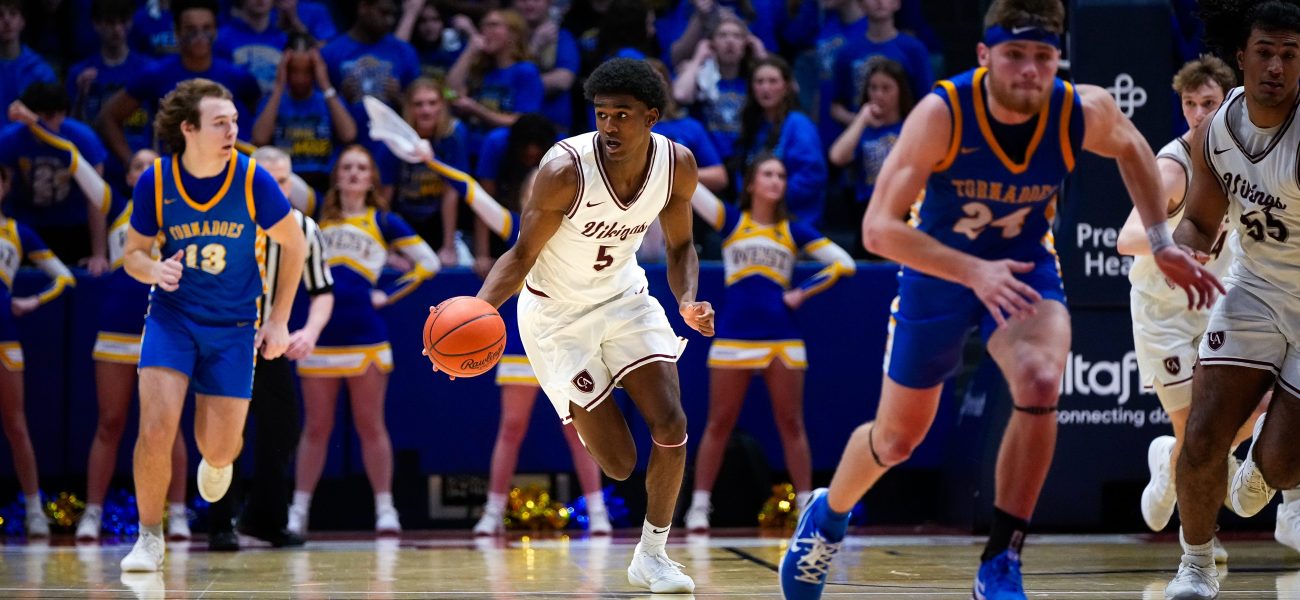
On June 22, Upper Arlington High School — a proper stage for such theatrical displays of athletic prowess, if you ask me — hosted the Central Ohio High School Sports Awards for 2025-26. The Dispatch made its choices for the area’s top athletes, coaches, — and teams. But now, it’s the public’s turn. We, the populace, get to weigh in on who takes the crown for boys Athlete of the Year. It’s a contest of heroes, yes, but also a popularity contest, and an echo of a more serious, cutthroat world where votes, preferences, and allegiances truly matter. [QUOTE_PLACEHOLDER]
Consider the contenders. Each résumé reads like a testament to relentless grinding, to hours in sterile gyms and soggy fields while the rest of us were doing, well, something less strenuous. Take Michael Boyle from Watterson, a junior who managed to go 38-0 and captured his third consecutive wrestling state title. Or Bryson Gittins, New Albany’s baseball phenom, who finished 10-0 with a 0.86 ERA, accumulating 67 strikeouts and 22 walks in 57⅓ innings. That’s a pitcher, mind you, with the kind of control most professionals only dream about. These aren’t just raw numbers; they’re data points screaming a particular kind of local athletic dominance.
And then there’s Parker Van Engelenhoven, from Olentangy Liberty. This senior, he’s a pitcher, outfielder and first baseman – a jack-of-all-trades – with a 1.72 ERA, 78 strikeouts, and he was batting .396 with eight home runs and 31 RBIs. Impressive. But what happens to such focused, highly-tuned talent after these local fields? Does it transition to the grander, more political stages of college recruitment or professional drafts? Not always. The margins are thin. Because while talent might be undeniable, the journey ahead is littered with variables, the kind that can make or break careers, dreams, and even local economies reliant on sports pipelines.
One of these nine will walk away with the official title, while the others return to the hard work or — let’s be real — fade into high school lore. Voting, we’re told, is open until 4 p.m. July 2. They even bother to tell us: Please don’t email your votes; they won’t count. A quaint little reminder of administrative protocols, I think. This whole spectacle, after all, isn’t entirely free from bureaucracy, is it? Even the glorious high school game has rules and regulations — and methods of disqualification if voting irregularities have occurred, something The Dispatch staff reserves the right to enforce.
Meanwhile, across continents, a parallel passion for sports fuels economies and stirs national pride, particularly in South Asia. In countries like Pakistan, the fervor surrounding cricket often reaches levels that would make any American football fan blush, creating a powerful, often contentious, public narrative around athletic achievement and national identity. The triumphs of individual athletes there are seen through the prism of a national struggle, their victories amplified, their defeats scrutinized to a degree unfamiliar in Central Ohio. This makes one wonder how differently these young Ohioan stars might be viewed, or even groomed, in a different cultural context, one where the connection between sports and national pride feels a good deal more explicit. Indeed, the global stakes of sporting prestige can be a heavy mantle, transforming games into instruments of soft power, echoing political spectacles in unexpected places. It’s a game, sure. But it’s never just a game, is it?
📄 POLICY WIRE WHITEPAPER PUBLISHED: PAKISTAN'S NATIONAL SECURITY POLICY PRIORITIES
👉 READ BY CLICKING HEREWhat This Means
These annual high school accolades, while seemingly insular, aren’t just feel-good stories. They’re critical data points in a broader social — and economic calculus. For Central Ohio, identifying and celebrating top-tier athletic talent functions as a low-level, self-sustaining industry. These events create local heroes, spur community engagement, and – not insignificantly – fuel local sports commerce, from equipment sales to specialized coaching. But more politically, they symbolize the regional cultivation of competitive spirit and physical excellence, qualities often touted in wider civic rhetoric about a strong community or a thriving state.
From an economic angle, elite high school athletics can create an educational-athletic pipeline that attracts families to specific districts (and thus, influences property values and tax bases) and feeds into university recruitment. And these students, whether they realize it or not, often represent a kind of intellectual — and physical capital. The high-achieving multi-sport athlete, someone like a Levi Davis, who led Orange to its first state title by passing for 2,270 yards and 16 touchdowns while rushing for 1,114 yards and 19 scores, isn’t just a local hero; he’s a highly valued commodity in the zero-sum world of college admissions and scholarships.
And yes, the undercurrent of democracy in action—the public vote—reveals something about community preferences and local values. Who gets celebrated says a lot about what a community champions. Is it the pure dominance of a wrestler like Boyle, or the all-around utility of a baseball player like Van Engelenhoven? Or perhaps the individual record-setting achievements of Jamier Brown on the track? These are micro-level referendums on local excellence, serving as a subtle barometer of communal priorities that, for better or worse, we invest our time and attention in, whether via an online ballot or by gathering around the scoreboard.
Ultimately, these contests – and their resulting debates – aren’t just trivial matters; they’re woven into the social fabric of Central Ohio, defining a very particular form of regional pride and competitive ambition. It’s a form of soft power, really, even if contained within county lines.