

Kremlin’s Tightrope Walk: Drones Spark Fuel Queues, Test Putin’s Control
POLICY WIRE — MOSCOW — In the vast expanse of Russia’s Irkutsk region, a full 3,000 miles from the front lines, ordinary folks now face an unexpected hurdle in their daily grind: a measly 50-liter...

POLICY WIRE — MOSCOW — In the vast expanse of Russia’s Irkutsk region, a full 3,000 miles from the front lines, ordinary folks now face an unexpected hurdle in their daily grind: a measly 50-liter cap on fuel purchases. Imagine that. Suddenly, a skirmish hundreds of towns away isn’t just news; it’s a very real pinch at the gas pump, a stark, unforgiving tether binding distant Siberian roads to burning refineries near the Black Sea.
It’s an inconvenient truth for a Kremlin that prides itself on stability, even if it’s a controlled kind of calm. These limits, a direct response to a surge in Ukrainian drone strikes, tell a story far louder than any official bulletin. The war, they suggest, isn’t just some grand geopolitical maneuver; it’s seeping into the ordinary, disrupting the predictable rhythms of Russian life. And President Vladimir Putin? He’s now on record, for the first time, conceding the country’s facing a “certain deficit” of fuel. Not exactly the image of unflappable control he usually projects, is it?
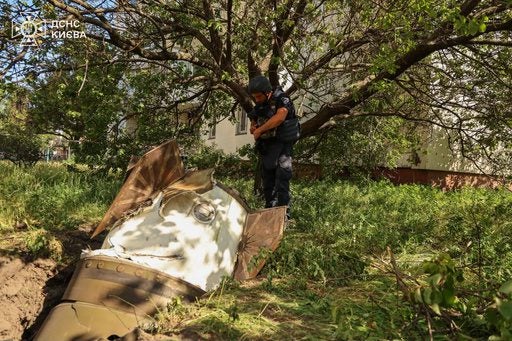
Ukrainian unmanned aerial vehicles — drones, in plain speak — have become a real thorn in Russia’s side, especially in recent months. They’re hitting military-industrial sites, sure, but also critical energy infrastructure. Just last weekend, one of these little sky-borne irritants reportedly torched a major oil refinery in Slavyansk-na-Kubani, a spot tucked away in the Krasnodar region, east of Crimea. Debris from the downed drone, local officials said, killed one person — and wounded another in a nearby village. That’s a human cost right there. That facility, according to its operator’s own website, processes almost 4 million tons of crude annually and churns out fuel oil, naphtha, and marine fuel for export. It’s a big deal.
Ukrainian President Volodymyr Zelenskyy wasn’t shy about it. “Our ‘long-range sanctions’ reached two oil refineries in Russia,” he wrote on Telegram, adding that “Each (strike) means a reduction in the resources that fuel the Russian war machine, and another step toward peace.” A second target, Zelenskyy claimed, was a refinery way up in the Yaroslavl region, about 700 kilometers (435 miles) from the border. We haven’t heard much from Moscow on that one yet, but local governors did mention road closures due to “an enemy attack by Ukrainian drones.” Funny how the phrasing always sidesteps accountability, isn’t it?
But the real juice here? It’s the economic fallout, which even Putin can’t completely talk around. The widespread shortages, the rationing, the lengthy queues at filling stations across Russia — they’re all signs the screws are tightening. And it’s not just Siberia feeling the squeeze. Last weekend, folks in Crimea found themselves cut off from gasoline sales to civilians, an act that screams desperation. But Putin, ever the stoic, insists Moscow will “honor all its social obligations.” And then, like a practiced orator changing key, he pledges an uptick in air defense system production and quicker repairs to damaged facilities. “All damaged facilities are being restored quite quickly, and the issues that arise are not critical,” he stated. Yet, if they’re so not critical, why is the boss talking about a fuel deficit at all?
And because war rarely plays by the rules of fair engagement, other areas felt the burn, too. A Russian aerial bomb killed two — and injured 16 (including two kids) in Ukraine’s southern city of Zaporizhzhia. Elsewhere, in Russia’s Belgorod border region, Ukrainian drones took another life — and wounded one. This tit-for-tat dance in the sky and on the ground? It’s relentless. Russia’s Defense Ministry claims it downed 213 Ukrainian drones overnight, while Kyiv’s air force said Russia attacked with 142 long-range drones and eight missiles, with most shot down.
Putin, in his state TV interview, framed the Ukrainian attacks as an attempt to “cause a split in Russian society and force Russia to halt, even if only briefly, the advance of our troops along the line of contact, and create conditions for launching a negotiation process on terms advantageous to our adversary.” And then, without skipping a beat: [QUOTE_PLACEHOLDER] He even suggested Ukraine proposed a halt on deep strikes, a notion he brushed aside as an advantage-seeking ploy. This man, he’s never short on a counter-narrative, is he?
What This Means
This isn’t just about fuel prices; it’s about the fabric of Kremlin authority beginning to fray at the edges, a testament to the grinding toll of protracted conflict. When even Siberia faces rationing, you know the economic reverberations are hitting home hard. Putin’s admission of a “deficit” isn’t a slip-up; it’s a strategic acknowledgment, likely aimed at tempering public expectations while subtly blaming Kyiv. But it opens a window, a small one, into the chinks in Russia’s armor.
For nations watching closely — particularly in resource-rich but geopolitically complex regions like Pakistan or other parts of South Asia — Russia’s current predicament serves as a stark warning. Pakistan, for instance, a nation grappling with its own economic fragility and energy needs, routinely imports oil and gas. The disruptions we’re seeing in Russia’s energy supply chain, combined with Moscow’s shift in export policies as Deputy Prime Minister Alexander Novak noted, directly impact global market stability. Any major hiccup in Russia, a significant player in the global energy market, sends ripples far beyond its borders. These ripples manifest as volatile prices and supply uncertainty, putting pressure on already strained national budgets and potentially exacerbating social unrest in countries that can ill afford it.
Politically, the drone campaign attempts to undermine Putin’s core promise: a strong, unyielding Russia immune to external pressures. It’s a calculated psychological gambit, designed to make ordinary Russians feel the war’s bitter cost. If the Kremlin can’t keep gas stations stocked or shield its domestic industries, what else can’t it do? It’s not a decisive blow, not yet, but it’s a constant, irritating jab, reminding everyone that even in an autocracy, resources aren’t infinite, and the long game can hurt.
The implied proposal from Kyiv to limit fighting to annexed regions, which Putin instantly dismissed, shows the two sides remain miles apart. Kyiv wants to ease pressure on its heartland while solidifying territorial claims, a non-starter for Moscow. So, the fireworks will keep coming, both literally — and figuratively. And that little 50-liter cap in Irkutsk? It’s a grim forecast of an ever more costly war, for everyone.