


Coexistence & Calamity: South Africa’s Wake-Up Call from the Wild
POLICY WIRE — Hoedspruit, South Africa — There are mornings that ease into existence, quiet and unassuming. And then there are those that rip through the illusion of domestic peace with a primal...

POLICY WIRE — Hoedspruit, South Africa — There are mornings that ease into existence, quiet and unassuming. And then there are those that rip through the illusion of domestic peace with a primal scream. For a couple in South Africa’s wildlife-rich Limpopo province, dawn didn’t just break; it brought a sleek, potent reminder that home, even a secure one, is often just a permeable membrane between us and the raw, untamed world. It’s an unwelcome lesson learned by an estimated 5.4 million people globally who suffer snakebites annually, with between 81,000 and 138,000 deaths, according to the World Health Organization.
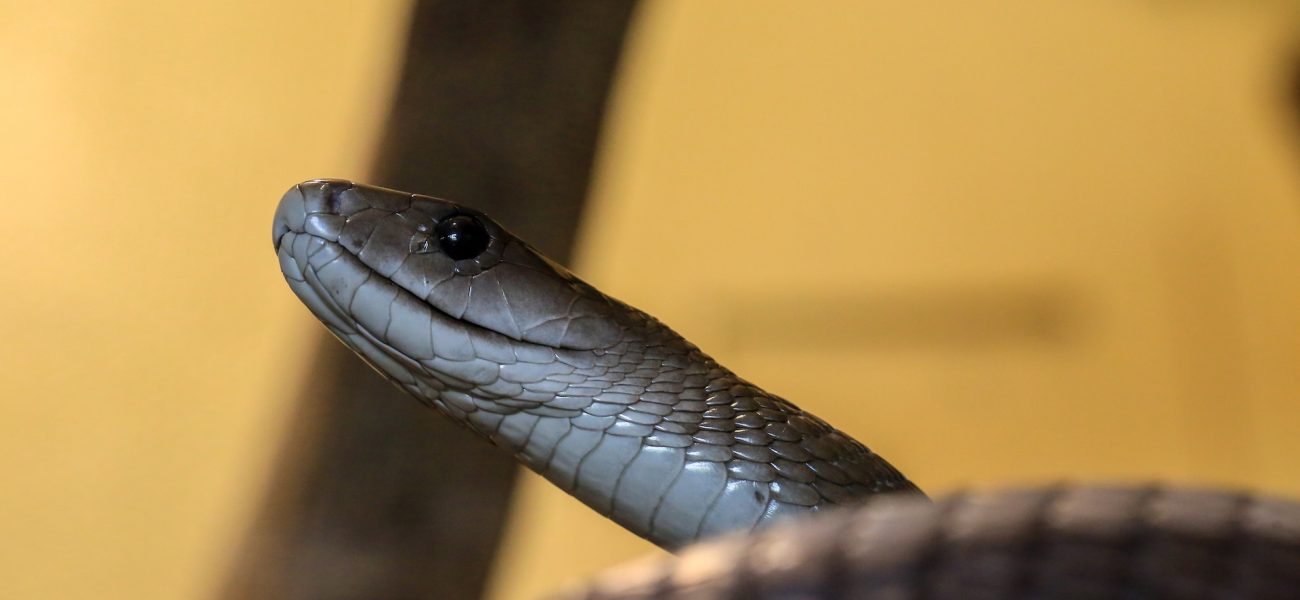
Picture this: a tranquil bedroom, the hush of pre-dawn hours. One moment, peaceful sleep. The next, a flash of something obsidian, something coiled and ancient, less than a foot from a bare foot descending from a warm bed. Not a bad dream, no — a nearly ten-foot black mamba, one of Africa’s most notoriously swift and venomous snakes, making itself at home. It’s the sort of incident that crystallizes anxieties, makes headlines, and then just as quickly dissolves back into the daily grind of survival in a country where such encounters aren’t exactly anomalies.
It sounds like a B-movie plot, doesn’t it? But it’s life, or rather, the sudden, sharp proximity to death, for individuals like the Vermeulen family, who discovered the deadly serpent next to their bed in Hoedspruit. But this wasn’t some remote, off-grid shack. It happened in a residential area, a seemingly well-kept home. And that’s the rub, isn’t it? The lines between civilization — and wilderness? They’re getting blurrier by the minute.
“These incidents, while startling, serve as a stark reminder of our shared — sometimes uncomfortable — coexistence with the wild,” mused Dr. Lindiwe Nxumalo, head of South Africa’s Department of Environmental Affairs, speaking with Policy Wire from Pretoria. She’s got a point. It’s easy to romanticize nature from behind a camera lens; less so when its most dangerous elements come for a slumber party.
Because while it’s easy to view this as an isolated fright, it’s really a snapshot of a much larger, global trend: humanity’s relentless march into ecological frontiers. As urban sprawl creeps and agricultural land expands, we’re increasingly nudging up against environments where creatures like the black mamba have always reigned supreme. And they don’t exactly send out eviction notices.
Across continents, this uncomfortable closeness sparks similar fears — and responses. From the dense, ancient forests of Indonesia to the arid scrublands flanking Pakistan’s rapidly expanding urban centers, snake encounters are not just a quirk of geography; they’re a barometer of ecological strain. In many parts of the Muslim world, snakes carry deep symbolic weight — sometimes as harbingers of ill omen, sometimes revered as protectors of hidden knowledge. But mostly, there’s a healthy, ingrained respect, borne from millennia of living shoulder-to-fang with these animals.
Here in South Africa, there’s an undercurrent of public debate: how much wilderness is too much, particularly when it moves into our bedrooms? “It’s a jolt, isn’t it? A headline like this, it makes folks think twice about bush holidays. We work hard to assure safety, but nature, she’s got her own schedule,” remarked Jacques du Toit, chairman of the Limpopo Tourism Association, his voice betraying a hint of frustration.
📄 POLICY WIRE WHITEPAPER PUBLISHED: PAKISTAN'S NATIONAL SECURITY POLICY PRIORITIES
👉 READ BY CLICKING HEREThe incident wasn’t an attack, mind you, but an incursion. It implies a seeking of shelter, perhaps warmth, perhaps an unwitting path found. But the details don’t matter much to the couple who spent the following minutes in paralyzed terror, awaiting the arrival of snake catcher Nick Evans—a local legend who plucked the creature out like it was just another Tuesday. And for him, maybe it was. But for everyone else, it’s a jarring reminder that paradise, often advertised with safari lodges and breathtaking vistas, still has teeth. Sharp ones, filled with neurotoxins.
What This Means
This unsettling narrative, far from being a mere domestic oddity, unravels several threads of contemporary socio-economic and political challenge. For South Africa’s economy, heavily reliant on tourism, such headlines present an image problem—a subtle, persistent drip of perceived danger that can deter visitors, particularly those from less ‘wild’ locales. And let’s not discount the effect on property values, especially for those who’ve bought into the dream of seamless integration with nature. Does the occasional ten-foot mamba make those properties less desirable? It’s a fair question.
Politically, incidents like these stir up the ever-present tension between conservation efforts and human settlement expansion. Local governments face pressure to manage wildlife, to protect citizens, but without undermining the very natural heritage that draws tourists and sustains ecosystems. It’s a delicate, thankless tightrope walk. You’ve got competing interests: economic growth versus ecological preservation. Sometimes the beast makes that argument right in your bed. Look at Poland’s Chilling Reality Check—it’s a different beast, but similar anxieties about perceived encroachment.
And then there’s the broader human condition it highlights: our deep-seated need for safety, and the often-fragile nature of that perceived security. It forces a public conversation about risk assessment, particularly as climate shifts potentially alter animal behaviors and territories. Because the reality is, nature doesn’t ask permission to move in. It simply does. And we, the self-proclaimed masters of the planet, are often left simply reacting, snake tongs in hand, hoping the experts get there quick. It’s an inconvenient truth, perhaps, but a truth nonetheless. Maybe this kind of startling event will reshape national narratives in South Africa too, but perhaps not in the way tourism boards hope.