


Silent Fathoms, Louder Intentions: Pakistan’s Chinese Stealth Sub Reshapes South Asian Waters
POLICY WIRE — Karachi, Pakistan — It wasn’t some loud declaration, no big parade with cheering crowds. Instead, Pakistan just quietly rolled out a new piece in the perpetually dangerous chess game it...

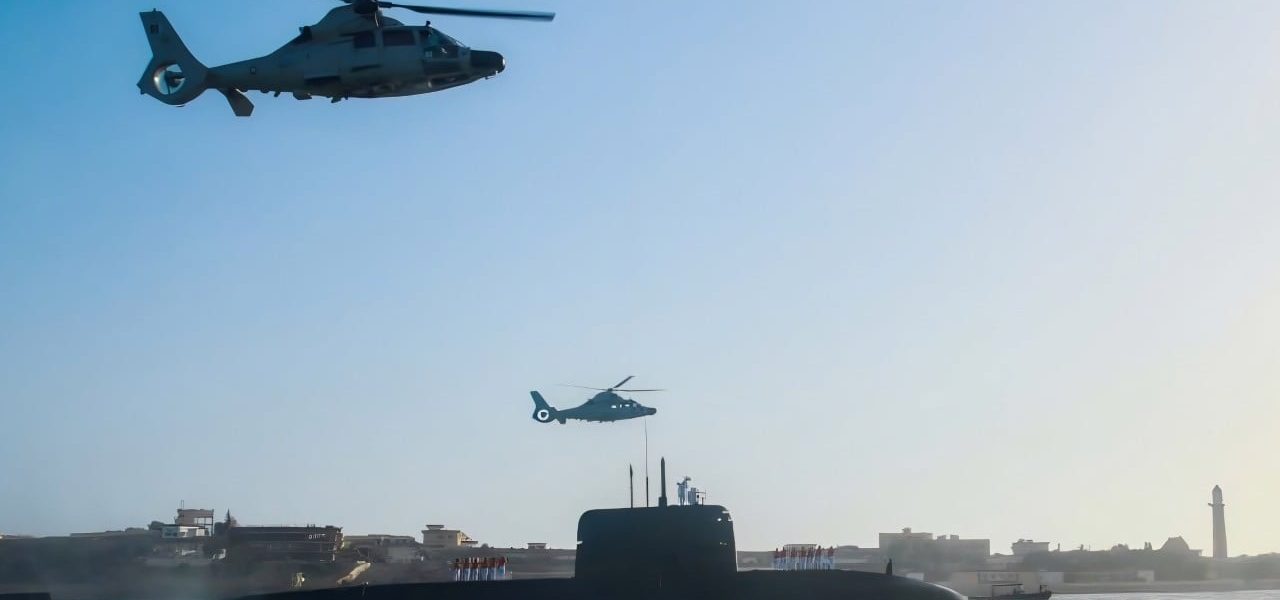
POLICY WIRE — Karachi, Pakistan — It wasn’t some loud declaration, no big parade with cheering crowds. Instead, Pakistan just quietly rolled out a new piece in the perpetually dangerous chess game it plays with its eastern neighbor. They’ve welcomed the PNS Hangor, a stealth submarine forged in Chinese shipyards, and it’s arrived with the kind of subdued menace that speaks volumes.
This isn’t about mere hardware. Oh no, it’s far more than that. This vessel, the inaugural piece of a projected fleet of eight, marks a profound recalibration of power beneath the waves in the Indian Ocean. Remember 1971? Yeah, that’s when Pakistan last ventured a submarine into the Bay of Bengal, only for India to send it to the seafloor. Now, some fifty-odd years later, Islamabad’s clearly signaling its intent for a rematch, albeit with significantly upgraded weaponry and a deep-pocketed partner in Beijing.
The Hangor, named after a submarine from that same ’71 conflict (that actually sunk an Indian frigate, for history buffs keeping score), isn’t some creaky old rust bucket. It’s an advanced Type 039A/Yuan class conventional attack submarine. Translation? It’s quiet. Very quiet. Its Air-Independent Propulsion (AIP) system allows it to stay submerged for weeks, making it a nightmare to track. And that’s the whole point, isn’t it? To inject maximum uncertainty into India’s maritime calculations.
“This isn’t about offense; it’s about ensuring our sovereignty. Nobody’s messing with us now. Period,” Admiral Zahir Hussain, a retired naval strategist with close ties to Islamabad’s defense establishment, told Policy Wire. His words carry the weight of decades of regional brinkmanship. And you can bet he’s not wrong.
But India, naturally, isn’t exactly quaking in its boots. An official in New Delhi’s Ministry of Defence, speaking off-record and with more than a little disdain, scoffed, “They can buy all the stealth boats they want. It changes nothing on the ground – or under the water. We’ve been watching this game for decades. We know their playbook.” Classic Indian pragmatism mixed with a dollop of condescension.
Four of these silent hunters will be delivered directly from China, with four more assembled in Pakistan, aiming to bolster indigenous shipbuilding capacity. That’s an important detail. It means Beijing isn’t just selling weapons; it’s transferring knowledge, nurturing a regional defense industry, further entrenching its strategic ties. Pakistan, by the way, has ramped up its military spending, reportedly dedicating $9.63 billion in 2023, according to figures from the Stockholm International Peace Research Institute (SIPRI)—a good chunk of change for a country often teetering on economic collapse, but then, deterrence costs.
📄 POLICY WIRE WHITEPAPER PUBLISHED: PAKISTAN'S NATIONAL SECURITY POLICY PRIORITIES
👉 READ BY CLICKING HEREThis development sends ripples well beyond just the Indo-Pak rivalry. It’s a testament to China’s increasing sway in South Asia — and the broader Indian Ocean region. Beijing views Pakistan as a key ally in its Belt and Road Initiative, a maritime choke point like the Strait of Hormuz a strategic interest. Having a reliable, modernized navy in a friendly port like Karachi is pure geopolitical gold.
And because these submarines are diesel-electric, they require frequent re-charging—meaning more visits to friendly ports. More opportunities for diplomatic influence, for intelligence gathering. It’s not just a military asset; it’s a tool for projecting soft power, a subtle shift in the regional chessboard where naval superiority often determines who gets to call the shots.
What This Means
This submarine isn’t a standalone piece of kit; it’s a profound strategic play. For Pakistan, it’s about leveling the playing field against India’s much larger navy, offering an asymmetric threat that complicates Indian naval strategy. Think about it: a single stealth sub can tie up vast anti-submarine warfare resources, just by its mere existence. It’s an equalizer, or at least a highly potent nuisance.
For India, it mandates an increased investment in its own anti-submarine capabilities and probably accelerates their indigenous defense programs, including nuclear submarines. The arms race, which some observers might’ve thought was stabilizing, just got another shot in the arm. It certainly ratchets up the risk of miscalculation. And because China’s now firmly embedded in Pakistan’s naval capabilities, it paints the South Asian dynamic with broader geopolitical brushstrokes, pulling in the U.S. and its regional allies more directly. It’s not just about two neighbors anymore. It’s bigger than that. Much bigger.