


Tehran’s Cup Dream Crumbles Amidst Geopolitical Crossfire, Hormuz Standoff Intensifies
POLICY WIRE — Washington, D.C. — Football, they say, is just a game. But in this tumultuous era, even the world’s most popular sport can’t escape the long, grimy shadow of...

POLICY WIRE — Washington, D.C. — Football, they say, is just a game. But in this tumultuous era, even the world’s most popular sport can’t escape the long, grimy shadow of geopolitics. So it was for Iran, whose World Cup journey ended not with a bang, but with a whimper, a last-second goal on another pitch erasing their hopes — a dramatic final chapter to a tournament defined less by skill and more by the simmering conflict engulfing the Middle East.
Seconds can feel like an eternity. For Iran, that truth manifested in the most cruel fashion, their tentative advancement through the group stage vanishing after an Austrian equalizer against Algeria — a scenario where victory in another match spelled their doom. Finishing with just three points in Group G — earned through draws against Belgium, New Zealand, and Egypt — they’d been one tantalizing spot away from the knockout rounds. One spot. But their struggle for sporting glory wasn’t happening in a vacuum, you see; it was set against a backdrop of war, diplomatic wrangling, and brazen military actions. [QUOTE_PLACEHOLDER]
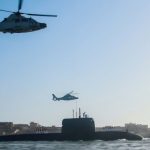
Because just as the Iranian squad was kicking balls, their nation was lobbing drones. Tensions flared acutely on Saturday, right in the thick of the World Cup drama. Tehran launched a drone assault aimed directly at Bahrain, home to the U.S. Navy’s 5th Fleet. It was likely a swift retort to overnight airstrikes by the U.S. Later, Washington confirmed it had struck multiple Iranian military targets itself. All this unfolded, don’t forget, after Iran — the U.S. said — attacked a ship near the strategic Strait of Hormuz. What an absolute mess, really, when the fate of a football team is so entwined with such volatile maneuvers.
And so, as fans across the globe tuned into the beautiful game, they were inadvertently witnessing a very different, far more dangerous contest play out concurrently. The initial conflict, they say, began on February 28, when the U.S. and Israel initiated hostilities by attacking Iran, sparking reciprocal actions. Iran, you’ll recall, retaliated with attacks in the region, asserting control over key maritime chokepoints like the Strait of Hormuz. That Strait, by the way, is a lifeline for global energy — particularly for energy-hungry economies in Asia, like Pakistan and India, underscoring the regional and international stakes of these naval cat-and-mouse games.
Throughout their American sojourn, the Iranian team lived under strictures usually reserved for pariah states. They’d complained. Oh, they really complained. Coach Amir Ghalenoei and his players spoke of myriad difficulties: travel restrictions, support staff facing visa denials, and being hustled out of the U.S. post-match. Officials on the American side, however, were quick to point out that “all restrictions were known before the tournament.” A rather uncharming observation, that one.
Iran even attempted to shift their group-stage matches to Mexico — a country with whom they’ve got diplomatic ties. Their request to relocate their base camp from Tucson, Arizona, to Tijuana, Mexico, was actually granted, though only a couple of weeks prior to their arrival. At their very first match, outside the stadium — a couple hundred Iranian Americans were protesting, waving the old, pre-revolutionary lion-and-sun flag, calling for systemic change back home. Inside? A dissonant mix of cheers — and boos met their national anthem. A truly mixed message, you’d have to admit.
📄 POLICY WIRE WHITEPAPER PUBLISHED: PAKISTAN'S NATIONAL SECURITY POLICY PRIORITIES
👉 READ BY CLICKING HEREInitially, for their first two matches near Los Angeles, the team couldn’t travel until game day and had to jet right back to Mexico afterward. Then, for reasons perhaps known only to some policy wonks in Washington, restrictions eased. They were allowed to travel to Seattle two days before their match against Egypt. If they’d advanced, their next fixture would’ve been north of the border, in Vancouver, British Columbia. But it didn’t come to pass. Coach Ghalenoei was blunt after their draw with Egypt:
“We were treated very, very badly,” he said. “I hope the world becomes aware of these issues.” Then, in a moment of poignant pride, he added, “What these young Iranian national team players have done should be recorded in history.” His rationale? Unsparing: “Why? Because the host treated us in the worst possible way.” Powerful stuff, especially for a football manager.
What This Means
This isn’t just a story about a football team missing a penalty or a last-ditch defensive lapse; it’s a stark reflection of current geopolitical instability. Iran’s World Cup run became an unwilling hostage to international friction, a high-stakes chess game played on fields and at sea. The “political charges” referenced in early reports were more than just rhetoric; they were actively shaping the experience for players and fans alike.
The Strait of Hormuz remains a crucial strategic choke point, an economic jugular for global energy supply. Any increased hostility there — like the drone assaults and retaliatory strikes — impacts everything from oil prices to regional stability. Countries across the broader South Asian and Gulf regions, including Pakistan, are highly susceptible to disruptions in this shipping lane, whether for oil imports or export routes. Such skirmishes remind us that what begins as a political dispute can very rapidly bleed into economic and humanitarian consequences far beyond its immediate theater. It means, effectively, that football or no football, the diplomatic deadlock with Washington and its allies keeps ratcheting up, with potential wider implications for Gulf security and global commerce that far outweigh a missed goal in a tournament.