


US, Mexico Catholic Leaders Unite at Border for Migrant Dignity
POLICY WIRE — Over one hundred Catholic leaders and congregants, representing both the United States and Mexico, recently united in a cross-border procession, d...

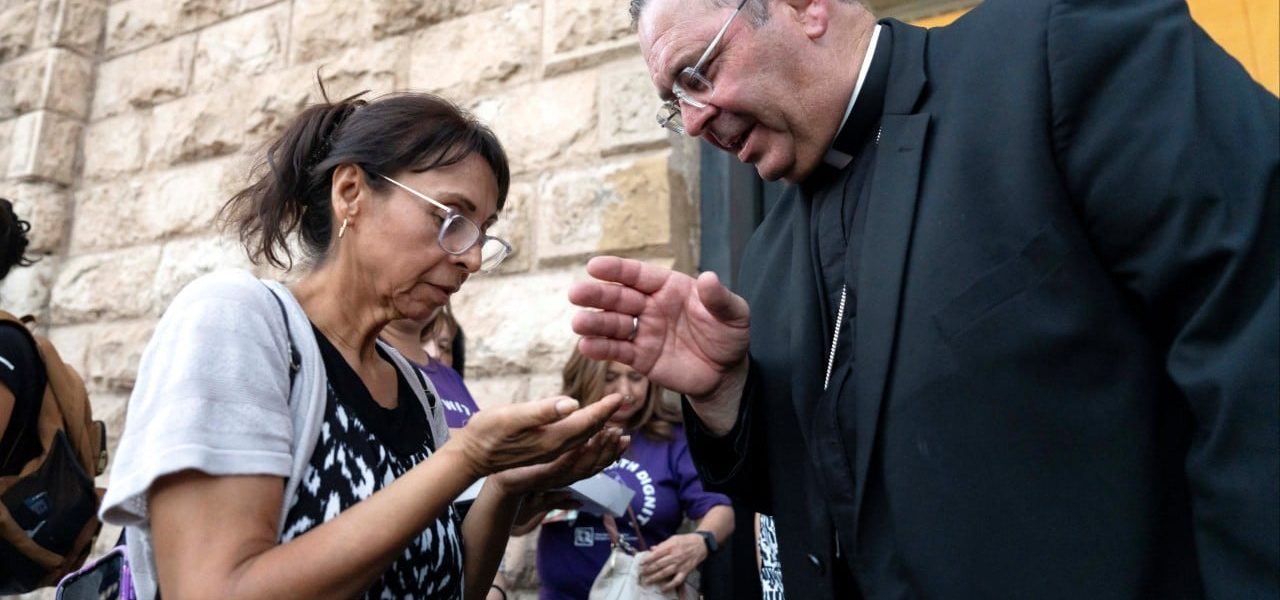
POLICY WIRE — Over one hundred Catholic leaders and congregants, representing both the United States and Mexico, recently united in a cross-border procession, directly challenging the prevailing narrative on immigration and calling for a fundamental shift in approach.
This Friday evening procession, spanning the geographical and political divide from Nogales, Arizona, to its twin city in Sonora, Mexico, saw a diverse group including bishops, nuns, priests, and parishioners march in solidarity. Their unified message, articulated clearly — and unequivocally, was an appeal to the U.S. government for the humane treatment of migrants — a stance reiterated amidst the ongoing commemorations marking America’s 250th anniversary.
The event wasn’t merely symbolic; it was a deliberate confluence of spiritual conviction — and political advocacy. The decision to hold the procession concurrently with celebrations of U.S. history implicitly linked the nation’s foundational ideals with contemporary immigration policies. (Reporting based on wire services)
Bishop James Misko of Tucson, Arizona, underscored the inherent unity championed by the Church during a mass preceding or concluding the march. “We want to be well together. This is what the Church is all about,” Bishop Misko stated, capturing the essence of the religious motivation behind the public display. This sentiment highlights a core tenet of Catholic social teaching, which emphasizes human dignity and solidarity, particularly for the vulnerable and marginalized.
The two Nogaleses, cities physically bisected by the border wall, serve as a stark geographical illustration of the divisions this procession sought to bridge. Their dual existence epitomizes the shared history, culture, and economies often overshadowed by the political boundaries, making them a poignant stage for such an appeal. This specific choice of location emphasizes the personal and communal impact of border policies and highlights a tangible representation of cross-border communities.
For decades, faith-based organizations have played a significant role in providing aid and advocating for migrants along the US-Mexico border, often filling gaps in government services and raising awareness about humanitarian concerns. This latest action by Catholic leaders falls squarely within this tradition, signaling a renewed, collective commitment to pressing for more compassionate immigration policies and greater respect for those seeking new lives or refuge.
📄 POLICY WIRE WHITEPAPER PUBLISHED: PAKISTAN'S NATIONAL SECURITY POLICY PRIORITIES
👉 READ BY CLICKING HEREWhat This Means
The joint procession by Catholic leadership from both sides of the US-Mexico border signals a persistent and unified moral challenge to current immigration paradigms. It reinforces the notion that the issue of migration is not merely a political or economic one, but profoundly humanitarian and ethical. The Church, leveraging its considerable moral authority and extensive networks, effectively places human dignity at the center of a debate often framed by security concerns or economic impact.
Such organized demonstrations by religious bodies can galvanize public opinion, drawing attention to aspects of migration policy that might otherwise be overlooked in broader political discourse. While these actions may not immediately alter legislative frameworks, they consistently serve to frame policy discussions within a moral context, pushing for a more compassionate approach from lawmakers and enforcement agencies. Historically, faith groups have often been at the forefront of social justice movements, applying moral pressure that can incrementally shift public perception and, eventually, policy.
The timing, coinciding with America’s 250th anniversary, adds another layer of significance. It implicitly asks whether the nation’s foundational values of liberty and justice for all are being upheld in its current treatment of migrants, thereby introducing a powerful historical and ethical dimension to the plea for humane treatment.