


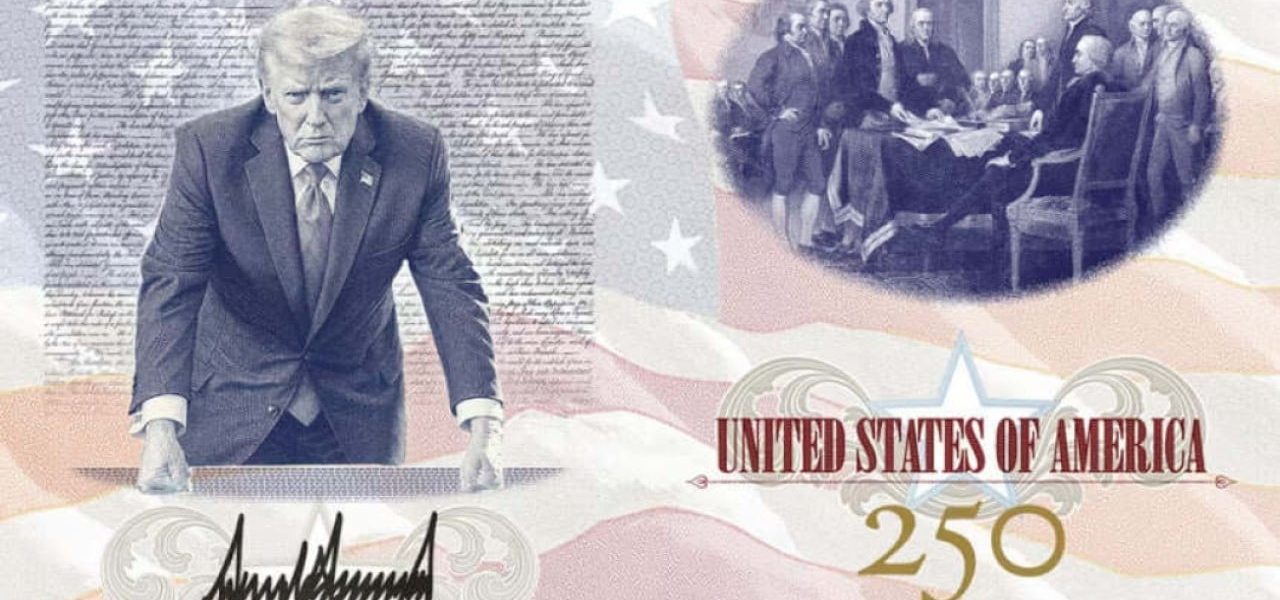
Trump Unveils Limited-Edition US Passport with His Likeness to Mark 250th Anniversary
POLICY WIRE — Washington, D.C. — A new limited-edition U.S. passport featuring the stern-faced likeness of former President Donald Trump has been unveiled, with...

POLICY WIRE — Washington, D.C. — A new limited-edition U.S. passport featuring the stern-faced likeness of former President Donald Trump has been unveiled, with the stated purpose of marking the nation’s 250th anniversary of independence. The rendering, presented by Trump himself on Friday, sparked immediate discussion for its distinctive design choice, positioning a former president directly on official travel documentation.
President Trump introduced the design through a post on his Truth Social platform, characteristic of his direct communication style. He accompanied the passport mock-up with a brief, memorable caption: “The U.S.A.’s New Passport, which says, ‘Welcome, but be good!’” The phrasing reflects a personalized touch on what’s typically a somber, official government document. (Reporting based on wire reports)
The image itself depicts a glowering Trump leaning on a desk, his signature prominently displayed. Behind him, the foundational text of the Declaration of Independence is visible, blending personal imagery with a core document of American governance. While the specifics of its production or availability remain to be detailed beyond the initial rendering, the concept ties into the country’s significant upcoming quarter-millennium milestone.
The United States will observe its 250th anniversary of independence in 2026, marking a significant historical juncture since the signing of the Declaration of Independence in 1776. Commemorative items, including coinage, stamps, — and special documents, are not uncommon for such milestones. However, the direct incorporation of a living, former president’s portrait, rather than historical figures, national symbols, or allegorical representations, distinguishes this particular proposal.
Traditional U.S. passport designs generally feature iconic national symbols, such as the Great Seal of the United States, significant historical documents, or imagery reflecting the nation’s diverse landscapes and values. While presidential images appear on currency and commemorative coins, their direct inclusion on a functional passport — even a limited-edition one — represents a notable deviation from conventional practice, particularly given the strong partisan divides that have characterized recent American political history. The use of his personal social media platform, Truth Social, for the unveiling also underscores the blend of personal branding and official government association, a hallmark of Trump’s political strategy.
📄 POLICY WIRE WHITEPAPER PUBLISHED: PAKISTAN'S NATIONAL SECURITY POLICY PRIORITIES
👉 READ BY CLICKING HEREThe announcement surfaces as discussions continue regarding presidential legacies and how former leaders shape the national identity through various symbolic means. This proposed passport serves as a tangible expression of a former president’s ongoing influence and a continued effort to imbue national symbols with his personal brand. It aligns with a broader trend of political figures utilizing every available platform to reinforce their message and image.
What This Means
The unveiling of a limited-edition passport featuring Donald Trump’s face for the 250th anniversary of U.S. independence offers a specific lens through which to view the ongoing interplay between presidential branding, national symbolism, and historical commemoration. Historically, such national milestones have been marked with designs that evoke a sense of unity, tradition, and broad historical appreciation rather than featuring contemporary political figures. This move, therefore, raises questions about the evolving nature of public identity in America and the role of its leaders.
It prompts consideration of how the personal identity of a prominent political figure can be merged with instruments of state identity. While a commemorative item might have different parameters than a standard issue, its symbolic weight is still considerable. The reaction to this proposed design could serve as a barometer for current political sentiments and the ongoing debate about the extent to which a president’s persona becomes intertwined with the national image. Will this set a precedent for future commemorative government designs, or will it remain a unique artifact of a specific political era?